Families across eastern DR Congo are mourning loved ones killed after a deadly landslide at a rebel controlled coltan mine, as some survivors prepare to return to work despite ongoing dangers.
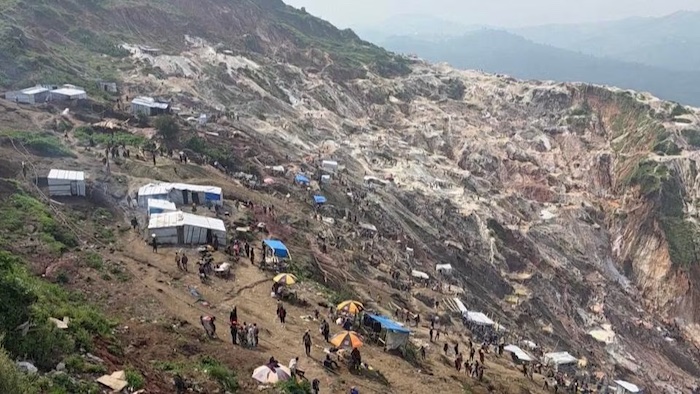
At least 200 people were killed last week when heavy rains triggered the collapse of a network of hand dug tunnels at the Rubaya mining complex. The mine, about 40 kilometres west of the regional capital Goma, has been under the control of Rwandan backed M23 rebels since early 2024. An unknown number of miners remain missing.
In Goma’s Mugunga neighbourhood, relatives of Bosco Nguvumali Kalabosh, 39, gathered at the family home to mourn his death. Since last Thursday, neighbours and loved ones have sat around a photograph of Kalabosh placed against a wall.
“He was supposed to return to Goma on Thursday,” said his older brother, Thimothée Kalabosh Nzanga.
Kalabosh had worked as a miner for more than 10 years and owned his own mines at the site. Artisanal mining had been passed down through generations in his family. He leaves behind a widow and 4 children, the eldest aged 5.
Survivors returning to town say economic pressure is forcing them back to the mines. Tumaini Munguiko, who survived the collapse, visited Kalabosh’s family to offer condolences.
“Seeing our peers die is very painful. But despite the pain, we are forced to return to the mines to survive,” he said.
Munguiko said he had lived through several similar incidents. “It has almost become normal. We accept it because it is our means of survival. I was saved this time, but I lost 5 friends and my older brother.”
He explained that landslides are common at Rubaya during the rainy season. “When it rains, the clay soils become unstable. Some take shelter, others perish, others survive, and others watch from afar,” he said.
Miners dig long tunnels, often parallel, with little structural support and no safe evacuation routes. A former miner told The Associated Press that repeated collapses are linked to unsafe construction and lack of oversight.
“People dig everywhere, without control or safety measures. In a single pit, there can be as many as 500 miners, and because the tunnels run parallel, one collapse can affect many pits at once,” said Clovis Mafare.
“The diggers don’t have insurance,” Mafare added. On compensation, he said, “It’s a whole legal process, and it’s very long. They might receive some money for the funerals, but that small amount isn’t compensation.”
Kalabosh’s family has received no compensation. Despite the risks, both Munguiko and Nzanga say they will return to the mines.
“I have no choice. Our whole life is there,” Munguiko said.
The Rubaya mines, which produce coltan used in mobile phones, computers and military and aerospace equipment, have been central to fighting in eastern Congo and remain under M23 control. Congo’s government has accused the rebels of illegally exploiting natural resources, while an M23 spokesperson rejected the claims and accused the government of politicising the tragedy.
Faridah Abdulkadiri
About the Author