Teased towards the end of November, Opel has officially removed the covers from the facelift Astra known to be under investigation for South Africa.
New outside
Updated four years after its market reveal as the first generation not to have been made by former parent company General Motors, the internally named Astra L benefits from comparatively minor changes largely centring around its exterior.
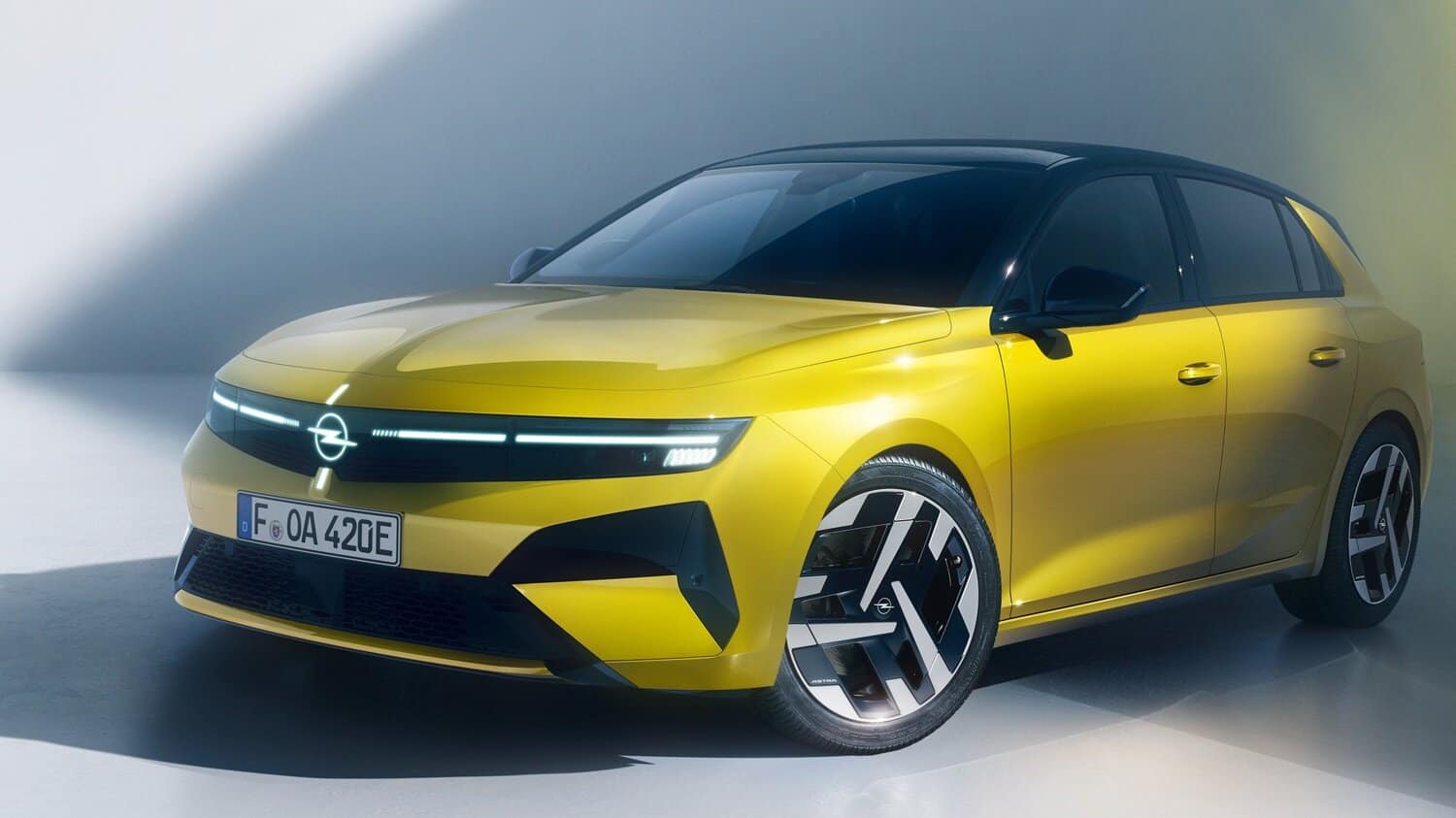
Applicable to both the five-door hatch and four-door Sports Tourer estate, the reworked aesthetics comprise a first-time illuminated Opel Blitz badge, new boomerang-type vents on the flanks of the front bumper, a narrower Vizor grille panel and an illuminated strip underneath the bonnet connecting the LED headlight clusters.
ALSO READ: Opel starts teasing facelift ‘under study for South Africa’ Astra
The front bumper being new, Opel has also added illumination above and below the badge, which represents the middle point of its styling direction.
Taken from the new Grandland, the Matrix IntelliLux LED headlights have been revised to provide better illumination around corners thanks to an improved steering sensitive system.
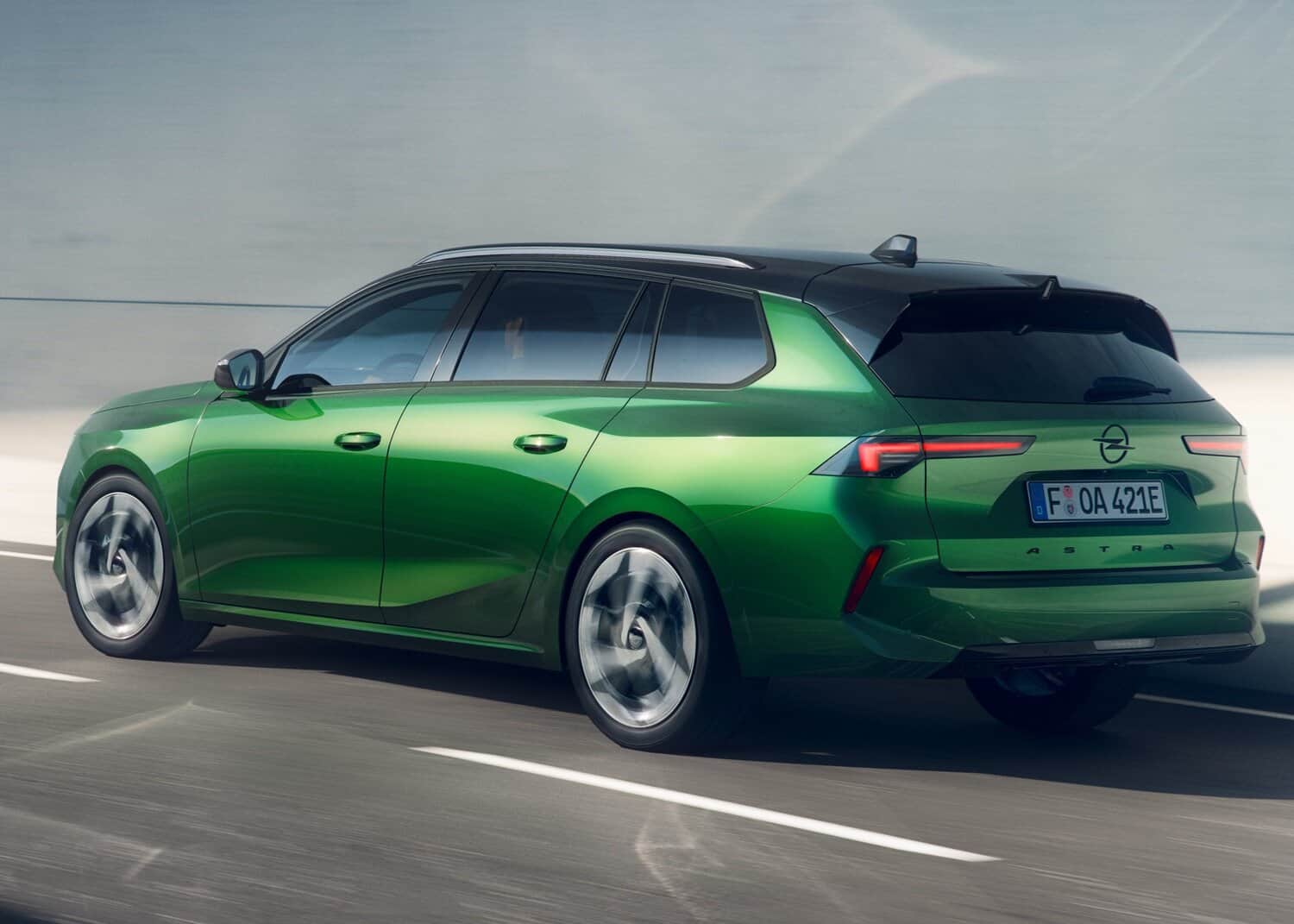
Unchanged is the rear facia on both the hatch and estate, though down the side new designs have been made available for the 17 and 18-inch alloy wheels.
Rounding the exterior off are two new colour options; Kontour White and Klover Green.
Inside
Inside, the interior has remained unchanged, bar new seats on entry-level derivatives called Intelli-Seats Opel says have been designed to reduce pressure on the occupant’s tailbone.
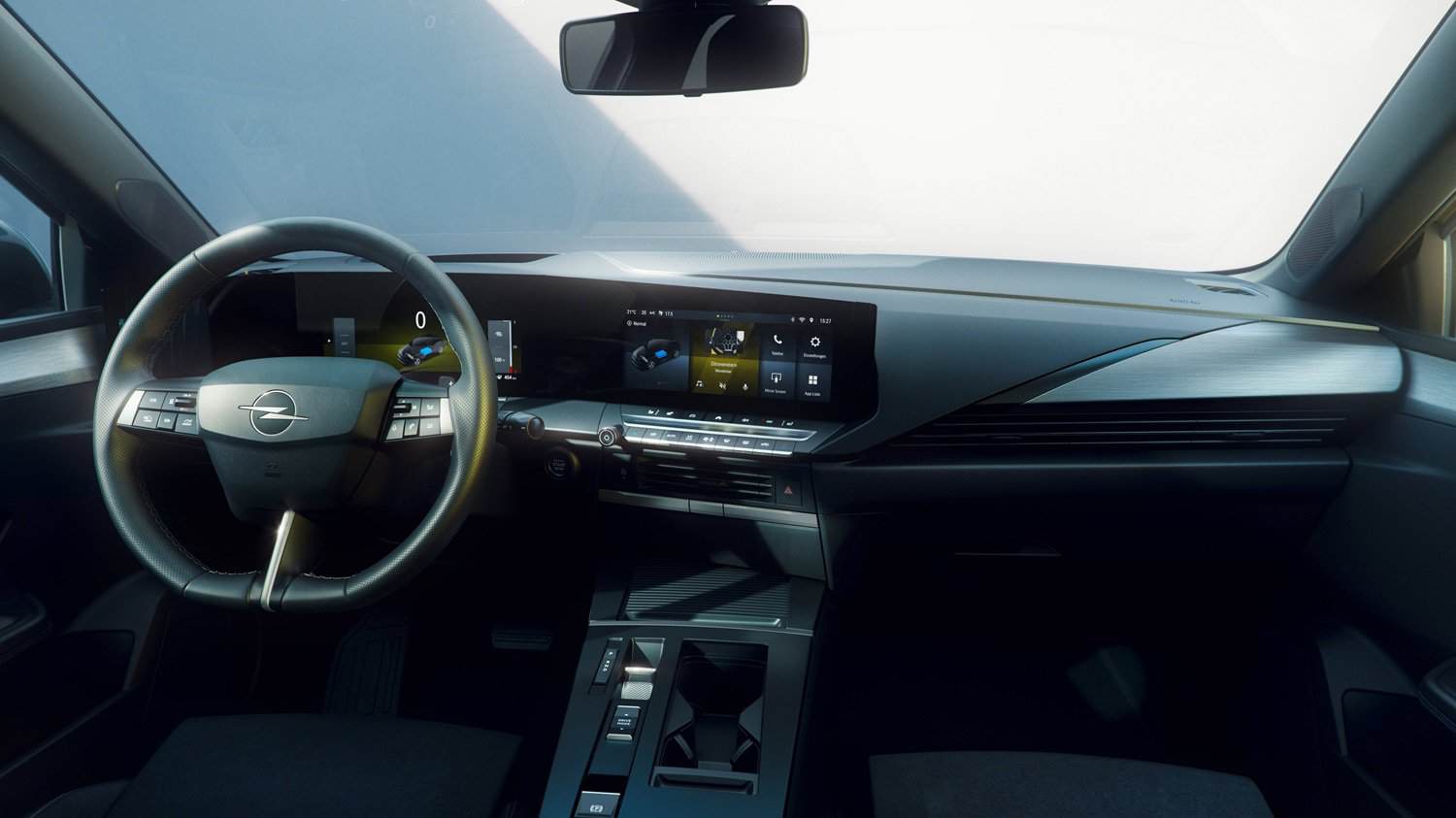
Optionally available with heating and massaging functions for the fronts only, the seats are also trimmed in a new material made mostly out of recycled fabrics.
Bigger battery for EV
Despite not mentioning any technical details, expectations are that the Astra retains the same choice of combustion engines as the now pre-facelift model.
On the petrol side, this means two versions of the 1.2-litre PureTech turbocharged three-cylinder rated at 81kW/205Nm and 96kW/230Nm, and on the diesel side, the single 1.5-litre Blue CDTI outputting 96kW/300Nm.
The standard transmission for both petrol models is a six-speed manual, with the option, an eight-speed automatic being reserved for the latter. It is, however, the only choice for the turbodiesel.
For the hybrid, the mentioned 1.2 is supplemented by a 48-volt mild-hybrid system, but this time, in a single state of tune as the lower 100 kW variant has been dropped.
This means figures of 107kW/230Nm directed to the front wheels through an eight-speed dual-clutch gearbox.
Finally, the plug-in hybrid combines the 1.6-litre PureTech four-cylinder with a 17.2-kWh battery pack for a total output of 144kW/360Nm or 165kW/360Nm in the case of the performance Astra GSE.
The sole transmission on both is an eight-speed automatic.
Topping the range, the Astra Electric receives a new 58.4-kWh battery pack that powers a single electric motor on the front axle, still producing 115kW/270Nm.
The claimed range is, however, slightly up from the previous 426 km to 454 km on a single charge.
South Africa return…
Confirmed to make its public debut at the Brussels Motor Show in early January, the Astra, as mentioned, is in-line for a possible market return next year.
This, after Opel’s head of operations for Africa and the Middle East, Falk Zimpel, told The Citizen at parent company Stellantis’ Media Connect event in July that the investigation into its comeback has reached “an advanced stage”.
Set to rival the Volkswagen Golf 8.5, Mazda3 and Toyota Corolla Hatch as the only mainstream, non-premium brand to still offer a hatch in South Africa, more details will only be announced in the new year.
NOW READ: Comeback star: Long awaited all-new Opel Astra officially revealed
About the Author