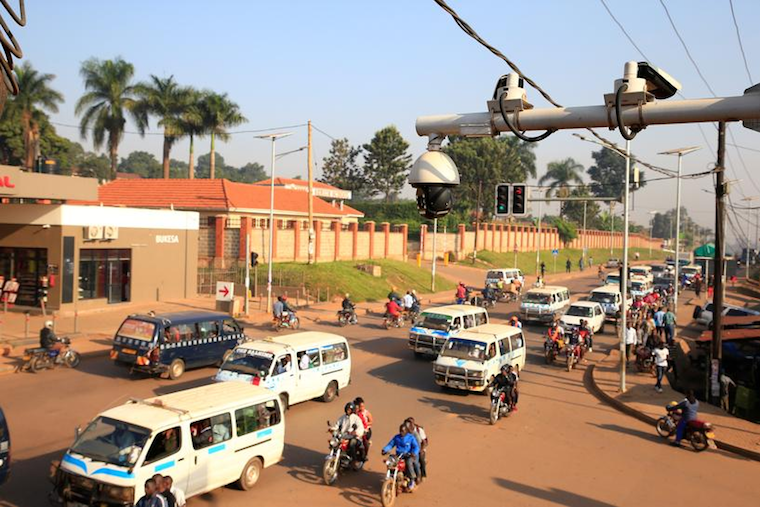
The ministry of Works and Transport has announced the reintroduction of the previously suspended Express Penalty System (EPS), citing a surge in fatal road accidents late last year and early this year that has renewed public anxiety over road safety.
The system was initially suspended following widespread public outcry over high fines and inadequate sensitisation. However, government and some citizenry now argue that the consequences of weak enforcement, measured in lives lost, have become too costly to ignore.
That shift in sentiment has been amplified by the recent deaths of 38-year-old Ivan Niwagaba and his entire family of seven – wife Brenda Ainembabazi, 37, brother Sayuni Turihohabwe, 39, and their four children Keith Agaba, 10, Keitha Atuhaire, Masaiko Kanene, 5, and Keron Agaba, 2, who perished in a horrific crash on December 27 along the Kampala–Mbarara highway.
The family was travelling from Kampala to Mbarara when their Toyota Fielder collided head-on with a Fuso Fighter truck, killing all occupants on the spot. During a church service held in their memory, mourners struggled to comprehend how an entire household could be erased in a single moment.
For many Ugandans, the tragedy has come to symbolise a painful but urgent truth: warnings and appeals alone are no longer sufficient to deter dangerous driving. According to ministry officials, EPS will return on a pilot basis in high-risk locations and major accident-prone corridors before a phased national rollout later this year.
The revised system will monitor speeding, traffic-light compliance, and lane discipline, with recorded data feeding directly into the EPS framework. Officials also say penalty levels will be reviewed, alongside nationwide sensitisation campaigns to ensure greater public understanding and acceptance.
Street interviews conducted in Kampala suggest growing support for the system among motorists and pedestrians alike.
“If used properly, cameras will help us,” said Clinton Tumanye, a taxi driver in downtown Kampala.
“When someone is reckless or causes harm, footage will show what happened. This system should protect people, not just punish them.”
Turning point fatal accidents
The renewed push follows a string of high-profile crashes that have shaken the country, including a 46-person bus accident on the Kampala–Gulu highway, a deadly collision in Bweyogerere that killed three people, including two university students, and the Niwagaba family tragedy.
Collectively, these incidents have reignited concerns about speeding, reckless overtaking, driver fatigue, and the near-absence of consistent enforcement, particularly on long-distance highways and during nighttime travel.
“The message from these tragedies is the same,” said Roseline Babirye, a pedestrian and working mother.
“We need smart enforcement in the most dangerous places first. Drivers will only change when they know someone is watching all the time.”
She added that enforcement technology should prioritise repeat offenders, drunk driving, and high-speed zones near schools, trading centres, and highway junctions.
System will return in phases
Ministry officials say EPS will be rolled out first through targeted pilot zones in Kampala and selected highways with high fatality rates, before expanding to other regions in early 2026.
The pilot phase is expected to allow government to fine-tune penalty thresholds, assess public response, and strengthen safeguards against abuse before scaling the system nationwide.
The revised framework will pair reduced fines with public education, improved road signage, physical safety upgrades, and digital monitoring.
“The public wants safety, not just surveillance,” said a senior transport official who requested anonymity. “The pilot approach allows us to prove that technology can save lives, not just issue tickets.”
Technology and safer roads
Globally, technology-led enforcement has played a significant role in reducing road deaths. Helsinki, Finland, recorded zero road fatalities in 2025 after integrating lower speed limits, automated enforcement, and safer street design.
Sweden has cut road deaths by more than half under its Vision Zero policy, combining engineering, regulation, and digital monitoring.
Singapore, Australia, and the United Arab Emirates have also deployed camera-based enforcement with measurable safety gains. Uganda, where road crashes claimed 4,434 lives and injured more than 25,800 people in 2024, now faces mounting pressure to modernise traffic policing and strengthen accountability on the roads.
Public expectations high
On Kampala’s streets, public mood appears to be shifting from resistance to cautious acceptance. While concerns persist around privacy, fairness, and cost, many citizens now view smart enforcement, particularly in accident-prone areas, as unavoidable.
“If cameras had disciplined speeding and overtaking on those highways, maybe that family would still be alive,” Roseline said. “We just want roads where rules apply to everyone, all the time.”
About the Author