Cardoso says economy not yet safe despite reform gains, vows to defend naira and build reserves through non-oil exports…..
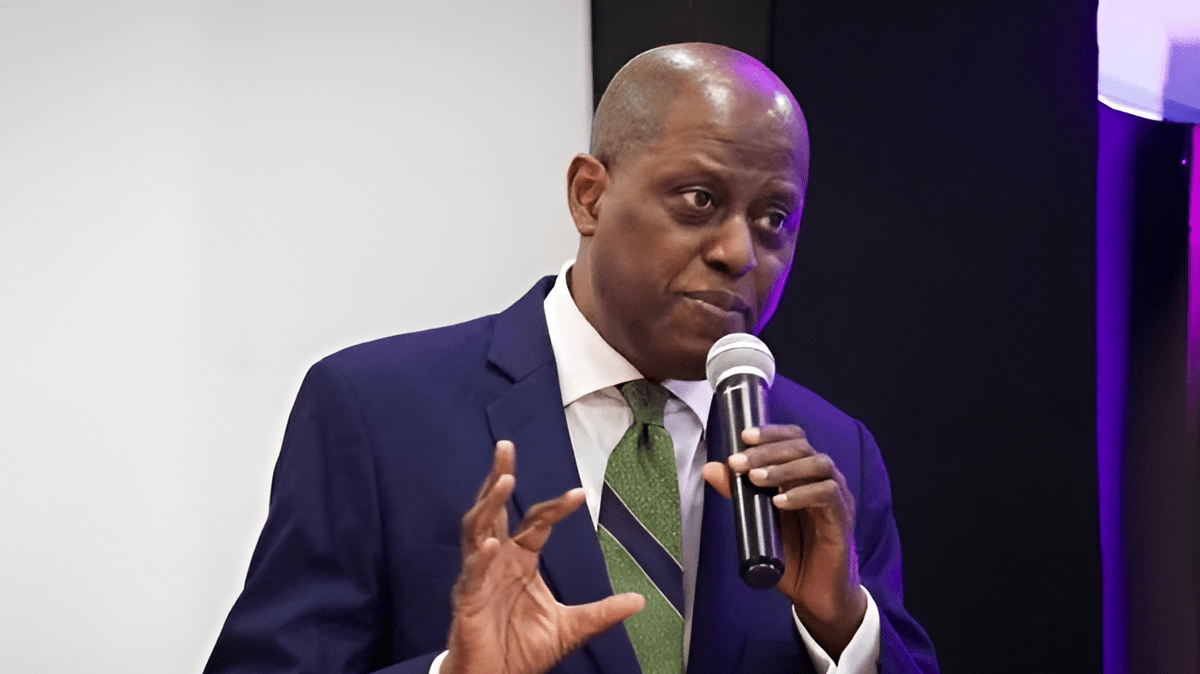
Governor of the Central Bank of Nigeria (CBN), Olayemi Cardoso, has warned that high liquidity levels in the financial system continue to pose a significant threat to Nigeria’s macroeconomic stability, cautioning that the country has not fully emerged from economic risk despite recent reform-driven progress.
Cardoso gave the warning on Monday while speaking at the National Economic Council (NEC) meeting held in Abuja.
He said the volume of money still circulating within the system must be carefully controlled to prevent a resurgence of inflationary pressures.
“There is still a lot of liquidity within the system, and we’re going to manage this very carefully. We are not out of the woods yet,” Cardoso said.
The CBN governor noted that spending associated with the election cycle injected substantial liquidity into the economy, stressing the need for close monitoring to ensure it does not reverse the gains made through recent economic reforms aimed at stabilising prices and restoring investor confidence.
“The election cycle, a typical election cycle, a lot of money has been pumped into the system. This has to be watched to ensure that it does not destabilise and challenge the very bold reforms which have brought about stability to the economy,” he added.
Cardoso also pointed to global trade tensions as an additional external risk capable of intensifying domestic economic pressures.
He emphasised that monetary policy alone cannot guarantee sustained low inflation, particularly in an environment affected by food supply shocks, high energy and logistics costs, infrastructure gaps, and a large informal sector that weakens policy transmission.
“Monetary policy is a necessary but insufficient tool,” he said.
According to him, long-term price stability will depend on stronger fiscal discipline, improved government revenue generation, more efficient public spending, and closer coordination between fiscal and monetary authorities.
Cardoso further highlighted the critical role of state governments in managing liquidity and inflation, noting that subnational governments control roughly half of the federation’s revenue and therefore have a major influence on national macroeconomic outcomes.
On the foreign exchange front, the CBN governor said the apex bank remains committed to protecting the value of the naira while strengthening Nigeria’s external reserves.
He stressed that maintaining price stability and a resilient external sector are central to Nigeria’s long-term growth strategy.
Cardoso disclosed that Nigeria’s net foreign reserves have risen significantly to 49 billion dollars, compared with about 3 billion dollars recorded in May 2023.
He explained that the CBN’s shift toward inflation targeting, alongside prudent reserve management and ongoing banking sector recapitalisation, will help reinforce macroeconomic stability and support the government’s ambition of building a one trillion dollar economy.
“We will do whatever it is to ensure that we safeguard the value of the naira,” he said.
The CBN governor added that the bank will maintain a disciplined interest rate path while continuing efforts to deepen domestic financial markets, strengthen financial system stability, and promote financial inclusion as part of its broader growth strategy.
Looking ahead to 2030, Cardoso said the central bank is targeting single-digit inflation and stronger foreign exchange reserves driven by non-oil exports, foreign direct investment, and diaspora remittances.
He described remittances as an increasingly vital source of external inflows and revealed that the CBN has been engaging Nigerians in the diaspora to make it easier and more efficient to send money home.
“Remittances have made a big difference, and they come from every state represented here,” he said.
Cardoso also called on state governments to align with national economic stability goals by prioritising infrastructure investment, strengthening human capital development, managing debt responsibly, and working with the financial system to expand access to credit and stimulate broader economic activity.
About the Author