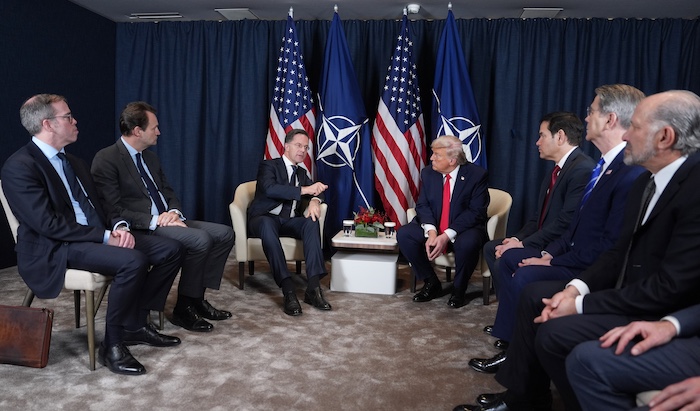
European Union leaders are set to reassess their relationship with the United States at an emergency summit on Thursday, despite President Donald Trump backing away from threats over Greenland that had badly shaken confidence in transatlantic ties, diplomats said.
Trump on Wednesday abruptly stepped back from plans to impose tariffs on eight European countries, ruled out using military force to take Greenland, a semi autonomous territory of NATO ally Denmark, and suggested a deal could be reached to resolve the dispute.
German Chancellor Friedrich Merz welcomed Trump’s U turn and urged European leaders not to abandon the transatlantic partnership too quickly.
However, EU governments remain cautious, fearing further reversals from a president they increasingly see as unpredictable and confrontational. Diplomats said leaders are now focused on developing a longer term strategy for managing relations with the United States under the current administration and potentially future ones.
“Trump crossed the Rubicon. He might do it again. There is no going back to what it was. And leaders will discuss it,” one EU diplomat said, adding that the bloc needed to reduce its heavy dependence on the United States in several key areas.
“We need to try to keep him close while working on becoming more independent from the U.S. It is a process, probably a long one,” the diplomat said.
After decades of relying on the United States for defence through NATO, the EU still lacks sufficient intelligence, transport, missile defence and production capabilities to defend itself against a possible Russian attack, giving Washington significant leverage.
The United States is also Europe’s largest trading partner, leaving the bloc exposed to Trump’s tariff policies aimed at reducing the US trade deficit in goods, and, as demonstrated in the Greenland episode, to advance broader political objectives.
“We need to discuss where the red lines are, how we deal with this bully across the Atlantic, where our strengths are,” a second EU diplomat said.
“Trump says no tariffs today, but does that mean also no tariffs tomorrow, or will he again quickly change his mind? We need to discuss what to do then,” the diplomat added.
Before Trump’s reversal, the EU had been considering retaliatory tariffs worth 93 billion euros on US imports or the use of anti coercive measures, while acknowledging such steps would damage both European and American economies.
Faridah Abdulkadiri
About the Author