The European Union has committed €22 million in grant funding to support Nigeria’s nationwide fibre-optic expansion under the Federal Government’s Project BRIDGE initiative.
The grant, announced in Abuja on Wednesday, will be channelled through the European Bank for Reconstruction and Development (EBRD) and on-granted to the Federal Ministry of Communications, Innovation and Digital Economy. It complements an €86 million loan from the EBRD’s own resources, pending final approval.
The financing marks the EBRD’s first major sovereign operation in Nigeria since the country became a shareholder of the bank last year.
Minister of Communications, Innovation and Digital Economy, Bosun Tijjani, described the agreement as a significant milestone in delivering the BRIDGE project on schedule. He noted that Nigeria’s digital transformation agenda depends on robust, resilient and inclusive broadband infrastructure.
He added that the partnership reflects growing international confidence in Nigeria’s digital roadmap and expressed optimism that 2026 would record measurable progress in Nigeria–EU cooperation.
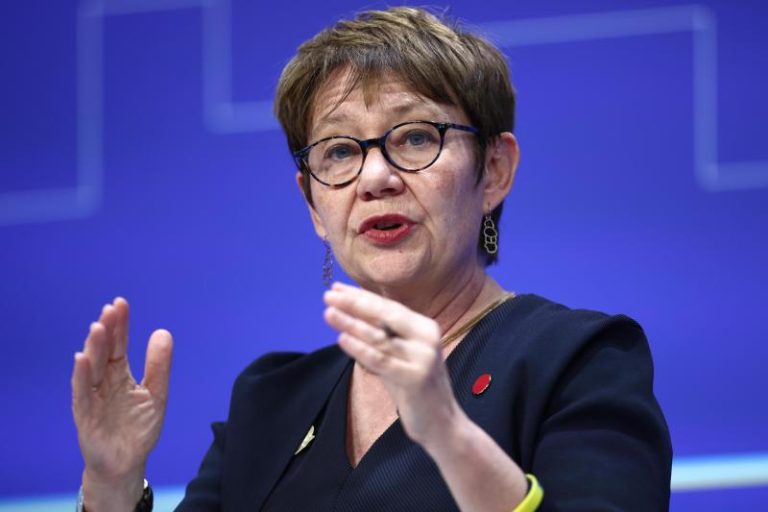
EBRD President, Odile Renaud-Basso, currently on an official visit to Nigeria, said the bank was pleased to collaborate with the EU to expand digital infrastructure in Africa’s largest economy. She explained that the financing includes technical cooperation designed to attract private capital while ensuring secure and inclusive connectivity.
EU Ambassador to Nigeria, Gautier Mignot, highlighted the strategic importance of high-integrity digital infrastructure built to international standards for both Nigeria and the EU.
Project BRIDGE aims to deploy 90,000 kilometres of fibre-optic cables nationwide through a Special Purpose Vehicle (SPV), to be capitalised with sovereign loans and private sector participation. In addition to the EBRD package, the Federal Government is expected to receive support from the World Bank and the African Development Bank.
The €22 million EU package includes technical assistance and investment support to accelerate project preparation and strengthen implementation capacity. It will fund low-level design work for approximately 40,000 kilometres of the planned network, including route mapping, crossing surveys, digital planning, quality assurance and security risk assessments aligned with global standards.
Officials said the preparatory work would provide the SPV with a ready-to-execute blueprint, enabling rapid rollout once financing arrangements are finalised and the vehicle is established with at least 51 per cent private sector ownership.
Beyond infrastructure, the programme is expected to strengthen Nigeria’s digital skills ecosystem. About 2,000 technicians will receive specialised training, while small subcontractors will benefit from pooled procurement systems and equipment subsidies aimed at reducing entry barriers.
Authorities estimate that the measures could cut deployment costs by 20 to 30 per cent, while promoting compliance with Nigerian and EU quality standards and encouraging participation of European technology suppliers in the fibre value chain.
The intervention forms part of the EU’s Global Gateway strategy, which supports investments in digital infrastructure, public services and human capital development in partner countries.
For Nigeria, the partnership represents renewed international backing for its ambition to build a resilient, open-access broadband network capable of driving economic growth, innovation and digital inclusion nationwide.
Michael Olugbode in Abuja
About the Author