Heirs Holdings chairman backs CBN’s monetary direction, urges faster settlement of power sector debts to unlock growth…..
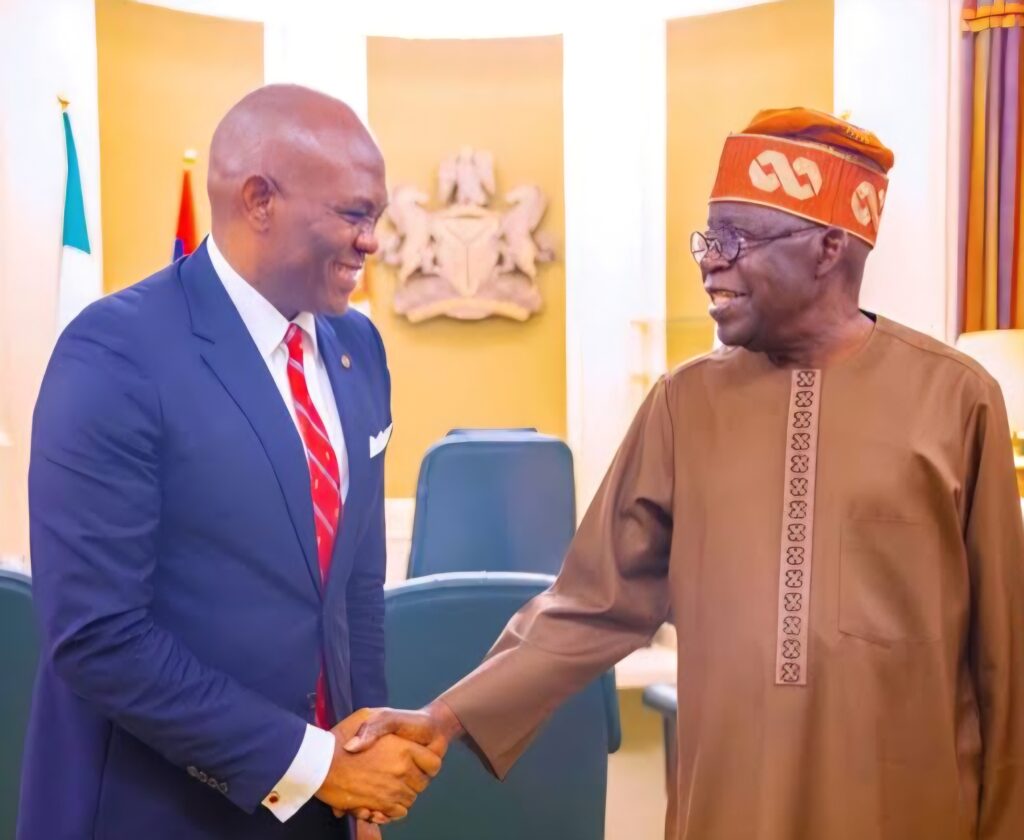
Chairman of Heirs Holdings and member of the Presidential Economic Council, Tony Elumelu, has thrown his weight behind the economic reforms of President Bola Tinubu, declaring that the era of foreign exchange scarcity in Nigeria is effectively over.
Elumelu spoke to State House correspondents on Friday after a closed-door meeting with the President at the Presidential Villa in Abuja, where discussions reportedly centered on monetary policy stability, electricity access, and support for small and medium-scale enterprises (SMEs).
According to the business leader, recent actions by the Central Bank have restored predictability to the foreign exchange market, a development he described as critical for investors and entrepreneurs.
“We also discussed the country’s monetary policy. What the Central Bank Governor and his team are doing is quite encouraging. We have seen a return to predictability and stability,” Elumelu said.
Speaking from both his banking and entrepreneurial perspectives, he stressed that clarity in economic direction is essential for planning and long-term investment decisions.
“I told someone recently that there was a time when, if I received ten calls regarding banking, seven would be about how to access foreign exchange. Today, if you get ten calls, not even one is about FX. That market is effectively sorted,” he stated.
He commended the President for what he described as creating the right environment for the Central Bank leadership to operate independently and implement reforms.
“The Central Bank Governor is doing well, and Mr. President should be commended for creating the space for the Governor and his team to do their work,” he added.
Power Sector Debt, Electricity Access in Focus
Beyond foreign exchange reforms, Elumelu revealed that electricity supply and the financial health of the power sector dominated a significant portion of the meeting.
He said the President is committed to improving electricity access nationwide, particularly by accelerating the payment of outstanding debts owed to power-generating companies.
“Improving access to electricity is critical for economic development. Mr. President realizes this and is committed to doing more, especially in helping to fast-track the payment of power sector debts so that power generators can do more for the country,” he said.
Elumelu, whose business interests span the power sector, noted that generating companies continue to supply electricity despite being owed substantial sums.
“All of us in the power sector are owed significantly, yet we continue to generate electricity. We want to see these payments made to ensure better provision of power. Access to electricity is essential for the development of our economy,” he stressed.
Industry stakeholders have long argued that liquidity constraints within the electricity value chain remain one of the biggest obstacles to stable power supply in Nigeria.
SMEs and Tax Reform
The meeting also touched on strengthening Nigeria’s SME ecosystem, which Elumelu described as the backbone of economic expansion.
“Today, we spoke extensively about Small and Medium-Scale Enterprises and how to further support them. Mr. President is very passionate about capacitizing entrepreneurs in Nigeria. I am very happy to hear that because they are the engine of economic growth,” he said.
He disclosed that the President highlighted tax reforms as a key instrument for empowering smaller businesses and improving their competitiveness.
Elumelu also noted that the President expressed strong confidence in the performance of the Bank of Industry, praising its leadership and encouraging the institution to expand its support for entrepreneurs.
The high-level meeting comes amid ongoing economic adjustments aimed at stabilising the macroeconomic environment, improving investor confidence, and addressing structural weaknesses in critical sectors such as power and manufacturing.
For Elumelu, the message is clear: with foreign exchange pressures easing and reforms underway, attention must now shift to deepening power sector reforms and empowering SMEs to drive the next phase of Nigeria’s economic growth.
About the Author