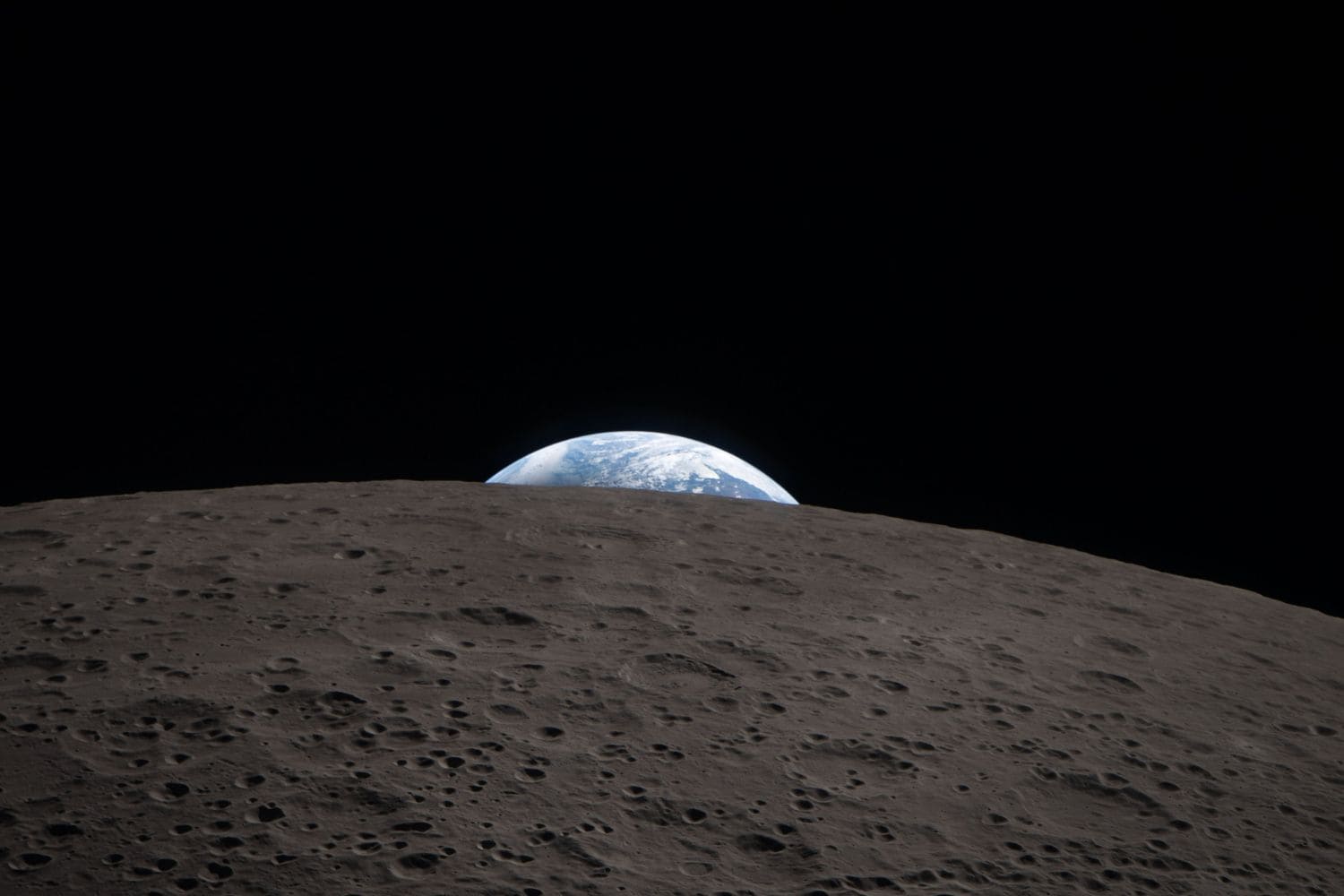
Artemis II astronaut Christina Koch has described their lunar flyby as a historic moment after splashing down off the coast of San Diego, completing a nearly 10-day journey that took them 252,756 miles from home at their farthest distance from Earth
The crew completed their first slingshot around the moon in over 50 years by any human.
Crew
The astronauts, Commander Reid Wiseman, pilot Victor Glover, mission specialist Koch and Canadian astronaut Jeremy Hansen, were all reunited with their families on Saturday.
Following their record-breaking mission around the Moon in April 2026, the Artemis II crew shared profound reflections on the “overview effect,” the cognitive shift experienced when seeing Earth as a tiny, borderless oasis suspended in the void.
Earths fragility
Koch said what struck them was the Earth’s fragility.
“It wasn’t necessarily just Earth. It was all the blackness around it. Earth was just this lifeboat. hanging, un-disturbingly, in the universe.”
Wiseman said the mission was “the most special thing I ever went through in my life”.
Glover described Earth as a rare “oasis” and a “fragile planet” in the vast vacuum of space, noting that the view “absolutely reaffirms” the need to protect the shared home.
Hansen stated the view “reaffirms” that humans must find joy and collaborate to solve problems, rather than destroy, given our existence on a “fragile planet”.
Welcome home Reid, Victor, Christina, and Jeremy! 🫶
The Artemis II astronauts have splashed down at 8:07pm ET (0007 UTC April 11), bringing their historic 10-day mission around the Moon to an end. pic.twitter.com/1yjAgHEOYl
– NASA (@NASA) April 11, 2026
Apollo 13
During their mission, Wiseman, Glover, Koch, and Hansen flew 694,481 miles in total. Their lunar flyby took them farther than any humans have ever travelled before, surpassing the previous distance record set by Apollo 13 astronauts in 1970.
During their April 6 lunar flyby, the astronauts captured more than 7,000 images of the lunar surface and a solar eclipse, during which the Moon blocked the Sun from Orion’s vantage point.
The imagery includes striking views of earthset and earthrise, impact craters, ancient lava flows, our Milky Way galaxy, and surface fractures and colour variations across the lunar terrain.