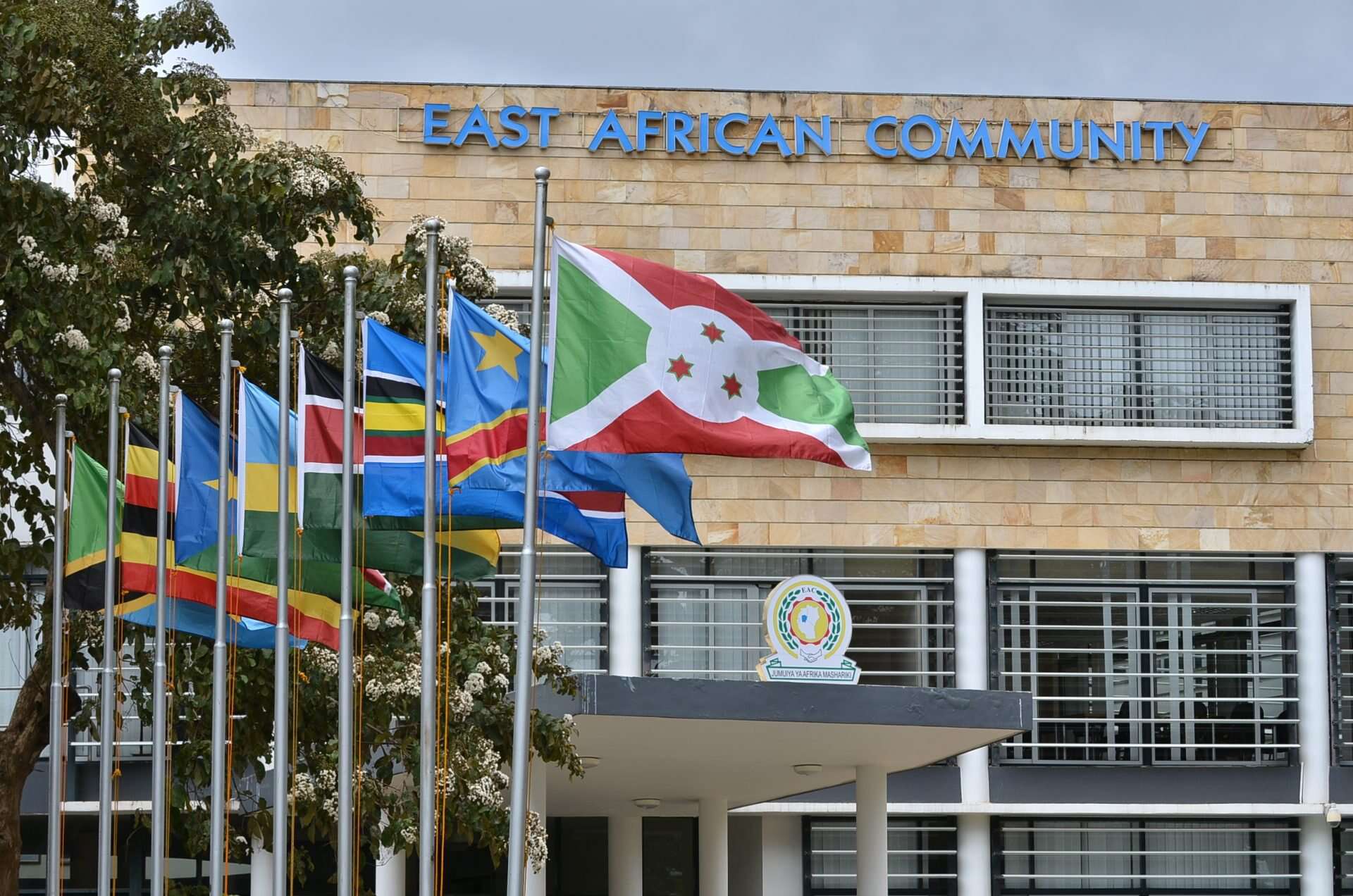
The EAC Headquarters in Arusha, Tanzania. The flags of the 7 member states are on display. Picture: Courtesy of eacj.org)
More than a decade after preparations began, the establishment of an East African Central Bank remains elusive as member states of the East African Community (EAC) are yet to agree on which country should host the East African Monetary Institute, the institution meant to pave the way for a regional central bank.
The East African Monetary Union, adopted under the EAC Treaty and signed on November 30, 2013, laid the foundation for a monetary union within ten years and provided a framework for partner states to gradually converge their national currencies into a single regional currency. However, progress has been slower than initially envisioned.
Bank of Uganda executive director for research, Adam Mugume, said the process has been delayed mainly by political disagreements among partner states over the location of the East African Monetary Institute, which is supposed to carry out preparatory work such as the design of the single currency.
“The EAC Council of Ministers was expected to meet and make a recommendation to the Heads of State Summit on where to host the institute and the regional central bank,” he said, noting that “hopefully a political solution will be reached soon. For now, the timeline for the EAC single currency remains 2031”.
Dr Mugume has been leading negotiations on the formation of the East African Monetary Union and the eventual establishment of the EA Central Bank.
The regional central bank is considered important for the bloc because enhanced regional cooperation would help monitor and manage cross-border financial risks, particularly among interconnected banks operating across several jurisdictions.
Such coordination could prevent financial shocks in one country from spreading across the region. It would also play a key role in stabilising exchange rates, supporting intra-regional trade, and reducing economic uncertainty.
As part of the roadmap toward a single currency, EAC partner states aim to harmonise monetary and fiscal policies, align financial, payment, and settlement systems, standardise accounting and reporting practices, improve statistical frameworks, and ultimately establish a regional central bank.
In May last year, the 28th Ordinary Meeting of the EAC Monetary Affairs Committee was held in Mombasa, Kenya, in which central bank governors and their representatives reviewed progress in implementing the revised roadmap toward achieving the East African Monetary Union by 2031.
The meeting noted significant progress in harmonising monetary and exchange rate policies and aligning principles and rules governing the regulation and supervision of the region’s financial system.
Governors also reported advances in harmonising information technology infrastructure, strengthening risk and crisis management frameworks, promoting climate risk awareness, expanding the use of the East African Payments System, and aligning governance, legal, and regulatory standards for payment systems.
The committee further observed that partner states have made notable progress in implementing the EAC Macroeconomic Convergence Criteria.
About the Author