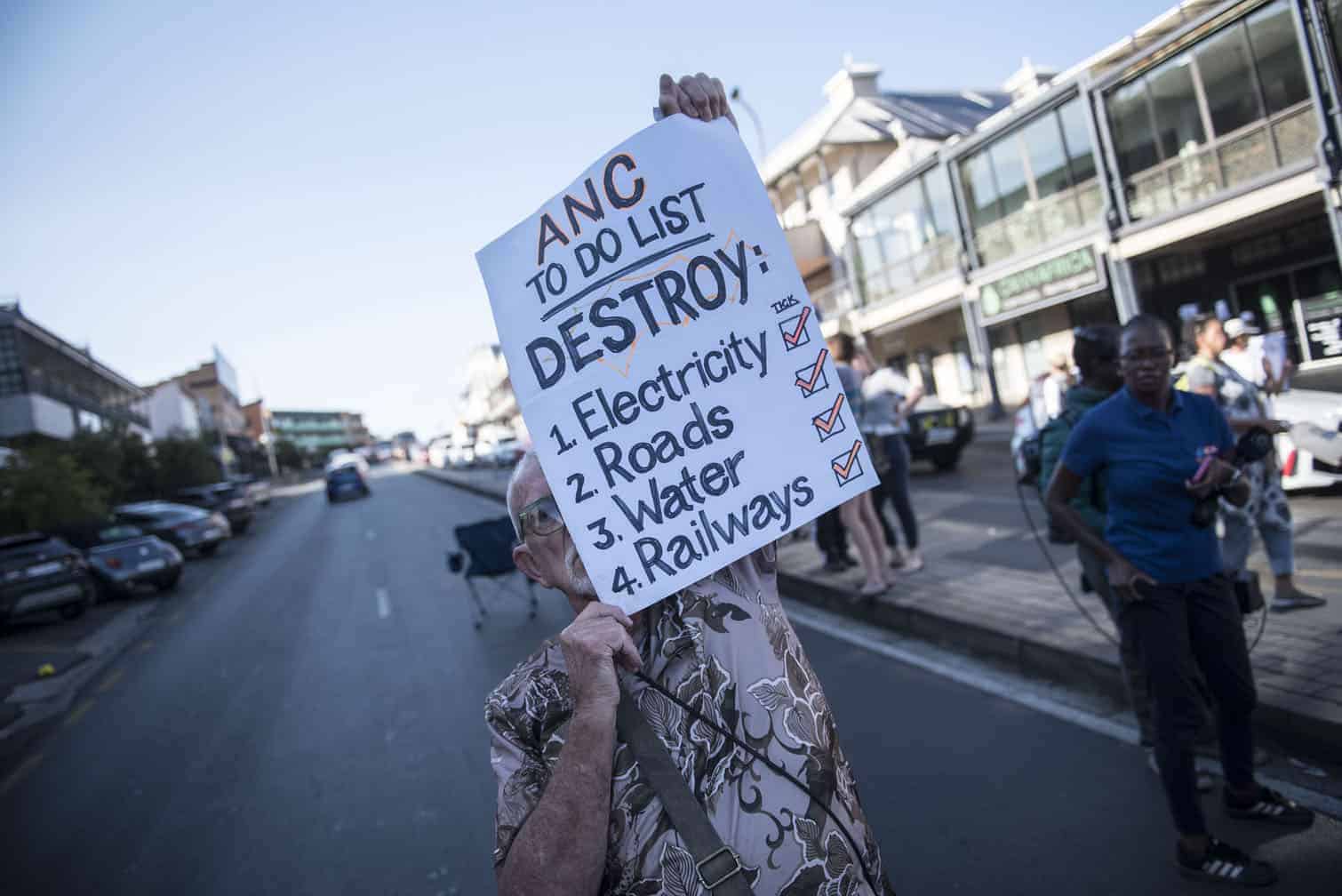
Residents of Melville, Westdene and surrounding areas protest against the lack of water supply in their suburb and many parts of Johannesburg, 11 February 2026, along Main Street in Melville. The city is facing an increasingly dire water situation as taps have run dry. Picture: Michel Bega/The Citizen
Has the water crisis finally shocked President Cyril Ramaphosa into action, and will his plan to overhaul local government help save our towns and cities, or will it see more concentration of power in the hands of the ANC – the organisation responsible for the mess in the first place?
That is what political analysts and civil society groups are debating following Ramaphosa’s announcement in his State of the Nation Address (Sona) that the national government will invoke its constitutional powers to intervene in troubled municipalities.
Such a centralisation of power could stifle efforts by some who want power devolved to the lowest level and by those who advocate self-determination for certain groups, such as Afrikaners.
Ramaphosa’s plan ‘may fail’
But AfriForum CEO Kallie Kriel said it’s not just Afrikaners who should be worried about such a development. He said centralisation affected all South Africans, not just Afrikaners, adding central government control had been proven to have failed dismally, and this was demonstrated by the crisis at state-owned enterprises such as Eskom and others, and many other areas of the public service.
“So, more centralisation to save municipalities is not the solution. It could have the opposite effect – further deterioration. This will not only affect Afrikaners, but I think all the people in the country are suffering from bad service delivery because of state centralisation, and they will now suffer even more. That is why we will continue to oppose centralisation and to condemn it in the strongest possible terms,” Kriel said.
In his Sona, Ramaphosa conceded the failure of many municipalities but stopped short of acknowledging that failed municipalities were ANC-controlled. He painted a dismal picture of municipal failure in different aspects of service delivery, putting special emphasis on water outages.
ALSO READ: Can Ramaphosa deliver on his promise to modernise municipalities?
Such outages are a symptom of a local government not working. The president announced that a far-reaching overhaul was underway to address the root causes of dysfunction in many of the failing municipalities. A White Paper setting out the details would be published soon, he added.
In many places, he said, local governments are weak and governed by patronage, rather than technical capacity and merit. Some people say the government is considering collapsing the poorly performing municipalities under those that perform well, or simply controlling them centrally.
‘DA municipalities doing their jobs’
Independent political analyst Sandile Swana dismissed the idea that municipalities as a whole in SA were not functioning. He said only those under the ANC faced a crisis because in the Western Cape and elsewhere, DA municipalities were doing their jobs.
Swana said the problem was not with municipalities but with who and how they are governed. In dysfunctional councils, billing was malfunctioning, and payments to water boards and Eskom were not made, and most residents were not paying for services.
READ: President Cyril Ramaphosa’s State of the Nation Address in full
“This is because the people who are representing the ANC have no political content to give to the population; they offer bribes in the form of illegal free electricity and water.
“If the ANC were to be removed from these municipalities, they would function on the same level as the municipalities of the Western Cape,” Swana said.
Service delivery
Political economy analyst Daniel Silke said political fragmentation inside councils was undermining the delivery of services.
“The president can talk up the story about turning the corner, but he could have turned the corner 10 years ago, frankly.
“He inherited the rot but most of his happened under his administration. The political accountability at executive level in Cabinet has simply never been there.
“The previous president and this president have never called out their own ministers when it comes to their oversight capacity on local government.
“Talk it up or introduce the legislation but, frankly, the lack of success of this administration is largely to blame for the problems, that we have,” Silke said.
READ NEXT: Water crisis: ‘Focus on things that work well,’ Ramaphosa says
– ericn@citizen.co.za
About the Author