Nothing good ever comes out of seeking short-term gains by mortgaging your future with the lifeblood of your own people.
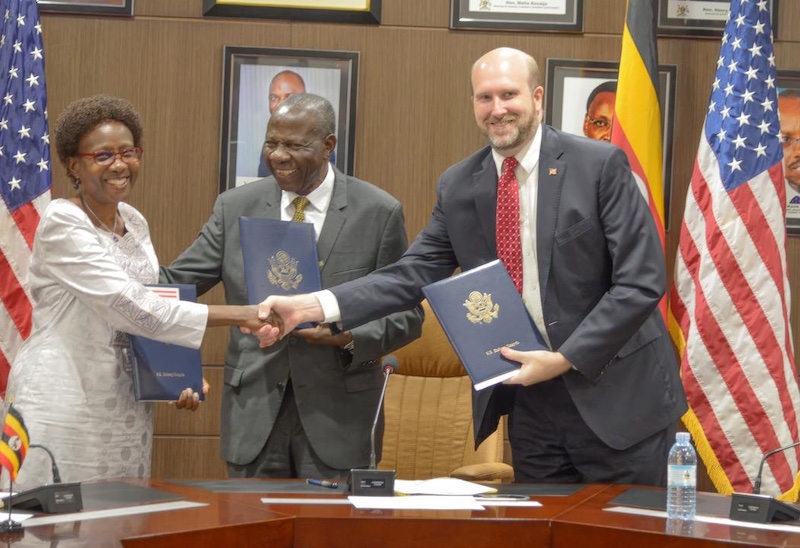
This is what happened when the government through the ministry of Health, signed a memorandum of understanding with the United States of America. In the agreement, the government, on behalf of its citizens, agreed to exchange data with the USA over five years.
In return, the United States agreed to invest $ 1.7 billion in the local health sector. Uganda, on its end, committed over $ 500 million to the program bringing the total amount of the deal to $ 2.3 billion.
For that fee, the government agreed to hand over sensitive health data without the consent of the people whose data is an extension of. The information being handed over comprises: biospecimens, pathogen samples, diagnostics, outbreak response findings, and is far more valuable than the money received for it.
To clarify, biospecimens include organ fragments like hair, nails, skin, plasma, DNA. Pathogen samples cover: clinical samples collected from patients, such as blood, urine, stool, saliva, swabs with microorganisms capable of causing disease.
Diagnostics contain test results identifying specific patient drug-related problems like infections and blood pressure. This data is exchanged with donors to monitor potential outbreaks and to manage the West’s foreign assistance programs, the America First Global Health strategy affirms.
In practice, donor-funded programs like PEPFAR, build data structures that sit alongside national health platforms where reports and analytics are duplicated into their systems.
This limits the national integration of health data and analytics, and the autonomy of the health sector from outsiders. The donor community — USA, UK, and EU, do this through their respective agencies— USAID, before it was dissolved, UK through the Foreign Commonwealth & Development Office [FCDO], and EU through partnerships with Africa CDC.
Donor governments collect the data and share it with pharmaceutical companies, which hold sway over governments, because they are major players in the global economy, and contribute to political campaigns widely. Over time, Big Pharma has proved to be a haven of employment for former politicians.
PHARMACEUTICAL POTENTIAL SOLD
In the United States, Big Pharma channels tens of millions annually into U.S. politics by dishing out donations and bankrolling Political Action Committees. According to a report, The economic impact of the global pharmaceutical industry, the aforementioned sector internationally contributed a total GDP of $2.2 trillion, employing 75 million people globally in 2022.
With such generous endowments handed down to them, governments feel indebted to share the harvested data with their respective pharmaceutical sponsors, who then use it to produce medicines.
By handing over raw large datasets and biospecimens to the West at a bargain, Uganda is essentially selling its potential to produce its own vaccines and medicines. Because raw data is fundamentally a raw material.
By selling it, Uganda is giving away value addition. This grandly gestures that for a long time, the country will be a customer for expensive pharmaceutical and biotechnology products like medicines, vaccines, enzymes, insulin, biofuels, which are inherent in health, agriculture and manufacturing.
Conversely, if the government kept, cleaned, and mined the data, it would develop capacity to produce its own medicines and technologies; while enacting laws to protect the information sitting in the national health repository.
The failure to host critical information systems independent of donors, has left native researchers locked out of data which is sitting in platforms controlled by external partners. Data they were instrumental in gathering.
This explains why countries like South Africa, which trashed deals like the America First Global Health strategy, have a robust pharmaceutical sector. According to companiesmarketcap.com, of the 751 largest public traded pharmaceutical companies across all major stock exchanges, only two: Clicks Group SA, and Aspan Pharmacare SA are from Africa.
Both are listed on the Johannesburg Stock Exchange. When donors buy raw health data, they are silently jeopardizing the health sector because then, government doesn’t see the need to invest in capacity building, technological development or legislation.
Rather, they reduce government to receivers of handouts, and vaccines with short shelf lives; as was the case during COVID: where more than a dozen million doses of expired vaccines in the country had to be destroyed.
RUSH TO STAY ON TRUMP’S GOOD SIDE
Additionally, by cheaply tossing sequences of pathogen and biospecimens to the highest bidder, the government is denying highly skilled local scientists familiar with diseases like HIV/AIDS, the chance to make ground-breaking contributions to research.
For instance, if notable local virologists were involved in the pre-production of Lenacapavir, they would have known that monotherapy isn’t effective in the treatment of HIV; because long- term usage leads to drug resistance.
For the injectable to be foolproof, it had to have a three- or four-drug composition to prevent the virus from becoming resistant to one drug. Local virologists know this after having dealt with HIV for long and monitoring its mutations.
Producing a monotherapy injectable to treat HIV, is more profitable to Gilead Sciences. This is because the pharmaceutical giant will certainly follow up their novel invention with a polytherapy drug after it develops resistance, to maximise profits.
The Observer reached out to high- ranking ministry of Health officials for comment on data sovereignty and the resistance risk factor of Lenacapavir, but got no response. In sum, a lot has to be considered by policymakers when making decisions involving superpowers like the U.S. under President Trump.
The Trump administration views objection to its tabled proposals as defiance, and responds with threats. For signing the egregious health agreement with the US to avoid being on Trump’s bad side, the government of Uganda can be shown grace.
But the reality is that the local health sector needs large sums of money to stay operational. And exchanging health data with donors for a fee is a feasible stream of income for government despite its oddity.
kidambamark3@gmail.com
About the Author