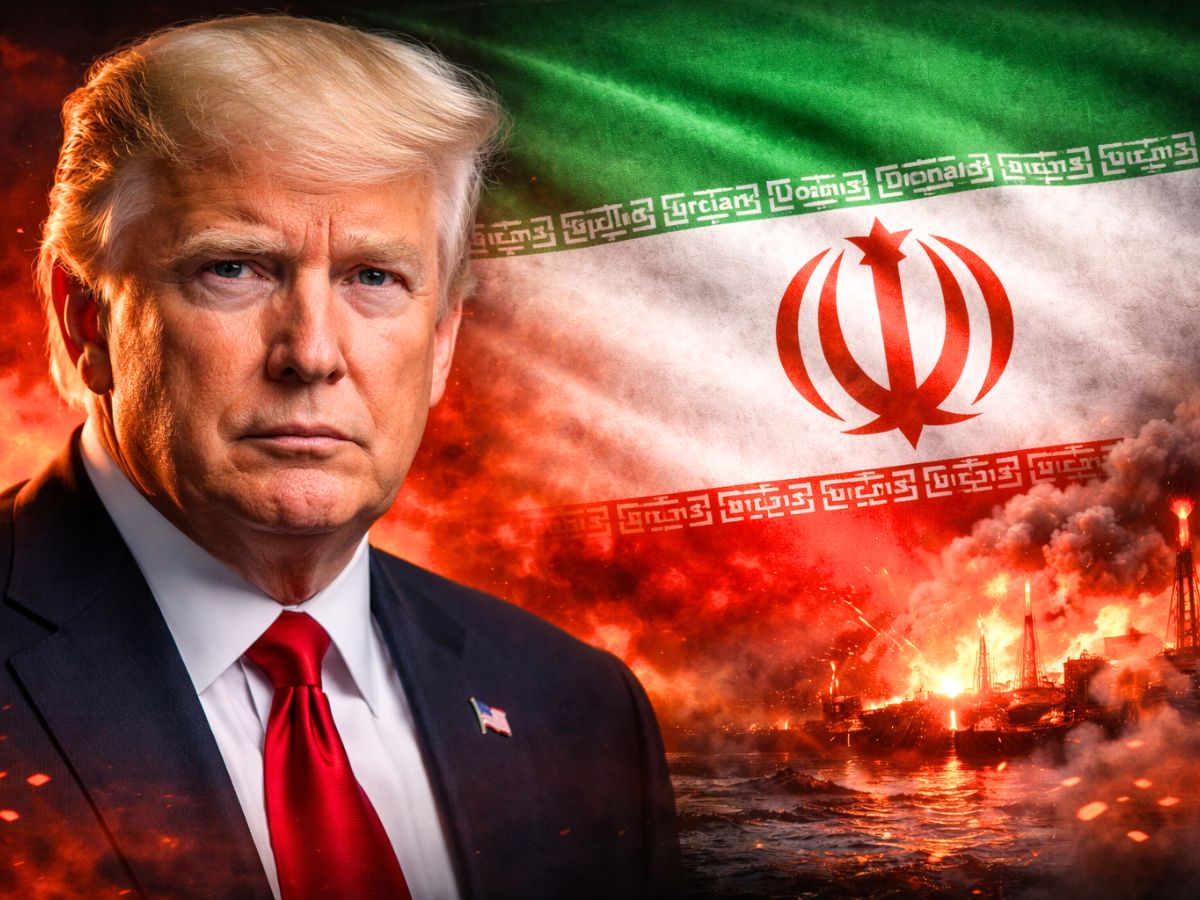
Donald Trump has issued a sharp warning to Iran, urging Tehran to engage seriously in efforts to end the escalating Middle East conflict, while cautioning that time for diplomacy may be running out.
In a strongly worded message posted on social media, Trump said Iran must move quickly toward meaningful engagement or risk facing consequences that could become irreversible.
“They better get serious soon, before it is too late, because once that happens, there is no turning back, and it won’t be pretty,” Trump declared, adding that Iran had been “militarily obliterated, with zero chance of a comeback.”
His warning came as Israel announced that its forces had killed a senior commander of the Islamic Revolutionary Guard Corps naval division, accusing him of being directly responsible for disrupting maritime movement through the Strait of Hormuz since the outbreak of hostilities.
The development adds fresh tension to a conflict that has entered its fourth week and drawn in multiple actors across the region.
Despite rising military pressure, diplomatic efforts appear to be quietly advancing behind the scenes.
Reports suggest that Washington has presented Tehran with a peace framework aimed at ending the confrontation, raising hopes for a negotiated breakthrough.
However, Iranian officials have publicly denied that formal talks are taking place.
Speaking on state television, Iran’s Foreign Minister Abbas Araghchi rejected suggestions of direct negotiations with Washington, though he acknowledged that messages are being exchanged through intermediary states.
“We seek an end to the war on our own terms,” Araghchi said.
Meanwhile, Pakistan has confirmed that it is playing an active mediating role in the crisis.
According to Pakistani officials, Islamabad is facilitating indirect communication between Washington and Tehran by transmitting messages between both sides.
Pakistan’s Foreign Minister Ishaq Dar revealed that a 15-point proposal submitted by the United States is currently under consideration by Iranian authorities.
He added that several regional powers—including Turkey and Egypt—are also supporting diplomatic efforts.
In addition, the Gulf Cooperation Council has expressed interest in participating in any broader negotiation process aimed at restoring regional stability.
Pakistan’s role has attracted attention because of its longstanding strategic ties with both Iran and the United States, as well as its influence across key regional diplomatic networks.
As military tensions persist, the possibility of indirect diplomacy now appears to be one of the few remaining channels for de-escalation.
About the Author