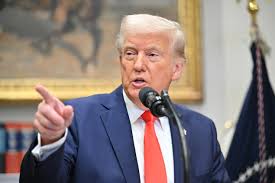
Donald Trump has indicated that the United States may begin scaling back its military campaign against Iran, saying Washington is considering “winding down” the conflict as fighting in the region enters its fourth week.
In a social media post on Saturday, Trump said U.S. forces were close to achieving key strategic objectives, but stressed that other nations should assume greater responsibility for securing the Strait of Hormuz, where ongoing disruptions continue to threaten global oil supplies.
The latest remarks came as Iran and Israel exchanged fresh attacks, while Iranian state media reported that the Natanz Nuclear Facility—one of Iran’s most critical uranium enrichment centres—had been struck.
Iranian officials said technical teams were deployed immediately after the reported attack and confirmed that no radioactive leakage had been detected, assuring nearby residents there was no immediate environmental danger.
Israeli authorities said they had no immediate confirmation of involvement, while the International Atomic Energy Agency said it was investigating the reported strike.
Russia condemned the attack, describing it as a violation of international law.
Although Trump suggested the conflict could begin to ease, U.S. military movements in the region continue, with additional Marines and amphibious landing units reportedly heading toward the Gulf, raising questions about Washington’s next strategic steps.
The conflict, which began in late February, has already caused heavy casualties, with reports indicating that more than 2,000 people have been killed in Iran since joint U.S.-Israeli operations began.
The war has also triggered serious economic consequences, with global oil prices surging by nearly 50 percent as attacks on energy infrastructure spread across Iran and neighbouring Gulf states. Brent crude remains above $110 per barrel, intensifying fears of a prolonged energy crisis.
Trump has increasingly criticised some NATO allies for refusing to become directly involved in efforts to secure shipping routes or support broader military operations in the Gulf.
Meanwhile, Iranian gas exports to Iraq reportedly resumed after disruptions caused by an earlier strike on the South Pars Gas Field, one of the world’s largest natural gas facilities.
In another sign of regional escalation, Israeli forces also launched strikes on Beirut, saying the target was positions linked to Hezbollah, the Iran-backed Lebanese group that has joined the conflict in support of Tehran.
Israel Katz said Israel intends to continue targeting Iranian-linked military capabilities until threats to Israeli and U.S. interests are neutralised.
The mixed signals from Washington—between possible de-escalation and continued military reinforcement—have left many allies uncertain about the long-term direction of the conflict, even as global concern over its economic and geopolitical consequences continues to grow.
About the Author