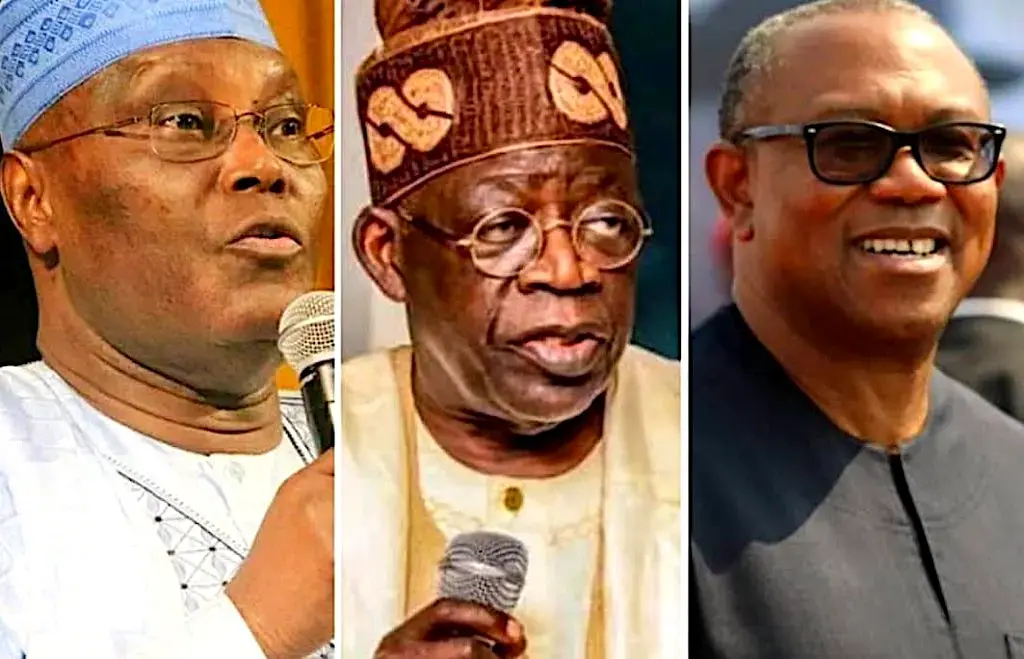
Nigeria’s political landscape is entering a new phase of uncertainty and recalculation as defections across party lines gather momentum ahead of the 2027 general elections, reshaping alliances and redefining power blocs across the country.
What once appeared to be a predictable movement toward the ruling All Progressives Congress (APC) has evolved into a broader and more complex pattern of political migration — one that now cuts across the ruling party, the opposition, and emerging alternative platforms.
From governors and former ministers to lawmakers in the National Assembly, political actors are no longer moving in one direction. Instead, the current wave of defections reflects a deeper struggle for relevance, survival, and strategic positioning in what is already becoming an intense contest for 2027.
Governors at the Centre of the Realignment
A major feature of the current political shift has been the movement of serving governors, particularly from the Peoples Democratic Party (PDP) toward the APC.
One of the most consequential developments came in Rivers State, where Governor Siminalayi Fubara formally aligned with the APC in December 2025, linking his decision directly to political survival and support for President Bola Tinubu.
“We have every reason… our only thank-you to Mr President is to support him… we are moving to APC,” Fubara declared during a stakeholders’ meeting, making clear that his new political direction was tied to alignment with the presidency.
In Delta State, Governor Sheriff Oborevwori also led a large-scale migration of PDP structures into the APC — a move widely regarded as one of the most significant political shifts in the South-South in recent years.
“What you have seen here today is a movement, not a defection,” Oborevwori said during the formal reception, explaining that the decision followed broad consultations and was driven by what he described as the long-term political interest of the state.
Other governors linked to similar political repositioning include Umo Eno of Akwa Ibom, Douye Diri of Bayelsa, Peter Mbah of Enugu, and Caleb Mutfwang of Plateau, reinforcing what analysts see as a widening strategic drift toward the ruling party.
Alternative Platforms Gain Attention
Yet the political movement is not solely benefiting the APC.
In a significant departure from the dominant trend, Osun State Governor Ademola Adeleke reportedly exited the PDP and aligned with the Accord Party, signalling that some political actors are actively exploring smaller platforms outside both the ruling party and the traditional opposition.
This emerging diversification suggests that politicians are increasingly looking beyond conventional alignments in search of structures they believe can better serve future ambitions.
Resistance Within the Defection Wave
Even in states where major political blocs are shifting, resistance remains visible.
In Zamfara State, political realignment followed a familiar pattern when Governor Dauda Lawal moved toward the APC. However, not everyone followed.
Former Commissioner for Education, Science and Technology, Wadatau Madawaki, resigned his position rather than join the new political direction.
“I only resigned because the governor is joining the APC. I’m a PDP member; I’ve never been APC, and I’m not ready to become an APC member,” he said.
His decision reflects a growing minority of politicians choosing ideological consistency over strategic migration.
Opposition Repositioning and Obi’s New Alignment
In the South-East, opposition politics is also being reshaped.
Former Labour Party presidential candidate Peter Obi has formally aligned with the African Democratic Congress (ADC), a move widely interpreted as an effort to consolidate opposition forces outside the established major parties.
Speaking during his registration in Anambra State, Obi argued that the next electoral contest would be defined less by party labels and more by national sentiment.
“The next election will not be about political parties; it will be Nigerians against bad leadership,” he said.
A similar political recalibration came from former Imo State Deputy Governor Eze Madumere, who resigned from the APC after years within the party.
“The decision, though difficult, has become necessary after deep reflection on my political journey. I sincerely feel it is time to explore new paths,” he wrote in his resignation letter.
National Assembly Defections Strengthen ADC
Inside the National Assembly, defections are proving equally consequential.
A number of senators and members of the House of Representatives have moved toward the ADC, citing unresolved internal crises within the PDP.
Among those identified are Aminu Tambuwal (Sokoto South), Mohammed Ogoshi Onawo (Nasarawa South), and Lawal Adamu Usman (Kaduna Central).
When one of the defection letters was read on the Senate floor, the reasons were explicit: persistent internal disputes, leadership disagreements, litigation, and weakening party cohesion.
“The ongoing conflicts have unfortunately weakened the unity and direction that once defined the party,” the letter stated.
These movements have further elevated the ADC’s profile as a potentially stronger opposition platform ahead of 2027.
Atiku: Opposition Remains Essential
Former Vice President Atiku Abubakar described the defections by opposition lawmakers as a necessary contribution to democratic balance.
“At a time when many are being pressured toward the ruling party, their decision to remain with the opposition is a powerful statement of courage, conviction, and commitment to national interest,” he said.
“Democracy without credible opposition is democracy in name only,” Atiku added.
A New Political Equation
Political analysts say the current wave of defections is being driven by several factors: internal crises within major parties, personal political calculations, regional power negotiations, and the search for stronger electoral platforms.
What is now emerging is no longer a simple migration toward power, but a complex political chessboard where alliances are being rebuilt in multiple directions.
For voters, the significance goes beyond party labels.
The real question will be whether these shifting alliances produce stronger governance, clearer policy direction, and genuine democratic competition.
For now, one reality stands out: Nigeria’s political gale is still gathering strength — and the road to 2027 is only beginning.
About the Author