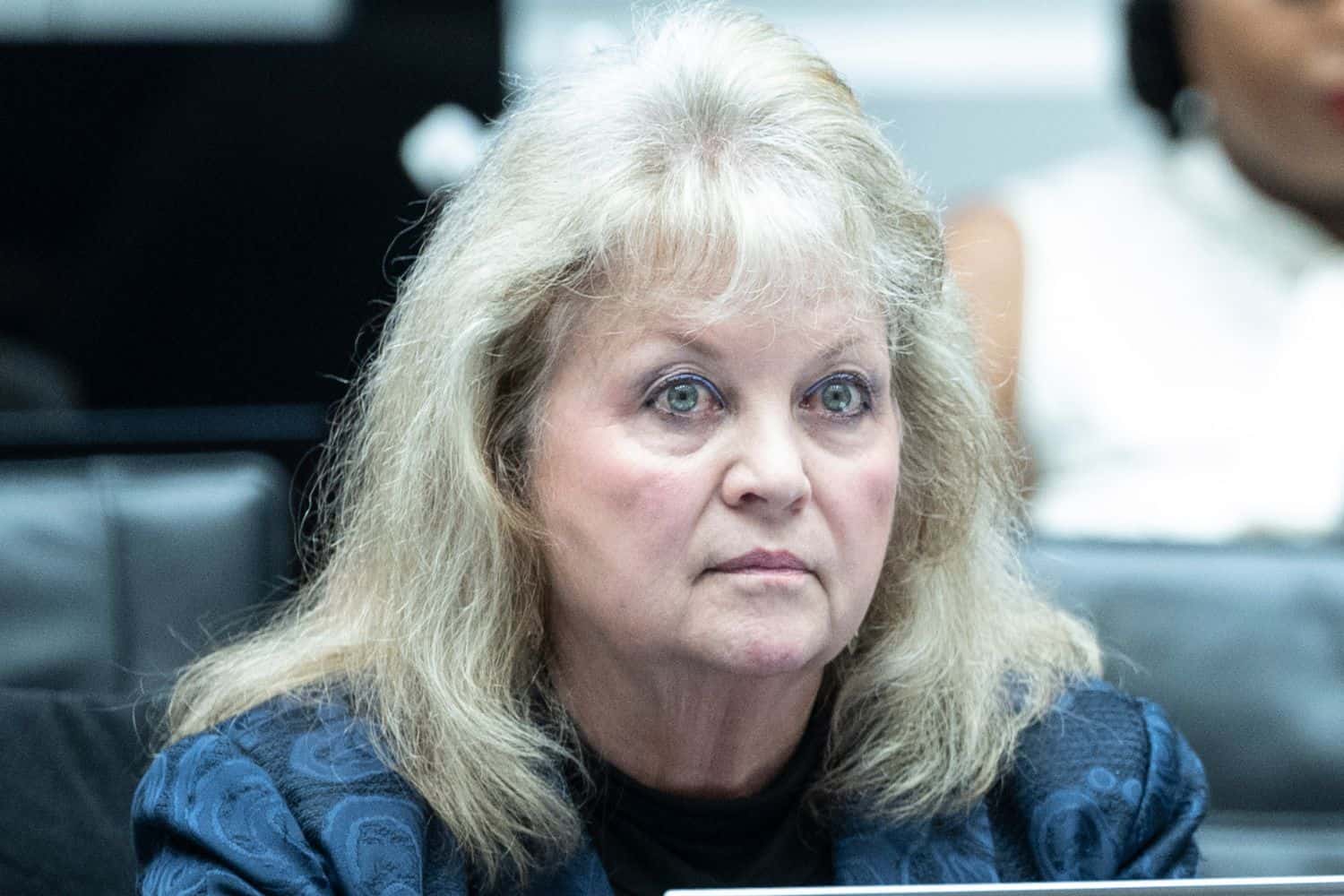
DA MP Dianne Kohler-Barnard has told parliament’s ad hoc committee that KwaZulu-Natal (KZN) police commissioner Nhlanhla Mkhwanazi’s accusations that she leaked classified information were driven by frustration.
Kohler-Barnard appeared before the committee at the Good Hope Chamber in Cape Town on Thursday to respond to allegations levelled against her by Mkhwanazi.
Last year, the KZN police commissioner claimed that Kohler-Barnard, an alternate member of the committee, had obtained and exposed classified intelligence.
ALSO READ: ‘What you did to us today is horribly wrong’: Witness slammed for ‘abusing’ ad hoc committee
The allegations relate to claims that Crime Intelligence used money from its secret service account – often referred to as a slush fund – to purchase two luxury hotels.
Mkhwanazi argued that Kohler-Barnard, a long-serving MP and a member of the joint standing committee on intelligence (JSCI), should have known how to properly handle sensitive information.
Although Kohler-Barnard has previously denied the allegations, saying the matter was already in the public domain, the claims sparked a heated debate within the committee, with some members calling for her recusal.
Kohler-Barnard testifies before ad hoc committee
During proceedings, Kohler-Barnard maintained that exposing corruption was a core responsibility of her role as an MP, but insisted that the strict rules governing the JSCI made it impossible for her to leak classified material.
“The joint standing committee is a very strange committee in that you take nothing in, you take nothing out. You never walk or stroll out with some classified documents, it’s impossible. It cannot happen,” she said.
She confirmed that she holds a security clearance after being vetted by the State Security Agency (SSA), unlike some South African Police Service officials.
“It’s an issue when you have people dealing with classified information with no clearance,” the DA MP said.
READ MORE: Police whistle-blower rejects ‘information peddler’ label, calls for greater protection
Kohler-Barnard told the committee that the alleged looting of Crime Intelligence funds often occurs through inflated procurement deals, including the purchase of buildings.
She said those involved pocket the difference between the real value and the inflated tender amounts.
“The handling of it [slush fund] has been extremely difficult and anyone who has tried to get it under control is booted out. I have seen it happen over and over.”
Mkhwanazi ‘a very frustrated officer’
Turning to Mkhwanazi’s controversial media briefing on 6 July 2025, Kohler-Barnard described the police commissioner as deeply frustrated with the status quo.
“What I heard was a very frustrated officer who felt let down by the system. Much of what he said was not raised by him in the portfolio committee [of police] previously,” she said.
While she acknowledged that some of his allegations appeared credible, she cautioned that others required verification.
“I don’t know what the ramifications will be for him doing what he did; whether he will be seen as a whistleblower, but he made the allegations and now we are looking into them.”
READ MORE: Ex-Crime Intelligence cop links career downfall to R45m slush fund dispute
Kohler-Barnard insisted that the information she was accused of leaking had already been in the public domain.
“I believe he thought it was a leak from the joint standing committee on intelligence. However, the JSCI did not even exist at that stage; it was established only on the 1st of April.
“All of this happened way before that. I have no idea how the information about the hotel came to be in the newspapers.”
Watch the ad hoc committee inquiry below:
She explained that she was serving on the police committee at the time and issued a public statement calling for an investigation into the hotel purchase after reading a media report published in January 2025.
She said she subsequently referred the matter to the Inspector-General of Intelligence.
“Having written the Inspector-General of Intelligence, I was then even more shocked to hear of another building.
“I asked the Inspector-General to add that to the investigation I had requested.”
Demand for an apology
Kohler-Barnard reiterated her demand for an apology from Mkhwanazi, saying his accusations were based on a fundamental misunderstanding of her role at the time.
“I believe that his fury was centred around the fact that he believed I was a member of the joint standing committee on intelligence and once I corrected that erroneous belief, I felt that he owed me an apology because you can’t leak out of a committee that doesn’t exist.
“So I was not happy to be labelled basically a criminal when in fact I believed I was simply doing a job every MP has to do: an oversight role.”
When asked whether Mkhwanazi had contacted her or offered an apology, Kohler-Barnard confirmed that this has not happened.
“No, he has my phone number. He could have asked me beforehand, [but] he chose not to. We do have a history, but he had no intention, I think, of ever discussing it with me.”
About the Author