Agreements align with Nigeria’s Gas Master Plan 2026 and the federal government’s Decade of Gas initiative
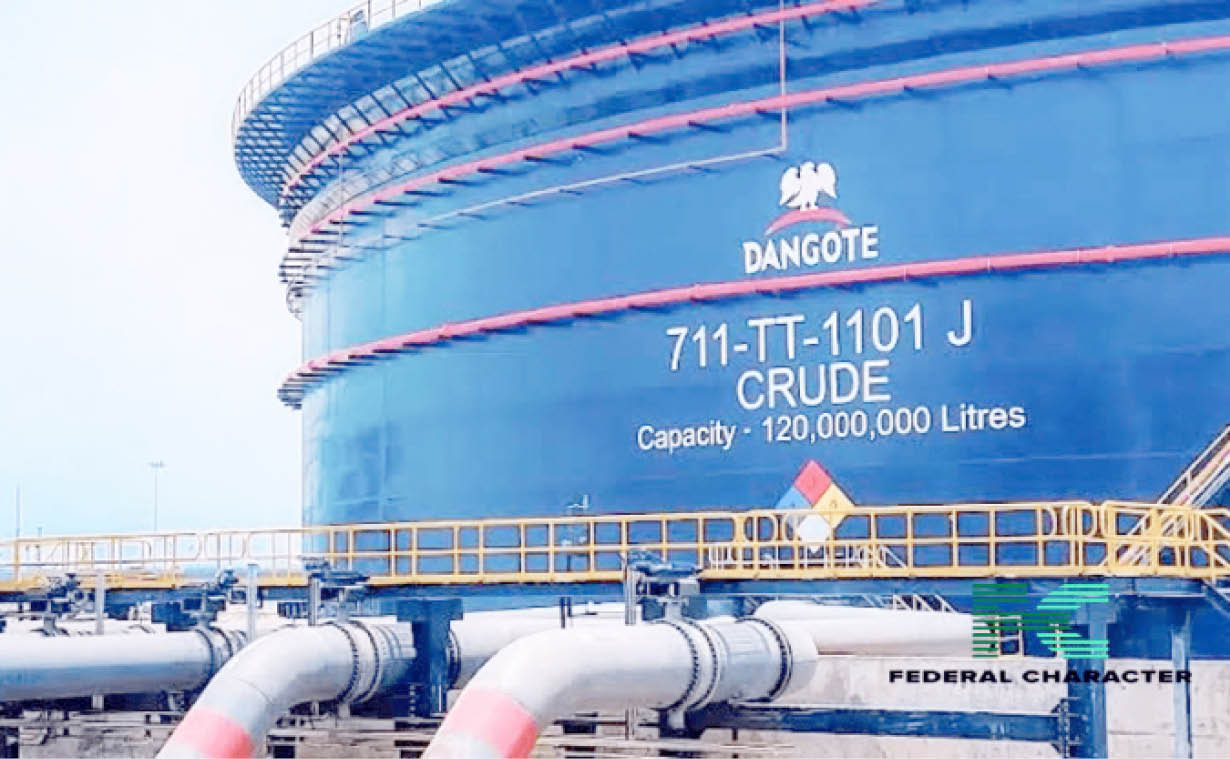
Dangote Industries Limited (DIL) has signed gas supply agreements with the Nigerian National Petroleum Company (NNPC) Limited for three of its subsidiaries as part of efforts to meet rising energy needs linked to its expansion projects.
The agreements were signed during the unveiling of the NNPC Gas Master Plan (GMP) 2026 at the NNPC Towers in Abuja. David Bird, managing director and chief executive officer of Dangote Petroleum Refinery, signed on behalf of the refinery; Arvid Pathak, group managing director of Dangote Cement Plc, represented the cement company; while Mustapha Matawalle signed for Dangote Fertiliser FZE.
Under the deals, Dangote Refinery, Dangote Fertiliser, and Dangote Cement scaled up their gas sales and purchase agreements (GSPA) with NNPC subsidiaries, including Nigerian Gas Marketing Limited and NNPC Gas Infrastructure Company Limited (NGIC).
The agreements are expected to advance Dangote Group’s ‘Vision 2030’ by boosting production capacity, improving access to cleaner energy, and sustaining ongoing expansion projects.
Bird said the agreements reflect the refinery’s strategic steps to expand capacity, describing them as a “critical milestone” in locking in long-term gas requirements for anticipated production growth. Pathak noted that the deals would enable Dangote Cement’s objectives by guaranteeing gas supply to support higher production capacity and the adoption of compressed natural gas (CNG) as autogas. For Dangote Fertiliser, the agreements secure natural gas supply, a key input for fertiliser production, to support capacity expansion.
Gas Master Plan Aligns with Federal Government’s Decade of Gas Initiative
Speaking at the event, Ekperikpe Ekpo, minister of state for petroleum resources (gas), described the master plan as a move from policy articulation to disciplined, commercially driven execution.
“Today’s launch is not merely the unveiling of a document; it represents a deliberate shift towards a more integrated, commercially driven, and execution-focused gas sector, aligned with Nigeria’s development aspirations,” Ekpo said. “With one of the largest proven gas reserves in Africa, our challenge has never been potential, but translating resources into reliable supply, infrastructure into value, and policy into measurable outcomes for our economy and our people. The Gas Master Plan speaks directly to this challenge.”
The minister added that GMP 2026 focuses on supply reliability, infrastructure expansion, market flexibility, and strategic partnerships, aligning with the federal government’s Decade of Gas initiative.
Bayo Ojulari, group chief executive officer of NNPC Ltd, described the plan as an execution-anchored roadmap aimed at unlocking Nigeria’s gas potential and positioning the country as a globally competitive gas hub. He noted that Nigeria holds about 210 trillion cubic feet (Tcf) of proven gas reserves, with upside potential of up to 600 Tcf, supported by the Petroleum Industry Act (PIA) and the government’s gas-led energy transition agenda.
Ojulari added that GMP 2026 is structured to surpass the Presidential mandate of increasing national gas production to 10 billion cubic feet per day by 2027 and 12 billion cubic feet per day by 2030, while catalysing over $60 billion in new investments across the oil and gas value chain by 2030. The plan prioritises cost optimisation, operational excellence, and strengthens gas supply to power generation, CNG, LPG, mini-LNG, and key industrial off-takers.
About the Author