New hike pushes diesel close to ₦2,000/litre, deepening cost pressures on businesses and households….
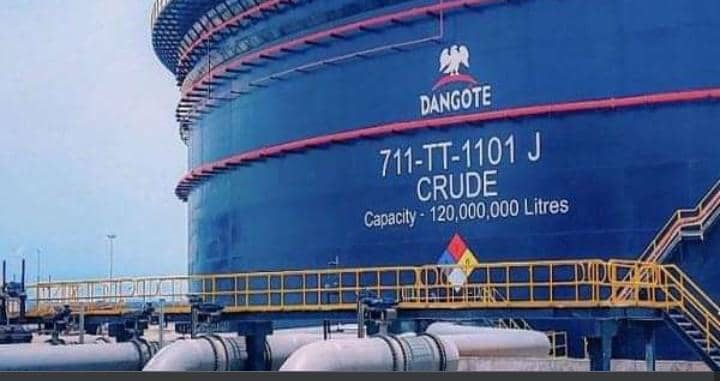
The Dangote Petroleum Refinery has increased the gantry prices of petrol and diesel once again, intensifying pressure on consumers and businesses already grappling with rising energy costs.
A senior official at the refinery confirmed the adjustment on Tuesday, attributing the move to escalating global crude oil prices and shifting market conditions.
Under the new pricing structure, petrol now sells at ₦1,275 per litre, an increase of ₦75 or just over 5% from the previous ₦1,200. Diesel recorded a steeper jump, rising by ₦200 to ₦1,950 per litre from ₦1,750.
The latest increase puts diesel on the verge of crossing the ₦2,000 mark at the pump, a development likely to ripple across transportation, manufacturing, and logistics sectors.
According to the refinery, the price adjustment reflects external pressures rather than domestic factors.
“These changes are aligned with global market realities,” the official said, pointing to ongoing geopolitical tensions in the Middle East that have pushed crude oil prices higher and tightened supply conditions.
Data from Petroleumprice.ng supports the development, showing a 5.02% increase in petrol prices at the gantry level.
The hike comes despite expectations that increased local refining capacity would help stabilise fuel prices in Nigeria. While the Dangote refinery has significantly reduced reliance on imported fuel, pricing remains closely tied to international crude benchmarks.
As a result, fluctuations in global oil markets continue to influence domestic fuel costs.
Industry observers warn that the latest increase at the gantry level is likely to translate into higher pump prices nationwide, as marketers adjust to reflect the new cost structure.
The broader concern is the knock-on effect across the economy. Higher diesel prices, in particular, are expected to drive up the cost of goods and services, given its critical role in powering transportation, industries, and generators.
Nigeria’s deregulated downstream sector means fuel prices are largely determined by market forces, including global oil prices, exchange rates, and logistics costs.
While the refinery was widely seen as a game-changer for energy security, analysts note that as long as crude oil pricing remains globally linked, domestic fuel prices will continue to rise and fall in response to international developments.
For consumers, the latest increase adds to mounting affordability concerns, with energy and transport costs already stretching household budgets and squeezing business margins.