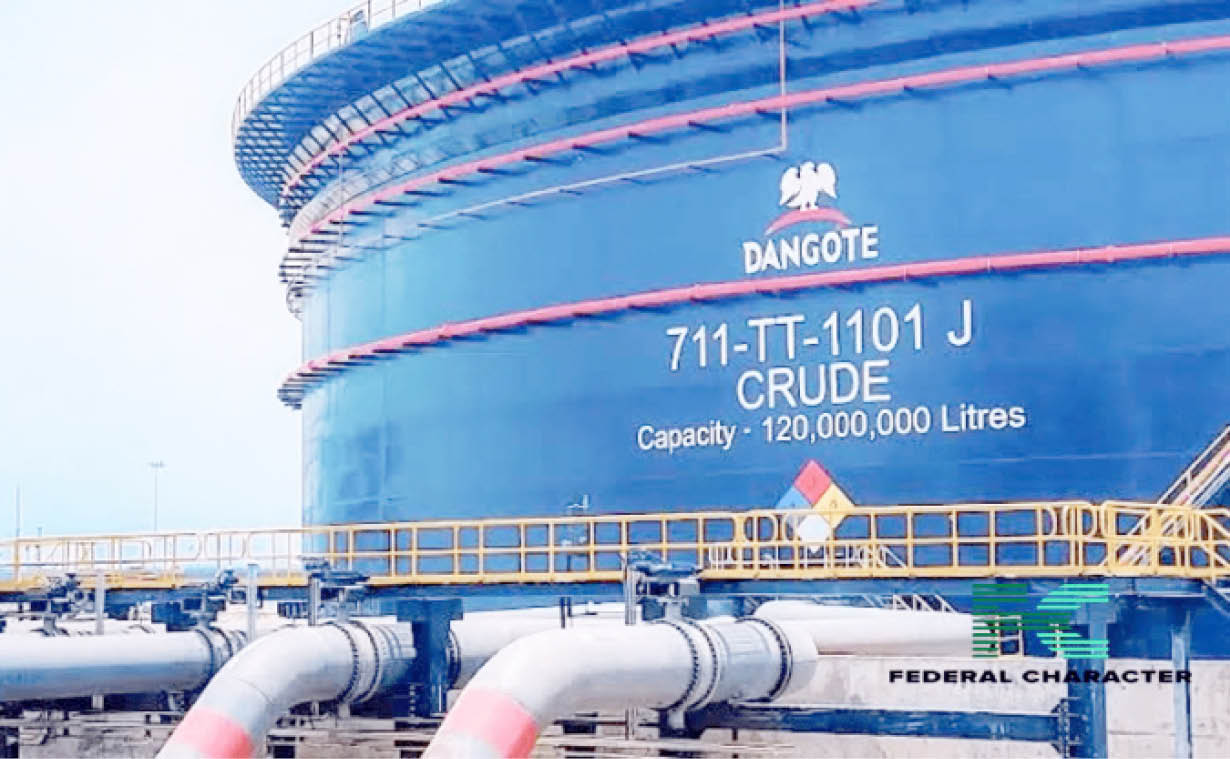
Refinery says it absorbed 20% of crude cost surge to shield Nigerians from sharper petrol price increase…..
Dangote Petroleum Refinery & Petrochemicals has assured Nigerians that petrol supply across the country will remain stable despite turbulence in the global oil market triggered by the escalating military conflict involving the United States, Israel, and Iran.
The reassurance follows recent increases in pump prices by fuel marketers after crude oil prices surged in response to the geopolitical crisis.
In a statement issued on Thursday, March 5, 2026, the refinery said it had deliberately absorbed part of the rising cost of crude oil in order to reduce the impact on consumers.
According to the company, although its ex-depot price of Premium Motor Spirit (PMS) was adjusted upward by N100 per litre, it absorbed about 20% of the cost increase caused by the surge in global crude prices.
The refinery explained that the adjustment was necessary to reflect changing market realities while ensuring that fuel production and supply to Nigerians remain uninterrupted.
Global supply pressures
Dangote Refinery noted that the ongoing conflict in the Middle East has disrupted global refining operations, forcing some refineries to shut down or reduce output.
This disruption, the company said, has intensified pressure on petroleum product supply worldwide.
It added that the situation has been compounded by China’s decision to halt exports of gasoline and diesel, further tightening global supply.
The refinery said:
“The Dangote Refinery will ensure that Nigeria is insulated from these supply shocks by prioritising supply to the domestic market. This is one of the many benefits of domestic refining.”
The company also noted that rising crude and shipping costs have pushed Brent crude prices up by about 26% in a short period, climbing to above $84 per barrel.
Rising crude costs affecting operations
Providing further insight into its pricing structure, the refinery explained that Nigerian crude oil is currently trading between $3 and $6 above the Brent benchmark.
When shipping costs of about $3.50 per barrel are added, the crude oil delivered to the refinery costs between $88 and $91 per barrel.
This represents a sharp increase from the $68 per barrel cost level when the refinery previously sold petrol at N774 per litre.
The refinery also disclosed that it receives only five crude cargoes monthly from the Nigerian National Petroleum Company (NNPC), far below the 13 cargoes required each month to sustain its domestic supply commitments.
Due to this shortfall, the refinery said it frequently has to source crude from international traders using foreign exchange at open market rates.
According to the company, selling petrol below cost would jeopardise its ability to secure crude oil, maintain production, and guarantee steady fuel supply in a deregulated market.
Logistics reforms underway
Despite the challenging global environment, the refinery said it is accelerating measures to improve nationwide fuel distribution and reduce logistics costs.
One of the key initiatives is the deployment of Compressed Natural Gas (CNG)-powered trucks for fuel transportation.
The company said the rollout of the CNG truck fleet is expected to begin this month and will help reduce distribution costs while improving delivery efficiency across Nigeria.
National fuel supply strategy
Dangote Refinery emphasised that expanding domestic refining capacity remains critical to shielding Nigeria from global supply disruptions.
Large-scale refining within the country, the company said, will also help moderate foreign exchange demand and reduce the risk of severe fuel shortages during periods of international market instability.
Growing distribution network
The refinery recently reached an offtake agreement with 12 major and independent fuel marketers across the country.
Under the arrangement, the marketers will distribute between 60 million and 65 million litres of petrol daily nationwide.
According to Aliko Dangote, chairman of the Dangote Group, the agreement is designed to guarantee nationwide availability of petrol while allowing the refinery to export excess supply to international markets.
About the Author