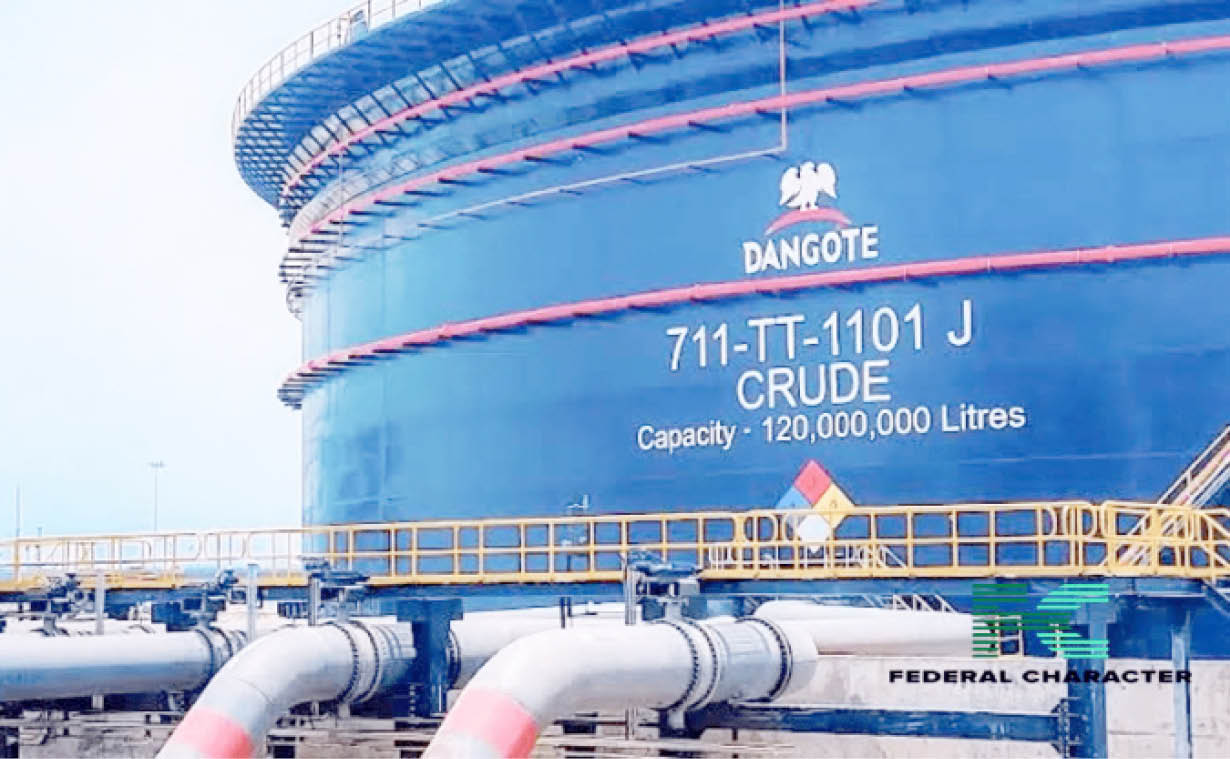
Bird clarifies refinery operations, says imports aimed at maximising utilisation and boosting cleaner fuel production……
David Bird, chief executive officer of Dangote Refinery, has said the facility is importing only intermediate feedstock and not finished petroleum products.
Intermediate feedstock typically refers to crude oil or partially processed materials that can be refined into fuels such as petrol, diesel and kerosene.
Recent reports had suggested that the refinery was importing refined petroleum products.
Speaking at a stakeholders’ meeting in Lagos on Wednesday, Bird dismissed the claims, stating that the refinery has no interest in importing finished fuels.
“I can guarantee you we are not importing finished products. I am a refinery. I have no interest in importing finished products, but I will be importing intermediate feedstocks and components,” he said.
Bird explained that the refinery processes a wide range of crude oil types, each with different characteristics, making the import of certain intermediate materials necessary to maintain efficient operations.
“Each crude is different. Each crude has different fractions. So therefore, if we’re processing different crudes, we need to be able to bring in intermediate feedstocks, so that always, we are loading up, maximising utilisation of our treatment units,” he said.
He listed some intermediate feedstock to include high sulphur diesel or heavy diesel, naphtha and light cycle oil.
Bird also disclosed that the refinery is preparing to import liquefied petroleum gas as part of plans to enhance operational efficiency and expand production.
According to him, the refinery is building supporting infrastructure, including a jetty, to enable LPG imports that will help fully utilise one of its processing units, boost polypropylene production and reduce dependence on varying crude types.
“Similarly, on the butane, we want to load up the alkylation unit and we’ll bring in that LPG,” Bird said.
He added that Nigeria should take pride in the public health benefits of a domestic refining industry capable of producing fuels that meet modern global standards.
According to Bird, petrol currently produced locally meets a sulphur specification of 50 parts per million, aligning Nigeria with cleaner fuel benchmarks.
About the Author