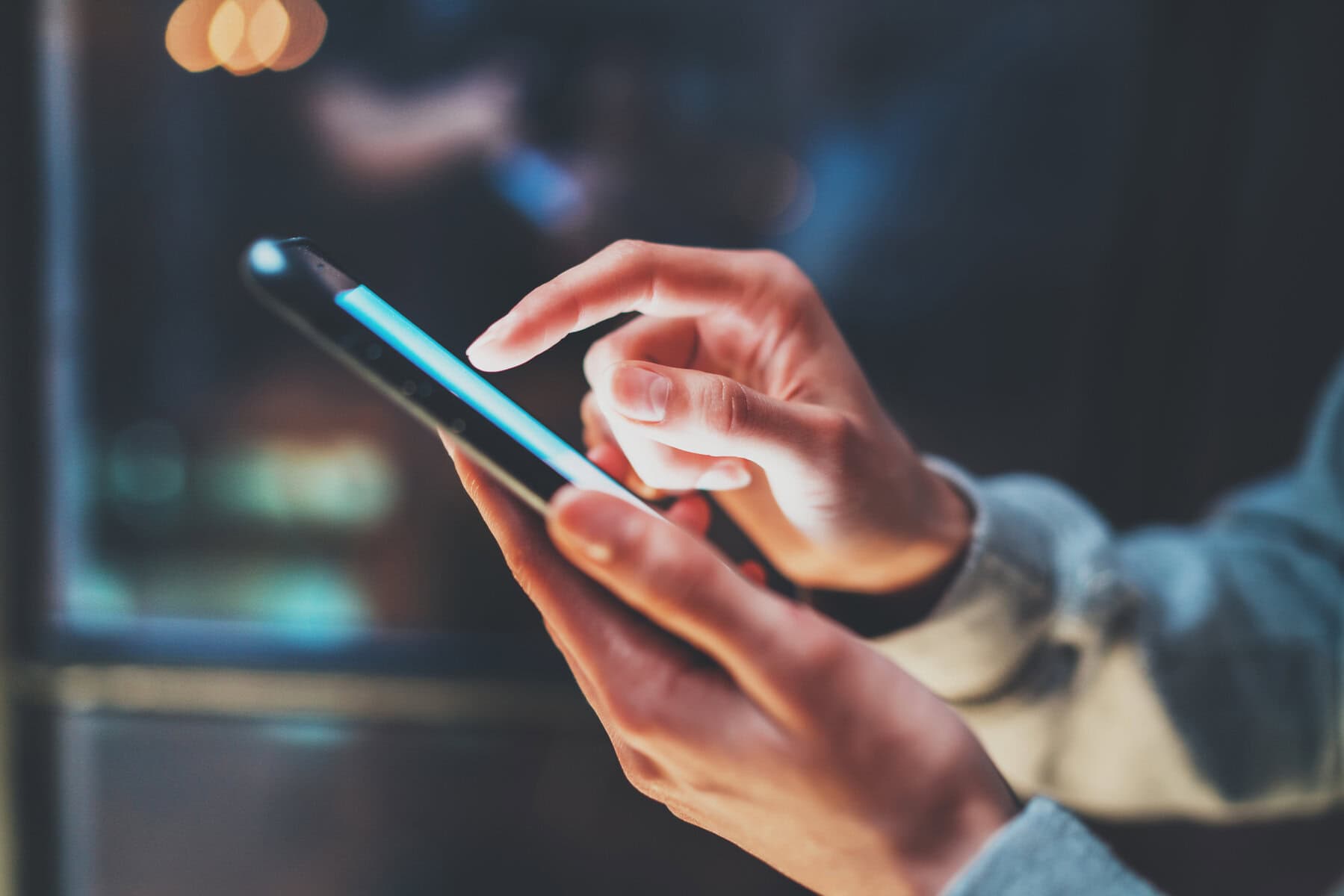
Closeup view of woman holding modern smartphone in hands.Girl typing on empty mobile screen. Horizontal, blurred background, bokeh effects
There’s a lot of hope every year in the president’s State of the Nation Address, glossing over the difficult bits with a whole bunch of promises that should come with the old E&OE (errors and omissions excepted) small print on ads, contracts and other legal documents.
One flicker of hope is the promise of a move towards a digital ID – and not just one that you could have on a smartphone, but a digital ID that could incorporate all the other details you need.
In the analogue era pre-1994, there was the so-called Book of Life, a compendium of hatches, matches and possibly dispatches: weddings, divorces, driver’s and even gun licences.
Given the much-storied woes with the sole licensing printing machine for our drivers’ licences (the backlog is apparently over half a million), it’s logical to put everything in one place.
Imagine what else could be easily accessible from a digital ID?
People used to joke about the Covid vaccinations being a plot to implant Microsoft chips in us, but if you’ve ever had to sit through a home affairs queue – which, in fairness, is on a continuing upward trajectory of improvement – you might have been tempted to get a QR code tattooed onto your forehead instead. A digital ID makes a lot of sense.
ALSO READ: Energy, education and home affairs: A few successes and promises from 2026 Sona debate
The government has even partnered with banks, because they are at the cutting edge of using biometric tests to determine the identities of their own clients, so it isn’t a huge risk to ask them to extend some of the home affairs services to those clients – especially since everything loops back to the identities contained in the national population register.
There are libertarians who will fight against this, saying it’s an unwarranted invasion of privacy – and they’ve probably got a point, much like the anti-vaxxers did during Covid.
But just like then, when those who didn’t want to be vaxxed had to stay at home to protect themselves and us, the same argument should apply now.
If you’ve got a difficulty with someone pulling you over, scanning your ID card and seeing immediately that you don’t (a) have a valid licence, (b) have outstanding traffic fines, (c) haven’t paid your taxes, (d) don’t have the right to live in South Africa or (e) all of the above – then don’t leave home.
But for the rest of us, give us a break and slash the analogue red tape.
NOW READ: Digital ID scanning at Table Mountain National Park to distinguish between tourists and locals
About the Author