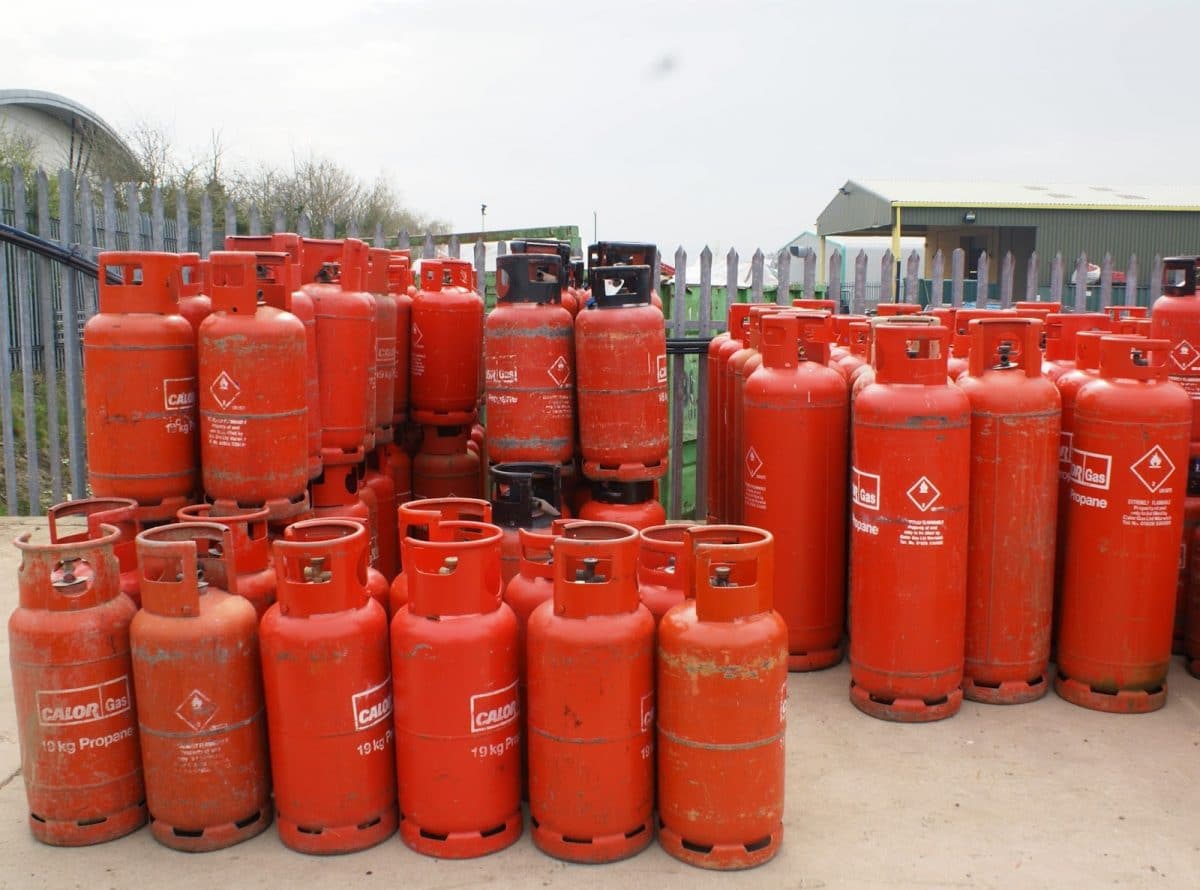
Marketers warn of worsening LPG shortage, rising hardship, and possible return to firewood as supply crisis deepens across Nigeria…..
Nigerians may soon face an even tougher battle to access cooking gas as marketers raise fresh concerns over the worsening scarcity of Liquefied Petroleum Gas (LPG) and the steady spike in prices across the country.
The cost of cooking gas, which sold for about ₦1,300 per kilogram in recent weeks, has now climbed to as high as ₦1,500/kg in several locations, adding more pressure to households already struggling with rising living costs.
In a statement released on Sunday, the Nigerian Association of Liquefied Petroleum Gas Marketers (NALPGAM) described the situation as alarming, warning that millions of Nigerians could soon be priced out of using clean cooking energy if urgent action is not taken.
According to the association, marketers are currently forced to pay between ₦25.2 million and ₦26.2 million for 20 metric tonnes of LPG depending on the depot location, a development they say is making retail prices unbearable for ordinary citizens.
NALPGAM said the continuous increase in depot prices, supply shortages, transportation challenges, and rising operational costs are making it increasingly difficult for marketers to maintain stable supply nationwide.
The association warned that the current situation is already taking a heavy toll on households, food vendors, small businesses, and low-income earners who depend on cooking gas for daily survival.
“It is sad and very unfortunate that Nigerians now wake up to buy cooking gas at over ₦1,500 per kilogram,” the marketers stated, stressing that the hardship could provoke public anger against gas retailers if the crisis continues unchecked.
The group also expressed fears that Nigeria’s clean energy campaign may suffer a major setback as more families are gradually returning to charcoal and firewood due to the rising cost of LPG.
For years, both government and private sector players have encouraged Nigerians to embrace cooking gas as a safer and cleaner alternative to kerosene and traditional fuels. However, marketers say those gains are now under serious threat.
NALPGAM further warned that the lingering crisis could worsen food inflation, force small LPG businesses to shut down, trigger job losses, and discourage investments within the sector.
The association called on the Federal Government, the Ministry of Petroleum Resources, the Nigerian Midstream and Downstream Petroleum Regulatory Authority (NMDPRA), the Nigerian National Petroleum Company (NNPC) Limited, importers, depot owners, and other stakeholders to urgently intervene before the situation deteriorates further.
Among its demands are increased domestic supply of LPG, transparent distribution across the country, reduction of importation bottlenecks, strategic price control measures, and investment in storage and distribution infrastructure.
The marketers maintained that ensuring affordable and accessible cooking gas is critical to protecting millions of Nigerian families from deeper economic hardship.
“We cannot stand by and watch millions of Nigerians suffer silently while access to clean cooking energy becomes more difficult and unaffordable,” the association said.
As prices continue to rise, many Nigerians now fear that cooking gas. once promoted as an affordable household necessity may soon become a luxury beyond the reach of average citizens.