Refinery insiders say allocations remain below capacity needs, even as talks with NNPC continue amid rising global oil pressures….
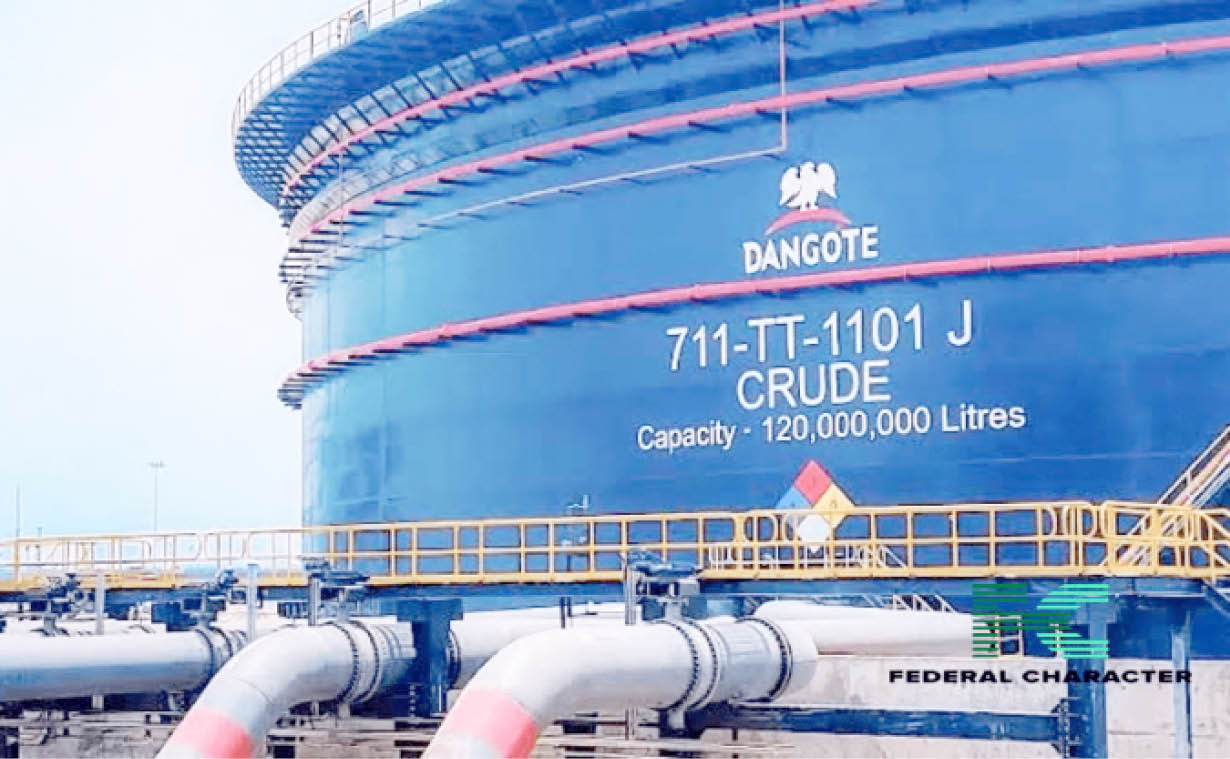
Fresh uncertainty has emerged over crude oil allocations to the Dangote Petroleum Refinery, as company officials say they are unaware of reports claiming an increase to seven cargoes for May.
Senior figures within the Dangote Group disclosed that discussions with the Nigerian National Petroleum Company Limited are still ongoing, but no official confirmation has been received regarding any upward adjustment in supply.
Earlier reports had suggested that the national oil company planned to boost deliveries to the refinery from five to seven cargoes next month in a move aimed at strengthening domestic fuel production. However, insiders at the refinery have pushed back on that narrative.
According to sources who spoke on condition of anonymity, the refinery is expecting approximately 6.15 million barrels of crude in May, equivalent to just over six cargoes not the widely reported seven.
“The report of seven cargoes is not clear to us yet,” one official said, noting that internal figures do not reflect such an increase.
Still Far Below Capacity
Despite the slight improvement, supply remains significantly below the refinery’s operational requirements.
The 650,000-barrel-per-day facility requires nearly 20 million barrels of crude monthly roughly 19 to 20 cargoes to run at optimal capacity. In reality, deliveries have consistently fallen short.
Recent supply figures highlight the gap:
- October: 4.55 million barrels
- November: 6.45 million barrels
- December: 4.30 million barrels
- January: 5.65 million barrels
- February: 4.66 million barrels
- March: ~6 million barrels
May’s projected 6.15 million barrels, while slightly higher, still underscores a persistent shortfall.
Supply Constraints and Rising Costs
The refinery has repeatedly raised concerns about inadequate access to locally produced crude, warning that it has been forced to rely heavily on imports.
In previous statements, the company said it receives about five cargoes monthly from the national oil firm far below its needs and that these supplies are priced at international market rates despite being paid in naira.
It also accused upstream producers of failing to meet supply obligations under the Petroleum Industry Act, further complicating sourcing efforts and increasing costs through reliance on foreign traders.
These pressures have contributed to multiple fuel price increases, with petrol prices climbing above ₦1,200 per litre in recent weeks.
NNPC Signals Support, But Challenges Persist
Officials at the Nigerian National Petroleum Company Limited maintain that efforts are underway to improve supply to the refinery.
According to insiders, the company is leveraging its global trading network to secure third-party crude at competitive rates, aiming to bridge the supply gap and support local refining.
They emphasised that ensuring energy security remains a priority, even as temporary constraints affect crude availability.
Global Pressures Add Urgency
The situation is further complicated by instability in global oil markets, particularly ongoing tensions in the Middle East and disruptions linked to the Strait of Hormuz. Rising crude prices have intensified concerns about domestic fuel costs and inflation.
Economist Bismarck Rewane has suggested that the Federal Government could consider selling crude to the refinery at a fixed price to stabilise fuel costs and shield consumers from further price shocks.
A Strategic Asset Under Strain
The Dangote Petroleum Refinery remains a critical component of Nigeria’s push for energy independence, with several countries already looking to it for refined products such as aviation fuel and diesel.
However, persistent supply gaps raise concerns about whether the facility can operate at full capacity and deliver on expectations without a more reliable flow of crude.