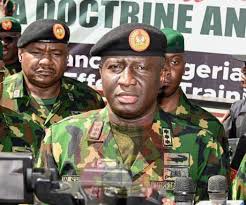
The Nigerian Army is pushing for better healthcare delivery for personnel as the Chief of Army Staff (COAS), Waidi Shaibu, advocates reforms in medical and administrative systems.
Shaibu made the call on Tuesday in Abuja while receiving the Managing Director and Chief Executive Officer of Defence Health Maintenance Limited (DHML), Azeeze Afolayan, during a courtesy visit to Army Headquarters.
The remarks were contained in a statement issued by the Acting Director of Army Public Relations, Appolonia Anele, also on Tuesday in Abuja.
The COAS said the increasing complexity of military operations across the country requires a more responsive and modern healthcare system capable of sustaining both the physical and mental readiness of troops.
He stressed that personnel welfare must extend beyond active service, noting that the Nigerian Army remains committed to the well-being of its veterans.
Shaibu said, “Retirement often comes with socio-economic challenges. The man must survive after years of dedicated service. Our responsibility to personnel does not end when they leave the colours”.
He also emphasised the importance of institutional memory, describing Afolayan as an “insider” whose continued contributions after retirement reflect the value of experience in strengthening military systems.
Earlier, Afolayan called for the adoption of standardised procedures within human resources and administrative structures in military medical services.
He said a well-defined and consistent operational framework is essential to eliminate inefficiencies and improve healthcare delivery across military institutions.
Afolayan further stressed that accurate personnel records and stronger administrative coordination are critical to ensuring prompt medical attention for serving personnel and their dependents, while also improving overall system efficiency.
He added that expanding and properly utilising secondary care facilities would strengthen specialist medical services and improve the distribution of healthcare professionals, particularly in operational environments.
According to him, leveraging such facilities would enhance cost-effectiveness, reduce pressure on primary military health centres, and ensure more reliable access to quality healthcare for personnel in the field.