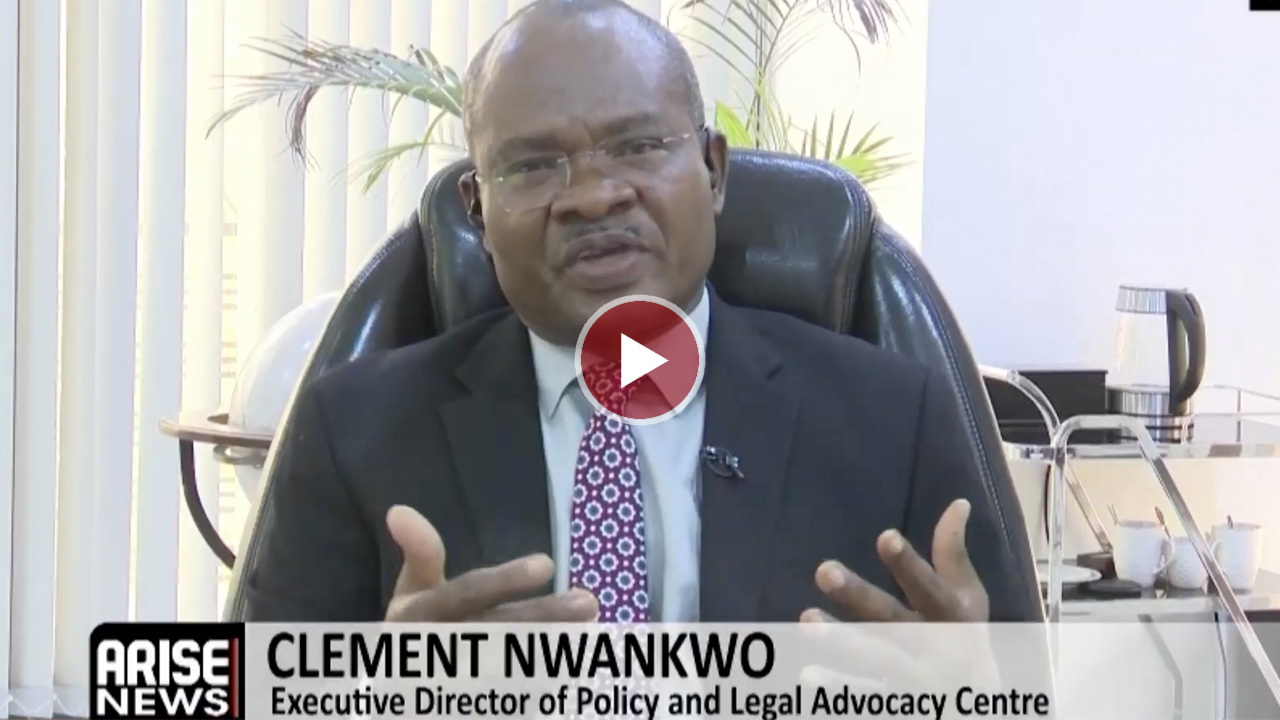
In an interview with ARISE NEWS on Tuesday, Nwankwo analysed the Act in detail, highlighting issues ranging from election timelines to candidate qualifications, pre-election petitions, internal party democracy, and INEC’s independence.
“The country is not running a parliamentary system, so it’s not supposed to be like you are calling a snap election. The election dates which are indicated indicate that the list of candidates will be submitted 120 days before the election date of January 16th. 120 days would mean that the list of candidates will be submitted no later than the 18th of September 2026.”
“So it is, for me, curious that INEC has given dates for primaries well well ahead of the date indicated in the Electoral Act for submission of the list of candidates.”
He also addressed concerns about the removal of certain candidate qualifications, “It talks about the issue of what has been removed in terms of qualifications. I think what is clear actually is that when you look at the various sections of the Constitution, for example, with respect to section 60 of this constitution, it indicates, and this repeats with respect to every level of election, whether it is the presidency or the governorship or national assembly or state house of assembly, it clearly indicates what are the constitutional requirements. And those constitutional requirements indicate qualifications in terms of educational qualification. It indicates it hasn’t been disqualified on grounds of dishonesty or fraud over a period of 10 years. It lists out all of those issues.”

Nwankwo explained that the new Electoral Act restricts challenges to candidate qualifications. Taking out from the 2022 Electoral Act, taking out some of these provisions regarding qualifications and disqualifications, the whole idea with respect to this is that you do have the pre-election issues, there’s that divide between pre-election matters or pre-election petitions arising from primaries and post-election, which goes to election tribunals. And in removing this from post-election petition issues, what the new Electoral Act has done is basically limit raising those issues to the time frame and the framework for pre-election petitions arising from primaries, such that it is not now provided explicitly that you can raise these as grounds for post-election petitions.”
“Now the Electoral Act did not clearly indicate how this is going to work with respect to when candidates who were not disqualified from primaries but go ahead and qualify and win elections. It’s not quite clear in the Electoral Act how this is going to be managed by the courts and even by the tribunals. So I think that’s where we need to think what the gap is and what the courts need to do respecting qualifications without grounds of forgery of certificates or indeed non-constitutional qualifications.”
He noted that the revised election timelines are likely to impact all political parties. “A situation where you have 31 governors or thereabouts who have defected to one particular political party alone means that even its own issues perhaps might magnify much more than the other opposition parties who may not have to deal with so many contending ambitions and interests.”
“So quite frankly, I don’t worry about whether it is positioned against one party or the other.”
“The one that I have made the most issue of, and I think it will affect all parties clearly, is the issue of either bringing forward dates for primaries.”
“I think all parties will be affected by it as we go ahead.”
On regarding direct and indirect primaries and consensus, he said, “ As indicated in the current Electoral Act, again, I think what you have really is just one mode of selection of candidates for the elections, which would be direct primaries.”
“It’s going to be very expensive to mobilise people. And I think a lot of times when the National Assembly passes laws, the legislators are not even thinking of themselves. It seems to me that in some cases they take dictatorship from the executive and inflict on themselves provisions that could actually be damaging, and that’s why you saw in the 2020 Electoral Act, the National Assembly passed an Electoral Act that excluded members of the National Assembly from being delegates, Now I think that in terms of the primaries, what the National Assembly has done is choose a mode of primaries that may in fact be detrimental to members of the National Assembly because when it comes to direct primaries, it’s going to be very expensive.”
“Members of the National Assembly may not necessarily have the same resources as governors to control direct primaries, which is what National Assembly members seem to think that they are avoiding. So in some ways, they are inflicting on themselves a pain that maybe they will have to prepare to deal with.”
On internal party democracy, Nwankwo emphasised, saying “No, we’re fine. There has to be legislation to guide the modalities for selecting candidates. As you know, a major issue in Nigeria is the issue of internal democracy within parties. Parties have been known to carry on without responsibility, without respect for their own laws. In legislating this, and this is not the first time it’s been legislated, in legislating this, there has to be some level of guidance for parties to know how best to keep a level playing field for everyone. So I would think that there is nothing really wrong with indicating how primaries should be conducted. What I think is most clear right now is the fact that stipulating direct primaries, we’ll go through the primaries, we’ll go through the elections, and we’ll take lessons from it. But I can forecast, quite frankly, that just having one vote of selection of candidates for elections, for the 2027 elections, is going to be something that will have its own consequences for the parties. Hopefully everyone gets a lesson from that and go forward. I really think that you have to have a situation where there is clear, quote, modalities for selecting candidates. Otherwise you would have arbitrariness, and that’s going to be part of the issues. And you saw that even in the 2022, with the 22 Electoral Act in the primaries, where some persons swung up and contested in primaries that they were not qualified to contest in. Some persons swung up even after primaries had been contested and gave clues to become candidates, all because of the arbitrariness of political parties. So you have to have a situation where that arbitrariness is reduced. And that’s why the Electoral Act stipulates this. And again, like I’ve said, with the direct primaries, I think the consequences will be clear for all to see.”
Reflecting on political calculations behind the Act, he said, “When the Electoral Act amendment began, and I was very much involved from the very beginning with support for it, we have thought that the Electoral Act amendment would have concluded since 2025. Indeed, the timetable had indicated that by June 2025, the Electoral Act amendment would have concluded. And if it had concluded then, so much of politics that now afflicted it would not have come in because the political calculations then would not have been the same as it is today. When you saw the National Assembly pass the Electoral Act at the beginning of this year, it was all political calculations, members thinking what is best for them, the executive thinking. And of course, put on their own influence on the legislature to get the kind of Electoral Act that they wanted. But I think that whatever it is, whatever it is, at the end of the day, attention now has to shift to INEC to make sure that INEC delivers on credible elections and make sure that INEC is insulated from political influence. And that’s the biggest fear that we all have. How much can INEC resist political influence on the executive? Because when you look at dates announced for preliminary activities leading up to elections, I feel that INEC has come under political influence already.”
Nwanwko encouraged continued work on implementing the Act effectively, “Thank you so much, sir. And thank you for the great work you’ve done so far in birthing this Electoral Act of 2026. And continue the conversation post and to see how we can implement it in a way that will benefit Nigerians.”
Erizia Rubyjeana
About the Author