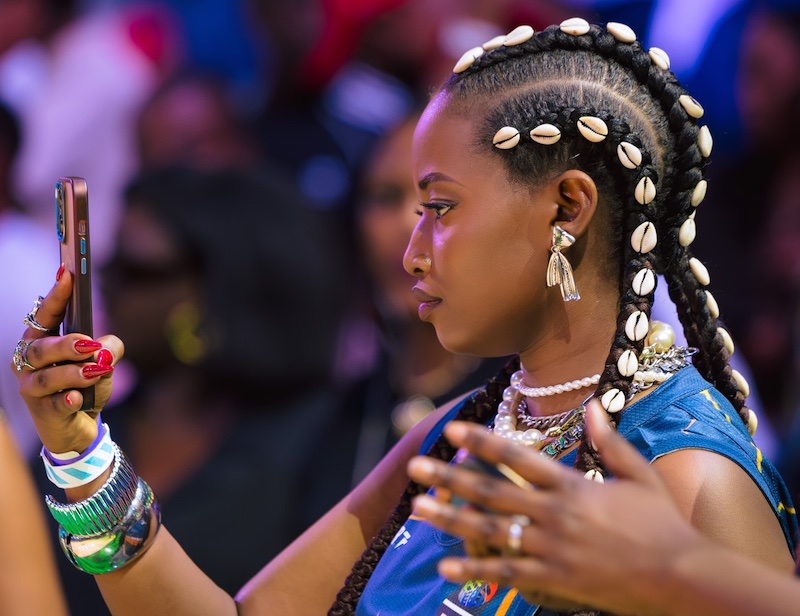
CLAUDIA NAISABWA, 23, is one of East Africa’s most influential young personalities; a media presenter, lifestyle influencer, actress, charity founder, continental host and entrepreneur who has turned her brand into “an economy of its own”.
Naisabwa is East Africa’s most booked media personality. Her Instagram and TikTok combined sit at 2.7 million followers, and climbing. Brands pay six figures for a single weekend with her. Yet she still answers her own DMs.
Quick Talk met her on a humid Thursday evening in Westlands, Nairobi, two days before she flew to Nigeria to launch her 2025 continental tour.
What was the exact moment you realised lifestyle could become a full digital economy for you?
I was 19, during the pandemic, still at university, posting makeup tutorials and “get ready with me” videos for fun. Zero shillings. I had been grinding free posts for a year, but my M-Pesa was drier than the Rift Valley.
Then one day a small Kenyan beauty brand slid into my DMs, offering KShs 15,000 for one Instagram post. I thought it was a scam. When the money hit my M-Pesa, I sat on my hostel bed and cried, then immediately called my mum screaming, “Mum, people will actually pay me to be myself!”
That KShs 15,000 became KShs 150,000 [about UGX 420,000]. I understood something that day: the same authenticity I was giving away for free could feed me, my family, and eventually hundreds of girls through bursaries.
The algorithm rewards realness, but the continent rewards vision. I decided to give it both. It taught me: monetization isn’t luck; it’s packaging your power so the world can’t ignore it.
You keep saying “We are our sisters’ keepers.” Where did that promise come from?
From watching my own mother struggle as a single parent in Samburu. From seeing brilliant girls in my village drop out because of periods or pregnancy. From being the only girl in media classes who looked like me and feeling the loneliness of that.
In 2022, I started the Claudia Naisabwa Initiative with KSh 400,000 [about Shs 11.2m] I’d saved from hosting gigs. Today, we have clothed, mentored, and kept in school over 2,000 girls and [this year] boys too.
Last month, we took reusable sanitary pads and mentorship to 120 young mothers in Samburu. One 17-year-old girl hugged me crying and said, “I thought the world forgot us.” That hug is worth more than every brand cheque.
Last June, I surprised a 16-year-old who had dropped out after her first period, no pads, no options, heading straight for early marriage. We showed up at hers with a full kit: reusable pads, school uniforms, and a one-on-one session where I shared my own “first hustle fails” to show her vulnerability isn’t weakness.
Three months later, she DMs my team a photo: top of her class, leading a girls’ debate club on “Why We Network Early.” Her guardian called me, crying: “You gave her back her fire.” Moments like that? They’re why I grind. We are our sisters’ keepers because no one else is coming to save us. We have to be the cavalry.
You just came back from Lagos. What was the moment on that continental tour that reminded you how big this has become?
Two moments in Lagos broke me open. First: walking onto the airport and hearing people scream my name before I even spoke. I’m from Samburu. My village doesn’t even have electricity in every house. That sound felt impossible.
Second: backstage, Nollywood and Nigerian A-listers including Yvonne Jegedde, Phyno, Qing Madi, etc pulled me aside, looked me in the eye and said, “East Africa finally sent their queen. Don’t let them dim you.” I cried in the dressing room.
You’ve been announced as the only East African selected for a major global festival in 2026. What does that mean to you?
I’ve been chosen as the official East African host and red-carpet correspondent for a close-to-Coachella 2026 in South Africa… the first time an East African woman has ever been given that platform.
The call came while I was in traffic in Nairobi and I had to pull over because I was shaking. My team is yet to make the announcement. It means the world is finally understanding that African stories don’t need a Western filter to be global.
I’m bringing Samburu beads, Sheng slang, Gen-Z Kenyan humour, and the full East African sauce to the desert. And I’m not going alone. I’m taking East African designers, make-up artists, DJ and dancers with me.
How do you balance work, travel and personal life?
Boundaries and Jesus. Intentionality is my superpower and a non-negotiable calendar. I block “red days” for rest like they’re brand shoots: no calls, no scrolls, just sleep [she sleeps eight hours minimum], prayer, journaling and mum calls.
And I have a rule: if my body whispers “rest,” I listen before it has to scream “hospital.” Burnout is not a flex.
Your charity work and your content… how do they feed each other?
Every time I post a glamorous photo, I make sure there’s a story about a girl we put back in school that week. My audience knows glamour pays the bills, but purpose keeps me alive.
When I did the Hennessy × BAL campaign in Kigali, we used part of my fee to buy sanitary pads for 500 girls in Samburu. When I host the awards outside town, I fly with boxes of books for rural libraries.
My followers see the red carpets and the flights, but they also see the school visits and pad distributions.

You keep preaching collaboration over competition…
When I get nominated alongside other incredible women, instead of silent rivalry, I create a group chat, add all of them, and say: “Let’s take the whole category to the world.”
We shoot a joint video campaigning for one another, tag brands together, and show up on the red carpet holding hands. Result? Every single one of us wins in different categories, we all get bigger deals after, and we now have a sisterhood that books each other for gigs across the continent. The industry has started noticing. Brands started saying, “We want the Claudia generation.”
What is the 2026 vision? [Leans in, voice drops to a fierce whisper]:
2026 is the year Claudia Naisabwa stops being “East Africa’s best-kept secret” and becomes Africa’s biggest export since Afrobeats. Scholarship program launch. My own fashion line, made in Kenya, for African skin, sold across the continent.
A documentary series. More basketball highlights. I’m not here to be big in Kenya. I’m here to be undeniable on the continent. Then undeniable globally. Because if a girl from Samburu with no industry connections can build an economy out of confidence, content, and sisterhood… imagine what the rest of Gen-Z Africa will do when they realise the ceiling was always a lie!
What should we be excited about or look forward to when you come to Uganda next year?
Kampala, my second heartbeat, get ready for the full Claudia Takeover explosion in 2026. The last time I was there, I headlined a gig at a Don Julio-fueled Cantina Fiesta remix that had Ndere Centre shaking.
Plus, I’m looking to make exclusive drops from my upcoming line, work with Ugandan designers and creatives; think of those Uganda-exclusive prints. Uganda is my second home.
ashleymwesigye@gmail.com
About the Author