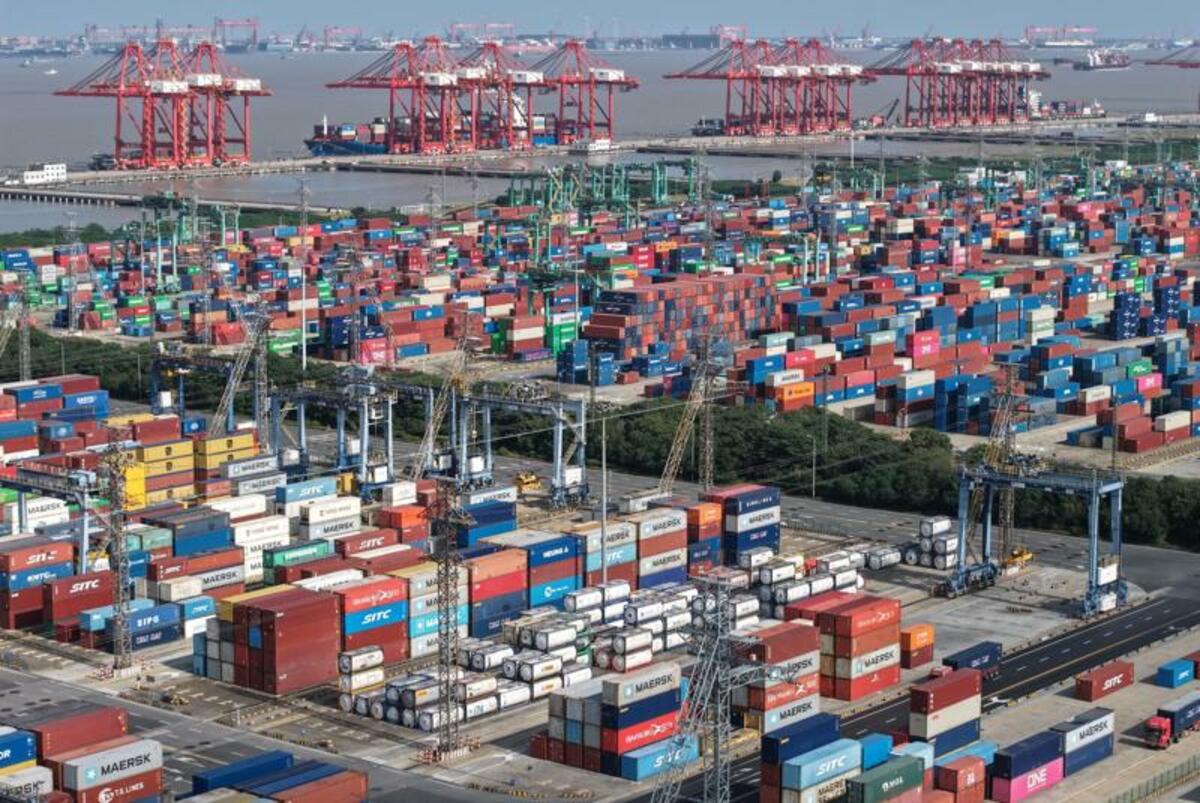
China’s exports have surged in the first two months of 2026 despite ongoing trade tensions with the United States and tariffs imposed by President Donald Trump.
Official data released by Chinese authorities shows exports rose by more than 20 percent in January and February, nearly three times higher than economists had predicted. The strong performance places China on track to surpass the record-breaking annual trade surplus it recorded in 2025.
The announcement comes ahead of an expected meeting between Trump and Chinese President Xi Jinping, who are scheduled to hold talks in China in early April.
The export growth highlights the continued importance of overseas trade to China’s economy as the country navigates a number of domestic economic challenges.
China, the world’s second-largest economy, remains heavily dependent on exports while facing weak consumer spending at home, a shrinking population and a prolonged crisis in the property sector.
Chinese authorities typically combine trade data for January and February to reduce distortions caused by the Lunar New Year holiday, which falls on different dates each year and can disrupt normal trade patterns.
According to the figures, the export surge was largely driven by strong global demand for electronics. Shipments of agricultural products and manufactured goods also recorded notable increases during the period.
Trade with European markets showed significant growth, with exports to the region rising by 27.8 percent.
Exports to member countries of Association of Southeast Asian Nations also climbed sharply, increasing by nearly 30 percent. The regional bloc includes major economies such as Thailand, Singapore and Philippines.
However, exports to the United States declined by more than 10 percent as Washington introduced tariffs and other measures aimed at addressing trade imbalances between the two countries.
The tariffs were imposed as part of the broader economic policies pursued by the Trump administration to reduce the US trade deficit and limit reliance on Chinese imports.
Despite the drop in exports to the United States, China’s overall export performance remained strong due to growing demand from other global markets.
Last week, China set a new economic growth target of between 4.5 percent and 5 percent for 2026. The goal is slightly lower than the 5 percent growth target set for 2025, which the country achieved largely through strong export performance.
Exports have remained a key driver of China’s economic growth, helping to support the economy at a time when domestic consumption remains weak and the property market continues to struggle.
The planned meeting between Trump and Xi is expected to take place as China and several other Asian economies grapple with the wider economic consequences of the US‑Israeli War With Iran.
The conflict has disrupted global energy markets and created additional uncertainty for economies already dealing with inflation, supply chain pressures and geopolitical tensions.
Economic analysts say the outcome of the upcoming talks between the US and Chinese leaders could influence trade relations and global markets in the months ahead.
Erizia Rubyjeana
About the Author