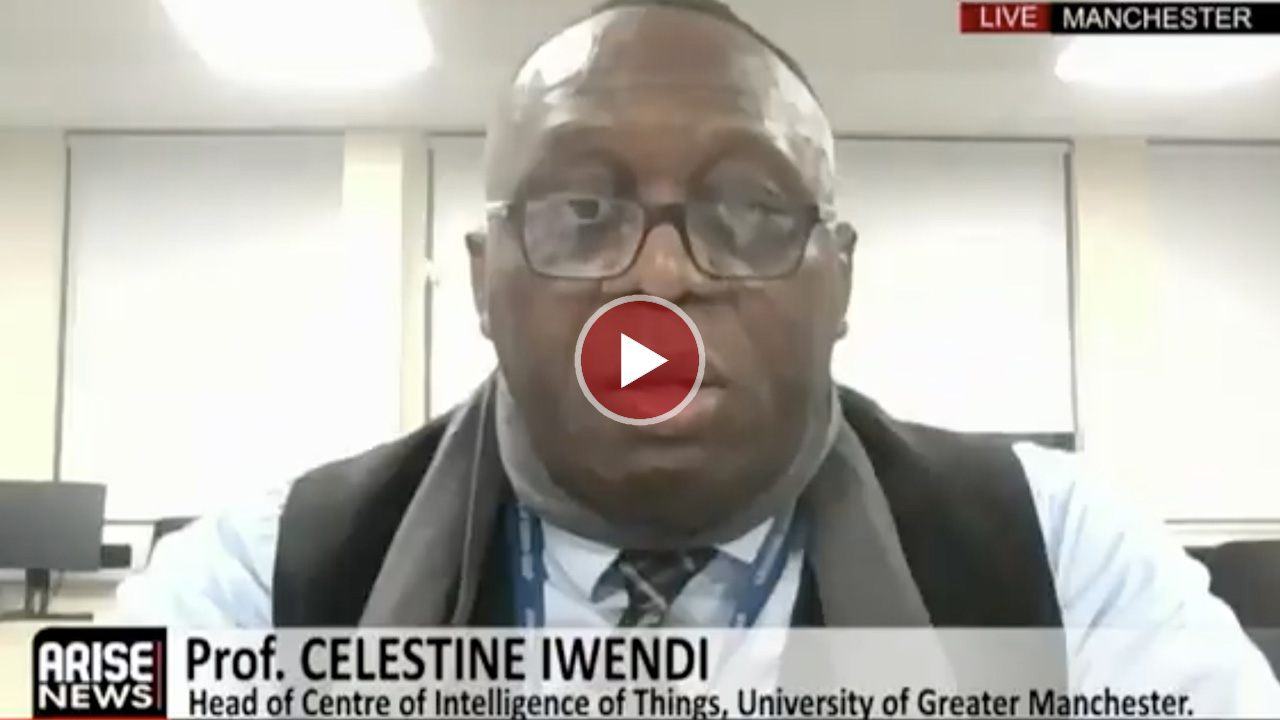
Head of Centre of Intelligence of Things, University of Greater Manchester, Professor Celestine Iwendi said Nigeria’s rising insecurity requires a strategic combination of modern technology, localised intelligence, and community-based security forces, warning that reliance on conventional military methods alone cannot protect citizens or curb the wave of kidnappings, banditry, and armed attacks sweeping the nation while also stressing that effective solutions must focus on both technological innovation and grassroots involvement.
In an interview with ARISE NEWS on Monday, Iwendi highlighted the critical role of artificial intelligence, drones, and data-driven operations in anticipating threats and preventing attacks before they occur. He also underscored the importance of empowering local communities to participate directly in security efforts.
“The president must give Nigeria’s ability to defend themselves in the local area. Don’t give it to the US. It’s very expensive, We need to have 1,000 local police, local commandos, stationed in their own local government area, I know how to defend our people.”
He further stressed the necessity of integrating advanced technological systems to enhance operational intelligence. “AI is about data. Without data, nothing is going to work, We need to collect the data. We need to see the route, We need drones, We need the base commandos. We need this data set.”
Iwendi warned that Nigeria’s reliance on open-source intelligence and publicly shared data can compromise operations. “Anything free does not have value, We can develop a system where it is highly secure, I also know who goes in there at a particular time and who is looking at the information
Highlighting the value of community engagement, Prof Iwedi called for the recruitment and training of locals in defense and intelligence operations. “If we have locals, join them in this thing. Bring in the chiefs. Bring in the OBs, the OBAs, you bring in people who know the area.”
He also addressed the shortcomings of Nigeria’s military in counter-terrorism operations, urging retraining and tactical modernisation. “We need to retrain the military into guerrilla fighting, If you want to reduce the counter‑terrorist threats, then we need to send in the drone. We need the base commandos.”
Expanding on the role of artificial intelligence, Iwendi highlighted its potential to revolutionise Nigeria’s security framework through predictive analytics, open-source intelligence monitoring, and telecommunication surveillance.
“I developed AI‑driven open‑source intelligence using NLP, to scan what people say on social media, Kidnappers and bandits use phones, If you have that, you can participate in it, This allows real‑time monitoring and proactive intervention.”
Iwendi also highlighted the need for collaboration with academic institutions and research centers to build national capacity. “We are training a whole lot of people in our centre in a whole lot of technology, It is easier to solve security problems in Nigeria than healing a problem in Africa, It is possible,” he said.
Erizia Rubyjeana
About the Author