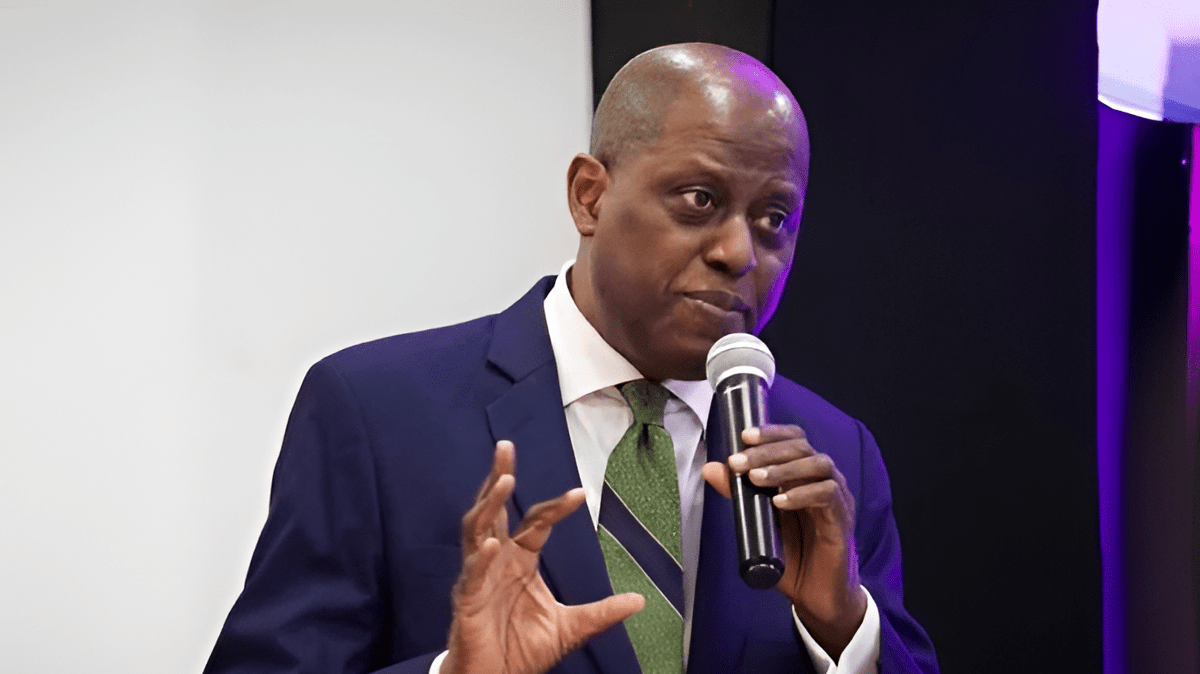
Cardoso cites research evidence, backs continued tight stance despite domestic and global risks
Sustained monetary tightening by the Central Bank of Nigeria has played a decisive role in slowing inflation, with internal research indicating that the bank’s policy stance contributed as much as 10 percentage points to the decline in headline inflation, CBN Governor and Chairman of the Monetary Policy Committee, Olayemi Cardoso, has said.
Cardoso disclosed this in his personal statement released by the apex bank on Wednesday following the Monetary Policy Committee (MPC) meeting held in November 2025.
According to the CBN governor, the findings provide strong counterfactual evidence that monetary policy remains effective even in the face of significant domestic and global challenges, underscoring the importance of firm and consistent action to protect price stability.
“Research estimates indicate that our tight policy stance has accounted for up to 10 percentage points of the decline in headline inflation,” Cardoso said, describing the outcome as encouraging evidence that current policy measures are delivering results.
Official data show that headline inflation fell to 16.05 per cent in October 2025, down from 18.02 per cent in September, representing an 8.43 percentage-point drop from the 24.48 per cent recorded in January 2025.
Cardoso noted that the disinflationary trend has been broad-based, affecting headline, food, and core inflation, with momentum strengthening in recent months. He attributed the slowdown to easing foreign exchange volatility, moderating food prices, and improved inflation expectations, supported by a relatively stronger naira.
He added that the exchange rate has become more stable and has shown signs of market-driven appreciation, while foreign reserves have continued to improve following reforms that boosted capital inflows and triggered structural changes in Nigeria’s balance of payments.
Beyond price stability, the CBN governor said broader macroeconomic conditions have also improved, pointing to rising investor confidence, stronger external buffers, and more positive business and household sentiment, all of which support long-term investment across key sectors of the economy.
However, Cardoso cautioned that risks to the outlook remain elevated. He cited persistent global uncertainties, geopolitical tensions, and Nigeria’s recent designation by the United States as a Country of Particular Concern, noting that while the classification is security-related, it could have spillover effects on the economy.
He also identified the 2026 political cycle as a key domestic risk, recalling that pre-election fiscal expansion in the past has often been associated with rising inflation, exchange rate pressures, and stress in the external sector.
While acknowledging that fiscal reforms are essential, Cardoso said they often take time to yield results and can introduce short-term challenges, stressing that monetary policy must remain proactive to prevent a reversal of recent gains.
Deliberations at the November MPC meeting, he said, supported the decision to maintain a tight monetary stance, with excess liquidity in the banking system identified as a major threat to price stability.
Cardoso argued that holding policy rates steady would reinforce stability and signal confidence that the current stance is working as intended. He added that improved alignment of overnight market rates within the standing facilities corridor reflects stronger policy transmission to the wholesale market.
Based on this assessment, he supported retaining the Monetary Policy Rate at 27 per cent, adjusting the standing facilities corridor to +50/-450 basis points, maintaining the Cash Reserve Ratio at 45 per cent for commercial banks and 75 per cent for non-TSA public sector deposits, while keeping the liquidity ratio unchanged at 30 per cent.
While stressing that monetary policy alone cannot deliver sustainable economic growth, Cardoso said the current tight stance remains critical to preserving stability and creating the conditions needed for broader structural reforms to take hold.
The Monetary Policy Committee recently voted by a majority to retain the benchmark interest rate at 27 per cent, extending its pause on further tightening as the bank seeks to consolidate recent progress in stabilising inflation, exchange rates, and capital flows.
About the Author