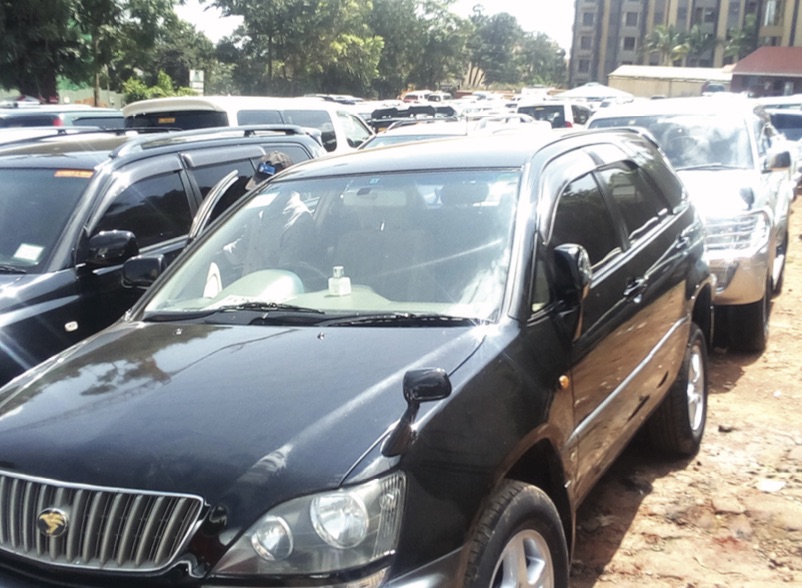
Car dealers in Uganda have expressed concern that new or higher taxes in the next financial year could push already high vehicle prices even further out of reach for buyers.
Industry players note that while headline vehicle import taxes have remained largely unchanged for several years, this period of stability may be nearing its end as the government looks for additional revenue sources ahead of the next national budget.
Although no formal announcements have been made, anxiety is growing across Kampala’s car bond yards that new levies or higher rates could be introduced in the coming financial year.
What importers are paying today
Taxes on imported vehicles are assessed using the cost, insurance and freight (CIF) value. The total tax burden typically includes import duty, value-added tax (VAT), withholding tax, excise duty, infrastructure levies and age-related penalties for older vehicles.
Combined, these charges can add 40 per cent to 60 per cent to the original purchase price of a used vehicle by the time it is cleared. Import duty generally ranges between 25 per cent and 35 per cent, depending on engine size and vehicle classification.
VAT is charged at 18 per cent, withholding tax at 6 per cent, and excise duty at about 10 per cent. Infrastructure and declaration fees add a further 2.5 per cent. Vehicles older than eight years often attract an additional age or environmental levy of around 20 per cent, significantly raising their final cost.
Dealers sense change coming
Car dealers say that while official rates have remained stable, the gradual addition of smaller levies in recent years suggests the government may be preparing the ground for further adjustments.
“When taxes stay the same for too long, government eventually adjusts,” said George Ateka, a Kampala-based car dealer who imports vehicles from Japan and the United Kingdom.
“We haven’t seen a major increase recently, but honestly, we don’t expect this stability to continue.”
Another dealer, Susan Musiime, who operates at a city bond yard, said buyers are increasingly rushing to import vehicles before the next budget cycle.
“People are asking us every day whether they should import now or wait,” she said. “There is a feeling in the market that taxes could go up, especially on older cars. Government needs money, and vehicles are easy to tax.”
Clearing agents also warn that age-related levies are likely to be the first area targeted if changes are made.
“If government wants to discourage old cars, the easiest thing is to raise the age levy,” said one customs agent.
“That alone would increase revenue without touching VAT or import duty.”
Rising costs without new hikes
Even without fresh tax increases, importers say costs have already climbed steadily due to a stronger US dollar, higher global vehicle prices and stricter enforcement of existing rules.
Many buyers are often surprised to find that taxes can equal, or even exceed, the price paid for the vehicle abroad, particularly for older units. URA remains tight-lipped
Officials at the Uganda Revenue Authority (URA) declined to comment on whether vehicle import taxes could be reviewed in the next financial year, noting that tax policy decisions are made through the national budget process.
URA officials contacted said they were not in a position to speculate on future tax measures and advised importers to rely only on officially published rates and budget announcements.
Watching the next budget
With the government under pressure to raise domestic revenue for infrastructure development, transport regulation and environmental compliance, industry players say the motor vehicle sector remains particularly vulnerable to new taxes.
For now, Uganda’s vehicle import tax regime remains unchanged, but uncertainty is growing.
“If nothing changes in the next budget, people will relax,” said Moses Kizito, a car dealer.
“But if even one new levy is added, importing a car will become even harder for ordinary Ugandans.”
As the next financial year approaches, many in the motor trade are asking the same question: after years of stability, is Uganda’s car import tax regime about to change?
About the Author