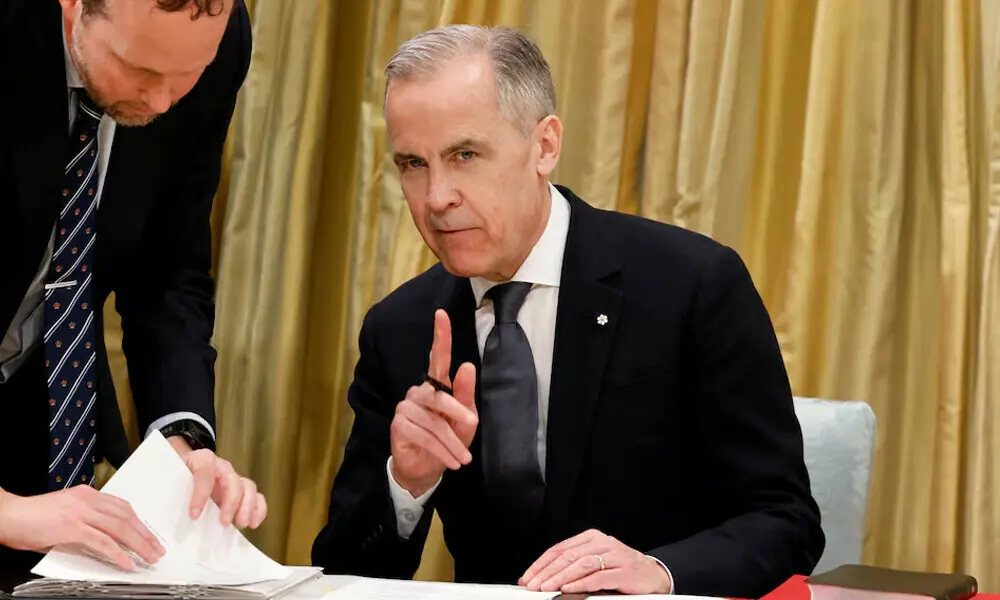
Canadian Prime Minister Mark Carney has acknowledged that the country is on course to miss its greenhouse gas emissions reduction targets for both 2030 and 2035, conceding that current policies are insufficient to meet the goals.
Speaking in an interview aired Tuesday on Radio-Canada, Carney said the reality was unavoidable. “What’s clear is that Canada is not going to reach our 2030 and 2035 climate targets with current policy,” he stated. “We need to change that.”
Under former prime minister Justin Trudeau, the federal government committed in 2021 to cutting carbon emissions by 40–45 per cent below 2005 levels by 2030. Trudeau’s administration also set an ambitious target of achieving a net-zero electricity grid by 2035.
Carney, who became prime minister in March 2025 after replacing Trudeau as leader of the Liberal Party, is now grappling with competing economic and environmental pressures.
Amid escalating trade tensions with the United States driven by President Donald Trump’s trade policies, Canada is seeking to diversify its export markets and reduce its reliance on its southern neighbour.
Official figures show that Canada’s carbon emissions declined by 8.5 per cent between 2005 and 2023. However, the Canadian Climate Institute has warned that emissions could begin rising again as a result of recent policy shifts under the new government.
Since taking office, Carney has rolled back several key environmental measures, including the carbon tax on individuals and a proposed emissions cap for the oil and gas sector. His minority government has also unveiled a series of large-scale energy projects aimed at positioning Canada as an “energy superpower.”
Despite criticism, Carney told Radio-Canada that he believes major investments in the energy sector will help drive emissions reductions over the long term, even if near-term targets are missed.
Canada remains one of the world’s highest emitters of greenhouse gases on a per-capita basis, a fact that continues to draw scrutiny from environmental groups.
Tensions within the government surfaced weeks ago after Ottawa reached an agreement with oil-rich Alberta, prompting the resignation of Steven Guilbeault from Carney’s cabinet.
Guilbeault, who previously served as environment minister under Trudeau, said the climate strategy he spent years crafting was being “dismantled.”
As Canada recalibrates its climate and energy policies, the government faces growing pressure to reconcile its environmental commitments with economic and geopolitical realities.
About the Author