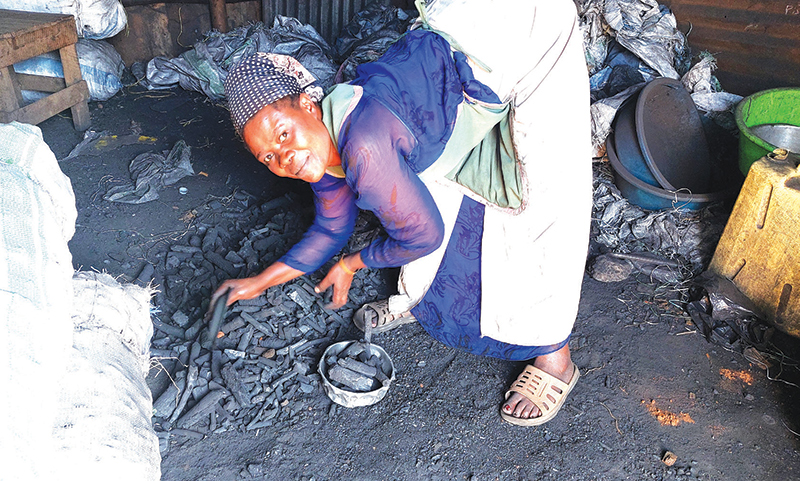
In many homes across Kampala, the day begins with the crack of charcoal stoves.
For millions of Ugandans, charcoal is not just a source of energy; it is a way of life. Yet behind this daily routine lies a growing national dilemma of how to transition to cleaner energy without disrupting livelihoods or deepening inequality.
According to the 2024 National Population and Housing Census, nearly half of Uganda’s urban households depend on charcoal for cooking. In Kampala, the figure rises sharply to more than 70 per cent.
By comparison, only a small fraction of households use cleaner alternatives such as Liquefied Petroleum Gas (LPG) or electricity. Despite increased investment in power generation under frameworks like the Uganda Energy Transition Plan, affordability remains a major barrier.
Electricity may be available, but for many families, it is still out of reach for everyday cooking. Charcoal sits at the centre of a vast informal economy that supports thousands of livelihoods from tree cutters in rural districts to transporters and market vendors in urban centres.
But this dependence comes at a cost. Uganda is losing approximately 72,000 hectares of forest annually, largely due to charcoal production and firewood use. Over two decades, forest cover has shrunk dramatically, while charcoal consumption has more than tripled.
The environmental consequences are stark: degraded ecosystems, reduced rainfall reliability, and increased vulnerability to climate shocks.
HEALTH RISKS
The dangers of charcoal extend beyond the environment and into people’s homes. Cooking with charcoal releases harmful pollutants such as fine particulate matter and carbon monoxide, contributing to indoor air pollution.
Women and children, who spend more time near cooking areas, are the most affected. Experts estimate that expanding access to clean cooking solutions could save up to 50,000 lives annually in Uganda by 2030.
In recent years, the government has intensified efforts to promote clean cooking through policies such as the Uganda Energy Policy 2023 and the Fourth National Development Plan. Measures include subsidising LPG, adjusting electricity tariffs to encourage electric cooking, and promoting improved cookstoves.
A controversial step came with Executive Order No. 3 of 2023, which banned commercial charcoal production and trade in Northern and North-Eastern Uganda. While well-intentioned, such measures have exposed a difficult reality: restricting charcoal without viable alternatives risks pushing vulnerable communities deeper into poverty. For many involved in the charcoal trade, the conversation is not just about energy—it is about survival.
“I know charcoal is destroying forests,” says a trader in one of Kampala’s bustling markets. “But what else can we do? This is how we feed our families.”
This sentiment reflects a broader concern: any transition away from charcoal must consider those who depend on it. Experts warn that without alternative livelihoods, skills training, and inclusive policies, efforts to curb charcoal use could backfire, fuelling illegal trade and undermining enforcement.
The challenge, policymakers say, is to design a “just transition”—one that balances environmental sustainability with economic realities.
Potential solutions include investing in affordable clean cooking technologies, expanding LPG and electricity infrastructure, leveraging carbon finance to support cleaner fuels and creating alternative income opportunities for charcoal-dependent communities.
Equally important is changing public perception. Charcoal remains deeply embedded in cooking culture, and shifting behaviour will require sustained awareness and trust-building.
NATIONAL CONVERSATION BEGINS
It is against this background that on March 17, 2026, the Makerere University’s Economic Policy Research Centre (EPRC) convened a national policy dialogue, bringing together government officials, researchers, private sector actors and civil society.
The dialogue aims to rethink charcoal supply chains, explore scalable alternatives, and align policies for a more sustainable future.
About the Author