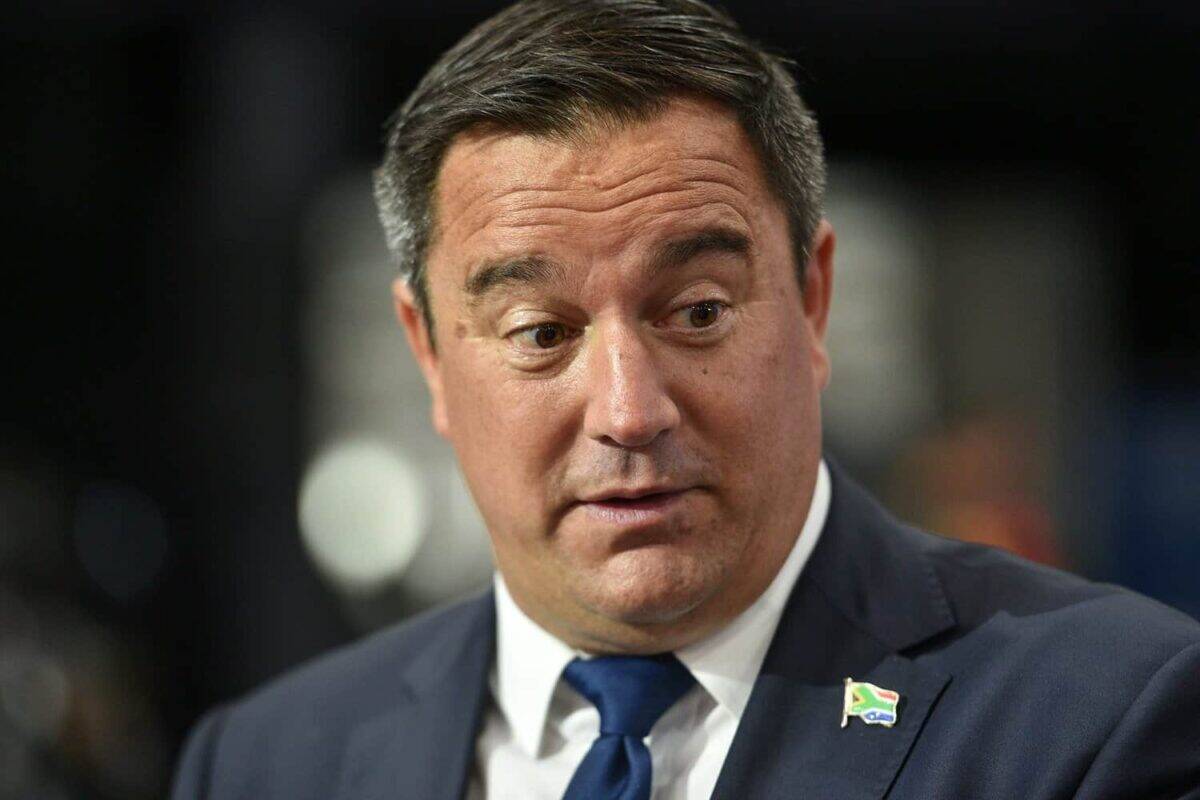
Outgoing DA leader John Steenhuisen wants his exit from the party’s leadership race to be read as calm, deliberate and dignified.
And on the surface, it is. He has ticked the boxes of legacy: stabilising a party once riven by internal turmoil, steering it into the government of national unity (GNU) and claiming “mission accomplished”.
Yet politics is rarely so neat. Beneath the polite language and press conference smiles lies a more turbulent truth – this is not just Steenhuisen’s personal decision, but a moment that exposes the DA’s deepest divisions.
Steenhuisen insists his mission was to steady the DA and lead it into government. On this score, he can credibly claim success.
The DA is no longer shouting from the opposition benches, it is now part of the governing machinery. For a party that spent decades defining itself against the ANC, this is a historic shift.
But stepping aside now is not only about legacy, it is also about timing. Being both party leader and a Cabinet minister is a punishing balancing act.
Apart from his alleged financial troubles and clashes with ex-DA federal finance chair Dion George, Steenhuisen’s portfolio of agriculture also presents challenges.
It comes with real crises, real farmers and real economic consequences. Every misstep lands not only on his desk, but on the DA’s brand inside government.
ALSO READ: Johnny the walker: What now for the DA?
By removing himself from the leadership contest, he reduces internal pressure and avoids the spectacle of a sitting Cabinet minister fighting a bruising party election.
This may be true, but it also smells like an excuse for why Steenhuisen is allowing himself to be pushed out. The quieter truth is the DA is changing, as is its internal power map.
Entry into the GNU has energised some supporters and alienated others. Managing that tension while leading from the front would have required Steenhuisen to defend compromises many DA voters are still uneasy about.
Stepping back spares him from becoming the lightning rod for that dissatisfaction.
So, what happens to him now? For the moment, Steenhuisen remains firmly in Cabinet. His position as minister does not automatically fall away when he steps aside.
Cabinet appointments are negotiated at the level of the governing agreement, not party elective conferences. Unless the DA itself demands a reshuffle – which seems unlikely in the shortterm – Steenhuisen stays where he is.
Politically, however, his role will shift. Once the DA elects a new leader in April, that person will shape the party’s tone inside government, its negotiating posture with the ANC and its long-term electoral strategy.
Steenhuisen will move from being the face of the DA to being one of its senior technocrats – influential, but no longer decisive.
ALSO READ: Steenhuisen denies claims of Zille power play, says DA leadership exit was his own decision
Whether this is a temporary phase or the start of a quieter political chapter depends on how the new leadership consolidates power. For the DA, the stakes are high.
This leadership race will not just be about personalities, it will be about identity.
Is the party a long-term governing partner, willing to share power pragmatically? Or does it remain a sharp-edged alternative, wary of being absorbed into the ANC’s political gravity?
Steenhuisen’s exit clears the stage for that debate. But it also removes a figure who, for better or worse, embodied the DA’s transition from opposition purity to governing compromise.
In stepping aside, Steenhuisen avoids a messy internal fight. He protects his Cabinet role – for now. He locks in his legacy.
But he also leaves the DA facing its most important question yet: now power is within reach, what kind of party does it want to be?
That is a question no leadership contest can dodge. And this will define not only the party’s future, but the shape of SA’s politics.
NOW READ: He’s no Johnny-on-the-spot
About the Author