Government is set to loosen the purse strings by an extra R90 billion, pushing consolidated spending to R2.67 trillion in the 2026/2027 financial year.
Finance Minister Enoch Godongwana presented the 2026 Budget Speech at the Nieuwmeester Dome in Cape Town on Wednesday, outlining revenue and expenditure plans ahead of the fiscal year starting 1 April 2026.
Public sector wage bill remains largest expenditure
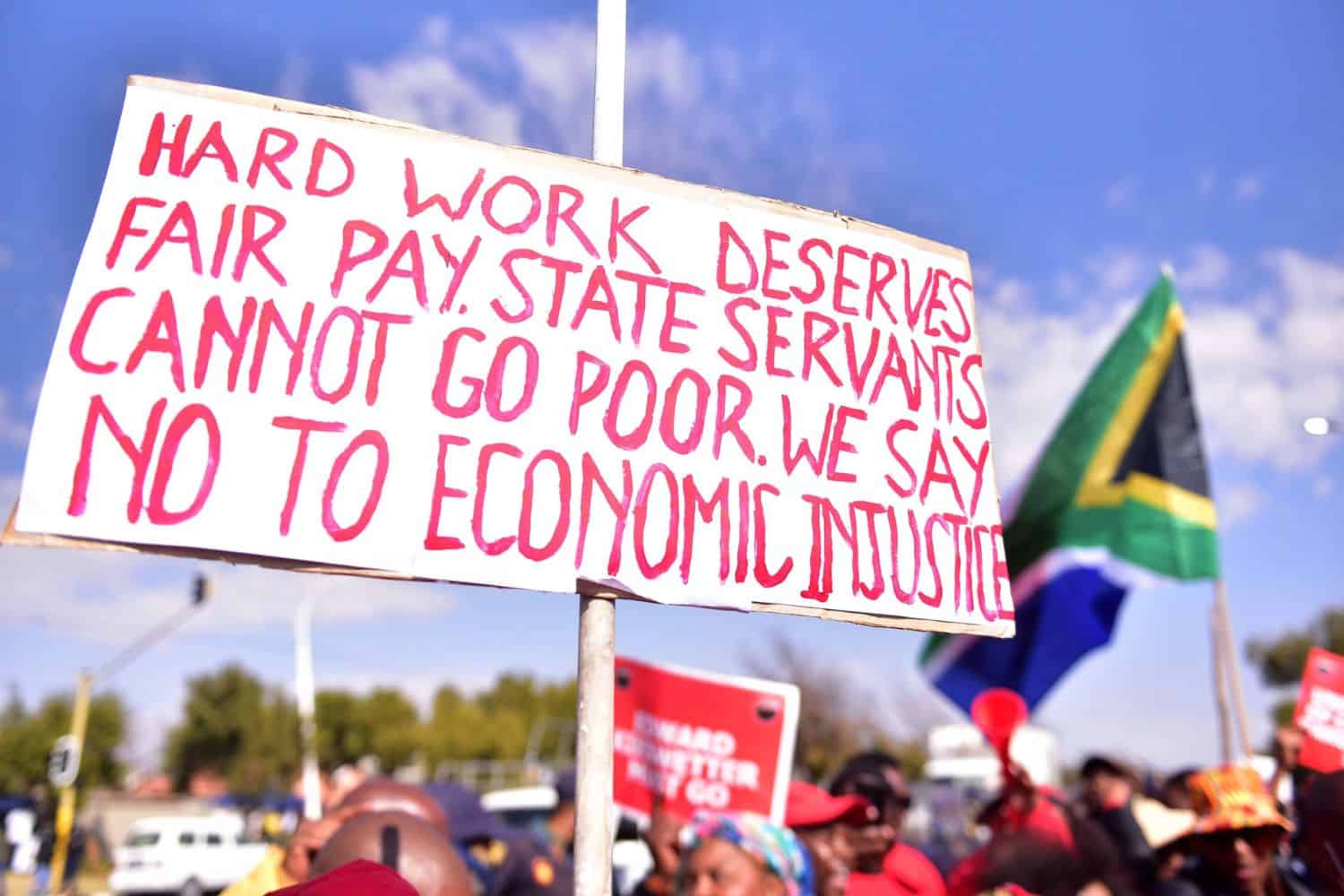
Compensation for government employees continues to account for the largest portion of planned spending, representing 32.1% of total expenditure.
The 2026 budget review prepared by the National Treasury highlights that the public sector wage bill is expected to rise from R808.6 billion in 2025/2026 to R852.6 billion in 2026/2027.
In an effort to manage costs, the government has introduced an early retirement programme for eligible employees under the age of 60.
Since its launch in October 2025, the programme has approved 7 687 applications, with the majority (4 644) from provincial departments.
ALSO READ: Here is how much Godongwana has raised tax on alcohol and cigarettes
Early retirements are projected to cost R3.7 billion, but are expected to generate net savings of R5.5 billion over three years, including R2.6 billion in the 2026/2027 financial year.
The budget review also highlighted efforts to identify ghost workers in the public sector.
Preliminary audits by the the Department of Public Service and Administration across national and provincial departments have flagged over 4 300 “high-risk” cases, where payroll system fraud may be involved.
Employees who cannot be physically verified will have their salaries withheld while verification continues.
Social services
In his speech, Godongwana described the R2.67 trillion spending plan as “highly redistributive”.
The budget review indicates that R1.58 trillion will be allocated to social services. This includes:
- R527.2 billion for learning and culture, with R344.7 billion for basic education, R54.3 billion for the National Student Financial Aid Scheme (Nsfas), and R15 billion for Technical and Vocational Education and Training (TVET).
- R310.4 billion for health, largely directed to district health services (R137.8 billion), central hospital services (R59.7 billion), provincial hospital services (R50.6 billion), and other health services (R50.5 billion). Facilities management and maintenance will receive R11.8 billion.
- R294.3 billion for community development, including R110.1 billion for municipal equitable share, R70.9 billion for public transport, and R53.6 billion for human settlements, water, and electrification programmes.
- R446.6 billion for social development, with allocations of R121.8 billion to old-age grants, R107.6 billion for social security funds, R89 billion for child support grants, R89 billion for other grants, and R24.3 billion for provincial social development. Policy oversight and grant administration is allocated R13.4 billion.
Overall, R292.8 billion of the social services budget will be directed to social grants.
READ MORE: 2026 budget: Social grants set to increase, Godongwana confirms
More spending
The economic development sector will receive at least R283.9 billion in funding.
Of this total, R164.1 billion will be allocated to economic regulation and infrastructure.
A further R45.8 billion will support industrialisation and exports, while R39.5 billion will be directed toward agriculture and rural development.
Labour affairs and work programmes will receive R13.2 billion, and R21.3 billion will be invested in innovation, science, and technology.
Spending on peace and security is set to rise from R268.2 billion in 2025/2026 to R274.6 billion in 2026/2027, reflecting the deployment of the South African National Defence Force (SANDF) alongside police efforts to combat illegal mining and gangsterism.
The budget allocates R140.1 billion to the South African Police Service (Saps), R14.3 billion to Home Affairs, R59.3 billion to defence and state security, and R60.9 billion to courts and prisons.
General public services will receive R55.4 billion, with executive and legislative organs, including Cabinet and Parliament, receiving R19.8 billion.
Debt service costs are projected at R432.4 billion, with R5 billion set aside in contingency reserves.
NOW READ: Budget 2026: Slight relief for overburdened individual taxpayers
About the Author