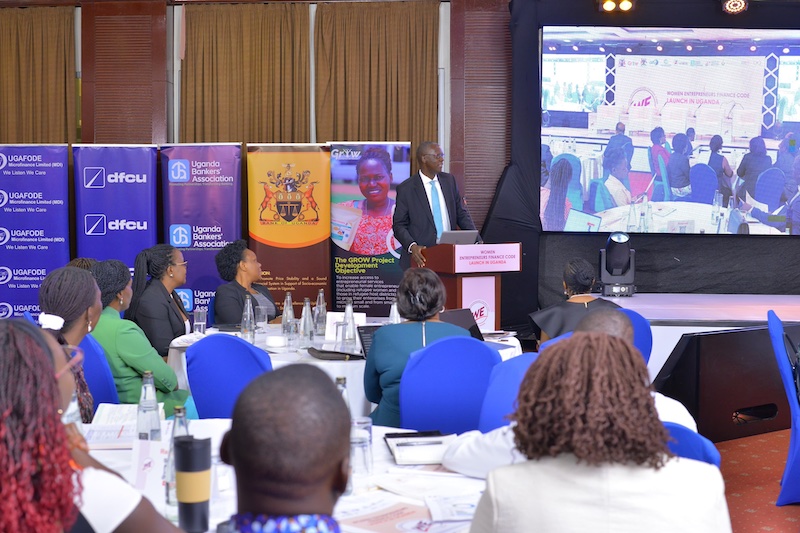
Bank of Uganda recently launched the Women Entrepreneurs (WE) Finance Code as part of its effort in improving women’s access to finance and strengthening gender inclusive financial services in Uganda.
Support by BoU’s new National Gender/Financial Inclusion Dashboard, it is expected to bring more women into the financial industry, and also offer BoU the kind of data that is needed to promote certain tailor-made products for women.
Despite being a substantial part of Uganda’s entrepreneurial landscape, women continue to encounter barriers such as lack of collateral, cultural restrictions, and limited financial literacy.
These challenges hinder their business growth, even though evidence suggests that closing gender gaps could boost MSMEs, create jobs, and enhance household resilience.
The WE Finance Code aims to address these issues by advocating for gender- inclusive policies, improving access to affordable finance, and encouraging financial institutions to develop products tailored to the needs of underserved women.
Uganda’s financial inclusion rate has reached 81 per cent, with a narrow gender gap of only two percentage points, yet stakeholders emphasize the need to tackle persistent barriers. At the launch in Kampala, Richard Byarugaba, representing the deputy governor, highlighted the initiative’s importance.
“The WE Finance Code calls on all of us to be gender-sensitive in our financing decisions,” he stated, noting that the new dashboard will facilitate evidence-based interventions and enhance the tracking of gender-disaggregated financial data.
Government programs such as the GROW Project, the Agricultural Credit Facility, and the Parish Development Model have already expanded opportunities for women, particularly those operating without collateral.
The WE Finance Code and dashboard are expected to reinforce these achievements by coordinating stakeholder efforts and ensuring transparency. The Bank of Uganda will function as the National Data Aggregator, enhancing the dashboard’s capacity to centralize information for regulators, policymakers, banks and development partners.
By implementing a unified and transparent strategy, officials aim to prevent duplication of efforts and foster significant advancements for women entrepreneurs.
This launch underscores a renewed commitment to ensuring that women are integral to Uganda’s financial development journey. Stakeholders are encouraged to collaborate closely to maintain momentum and realize genuine inclusive financial progress.
shammahmukuza@gmail.com
About the Author