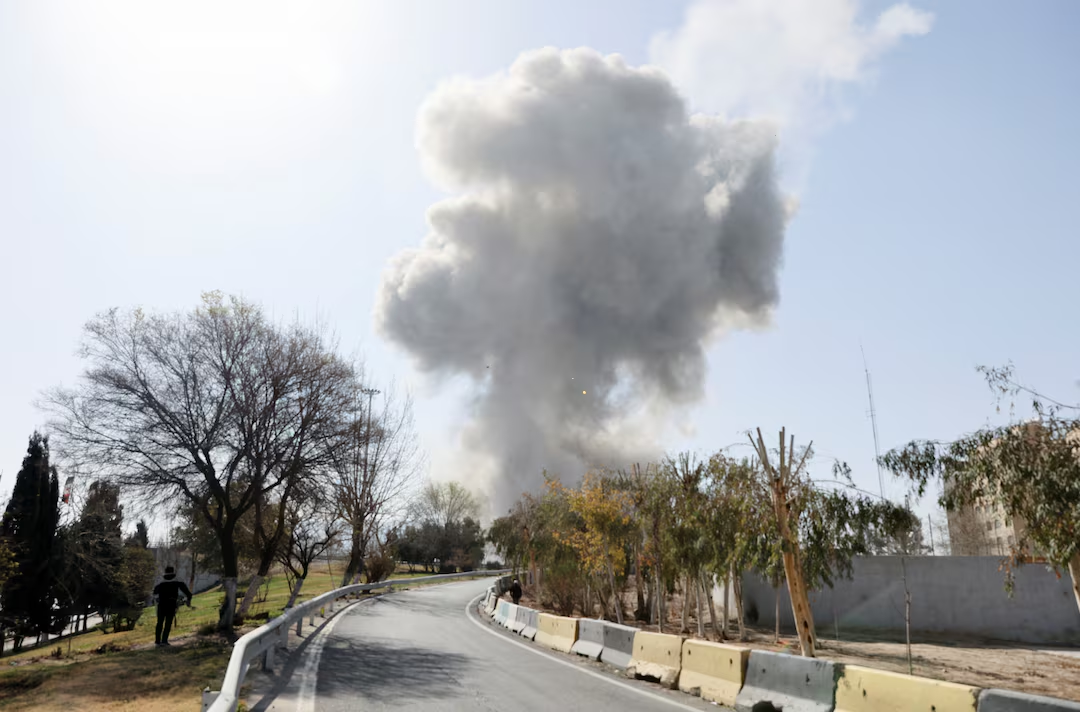
The U.S.–Israeli military campaign against Iran entered its sixth day on Thursday, with residents in Tehran reporting a significant escalation in airstrikes, particularly in the northern parts of the capital.
Witnesses described relentless explosions as Israeli forces carried out what they said were fresh strikes targeting Iranian government facilities. Many residents said the situation in the city had deteriorated sharply, leaving civilians uncertain about where to seek safety.
“Today is worse than yesterday. They are striking northern Tehran. We have nowhere to go. It is like a war zone,” said Mohammadreza, a 36-year-old resident who spoke by phone as explosions echoed in the background.
Meanwhile, tensions widened beyond Iran’s borders after Tehran vowed retaliation following a U.S. torpedo attack that sank an Iranian warship off the coast of Sri Lanka on Wednesday. The strike reportedly killed more than 80 sailors, marking a significant escalation in the conflict.
Iran’s foreign minister condemned the attack, warning that Washington would “bitterly regret” what he described as the dangerous precedent of destroying a vessel in international waters without warning.
Echoing the warning, a commander of Iran’s Revolutionary Guards, General Kioumars Heydari, told state television that Iran was prepared to target American interests wherever they might be found.
“We have decided to fight Americans wherever they are,” he said.
The economic repercussions of the conflict are also mounting globally. The escalating hostilities have disrupted energy markets, with some countries reportedly cut off from a substantial portion of global oil and liquefied natural gas supplies, intensifying concerns about wider economic fallout.
Inside Iran, political uncertainty deepened following the abrupt postponement of three days of national mourning planned for Supreme Leader Ayatollah Ali Khamenei, who was reportedly killed during the opening hours of the U.S.–Israeli air campaign. His death marks an unprecedented moment in modern geopolitics, as it is the first known assassination of a country’s supreme ruler through an airstrike.
Khamenei’s body had been scheduled to lie in state at a major prayer hall in Tehran beginning Wednesday evening, an event expected to draw thousands of mourners. However, authorities suddenly postponed the memorial indefinitely shortly before it was set to begin.
Prior to the announcement, Iranian officials had indicated they were close to naming a successor to the late leader.
Among the leading candidates reportedly under consideration was his son, Mojtaba Khamenei, a prominent hardline figure whose potential appointment would signal a defiant response to the ongoing conflict.
As the war intensifies, both military actions and political developments inside Iran continue to reshape the rapidly evolving crisis.
About the Author