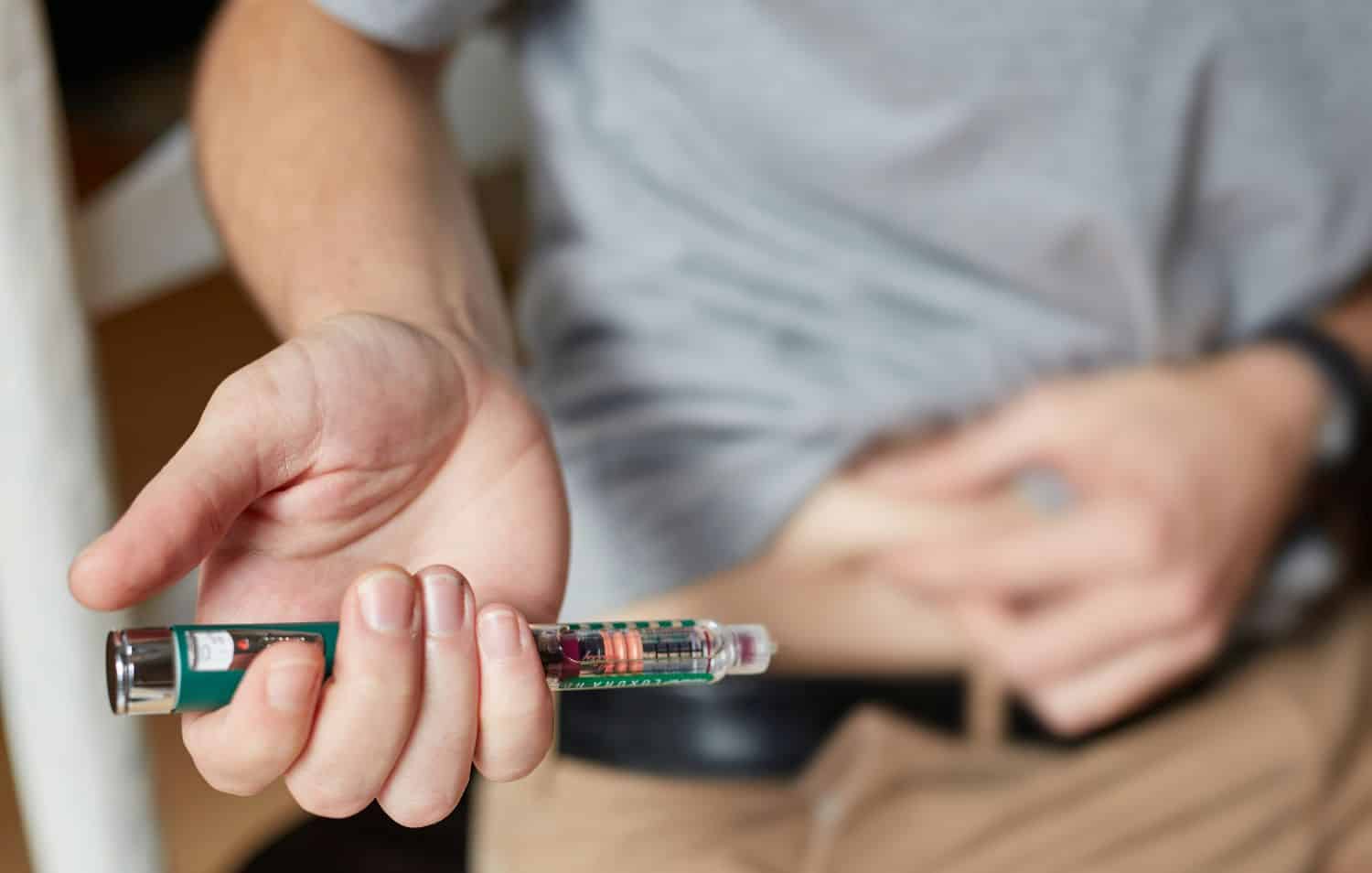
A class of weight-loss and diabetes medicines called glucagon-like peptide-1 receptor agonists (GLP-1s for short) have made massive waves around the world in recent years, mostly for their remarkable ability to help people lose weight.
The medicines, however, remain out of reach for most people who might benefit from them. They are not available in South Africa’s public sector, and their high cost means access in the private sector is mostly limited to relatively wealthy people – medical aid schemes only pay for some diabetes patients. Even so, sales are booming.
Semaglutide and tirzepatide
Ozempic and Wegovy are two brand names for the GLP-1 medicine semaglutide made by the Danish pharmaceutical company Novo Nordisk. In 2021, the company launched Ozempic in South Africa to treat diabetes, though it was used off-label for weight management. In 2025, Novo Nordisk launched Wegovy in the country specifically for weight management.
Spending on Ozempic has risen sharply in South Africa, according to data from Mediscor – a South African company that assist medical schemes in managing medicines benefits for their members. Mediscor’s 2024 Medicines Review, published in September 2025, shows that Ozempic surged from position 170 in 2023 to position 12 in 2024 on Mediscor’s list of top drivers of medicine spending by medical schemes and their beneficiaries. Wegovy was not yet available in the country and so was not included in this analysis.
Mounjaro, which is the brand name for US pharmaceutical company Eli Lilly’s GLP-1 medicine tirzepatide, has reportedly also seen skyrocketing sales in South Africa. It is sold by Aspen Pharmacare in South Africa and was launched as a diabetes treatment in December 2024. In October 2025, South Africa’s medicines regulator gave Aspen the go-ahead to also market Mounjaro for weight management.
ALSO READ: Billions’ worth of weight loss and diabetes medications reached SA shelves and patients in 2024
Aspen’s Dr Stavros Nicolaou told Spotlight that, according to IQVIA (a company that tracks and sells data on global medicine sales) sales of Mounjaro have now eclipsed all other medicines in South Africa.
“It’s the largest pharmaceutical product in South Africa… it achieved that status in November,” said Nicolaou. IQVIA’s medicines sales data for South Africa is not available in the public domain.
The explosion in sales of and spending on GLP-1 medicines is unlikely to slow any time soon as the popular game-changer medicines are increasingly being used to manage obesity.
The South African Metabolic Medicine and Surgery Society (SAMMSS) published new clinical practice guidelines in November 2025, which recommend the use of GLP-1s for treatment of obesity alongside other interventions.
GLP-1s are also under investigation for treating and preventing a myriad of other diseases, including obstructive sleep apnoea, substance use disorders, kidney disease, liver disease and neurological disorders.
The GLP-1 medicines currently available in South Africa are all formulated as injections. The market for these drugs is likely to expand further as they become available in forms that can be taken orally. A pill form of semaglutide was recently approved by the United States Food and Drug Administration. A second GLP-1 pill is expected to get the green light in the US later this year. Neither of these oral formulations are yet available in South Africa.
What coverage do medical schemes provide?
Despite rapid growth in sales of GLP-1s in South Africa’s private sector, many people who could benefit from these treatments and have costly medical scheme coverage are still unable to access them due to their high costs and limited coverage for the jabs.
When used for weight management, a maintenance dose of semaglutide and tirzepatide generally cost between R3 000 and R6 000 per month (but can exceed this amount).
The price of GLP‑1s depends on the required dose, with higher doses being significantly more expensive than lower‑dose products.
Coverage for diabetes
While medical schemes in South Africa are required by law to cover the treatment of diabetes as a prescribed minimum benefit – which is a standard set of health services to all members no matter the plan they pay for – they are not required to cover the costs of GLP-1s and often provide only limited coverage for these medicines.
Dr Noluthando Nematswerani, chief clinical officer at Discovery Health, told Spotlight that it provides coverage for GLP-1s for treatment of diabetes only when certain clinical criteria are met. “If the criteria are not met, these medicines are funded from the member’s available day-to-day benefits (Medical Savings Account and Above Threshold Benefit, where applicable),” she said.
ALSO READ: Goodbye Ozempic? Aspen plans to roll out weight-loss drug
Coverage for obesity
Coverage for GLP-1s for weight management is even more limited as obesity is not a prescribed minimum benefit condition in South Africa and, as a result, medical schemes are not mandated to cover the costs of treatment.
“There are numerous challenges regarding reimbursement of any treatment options for obesity – this includes surgery and medication. SAMMSS has negotiated continuously with funders and will continue to do so,” said Dr Marli Conradie-Smit, director of SAMMSS and an endocrinologist at Stellenbosch University and Tygerberg Hospital.
“For the first time we have a clinical practice guideline that indicates ideal care of [people living with obesity],” said Conradie-Smit. She added that the “next steps would be dissemination and information to be shared to healthcare practitioners and to public and private stakeholders. This will have to address accessibility and affordability of treatment options, which includes metabolic and bariatric surgery, and medication.”
Generic manufacturers are ready
More affordable generic GLP-1 products are expected to become available on the global market from next year.
Tahir Amin, CEO of I-MAK, a US-based non-profit working to improve medicine access globally, told Spotlight that “Brazil, China and India should see the key compound patents for semaglutide expire this year and with it generic entry”. He said a number of companies in China and India are already lined up to launch this year.
Another country in which generic products are expected to become available this year is Canada. Nine generic manufacturers, including Aspen, have already filed regulatory applications to market generic semaglutide in Canada.
Nicolaou said that Aspen indicated that the first market the South African company would potentially launch generic semaglutide in would be Canada. “We will be launching and commercialising biosimilar semaglutide according to the patent cycles across the world… according to where you see patents coming off first,” he said. “We’ll continue to follow that track, including for South Africa.”
When will generics come to South Africa?
Spotlight reviewed the patents on semaglutide and tirzepatide in South Africa. This was based on publicly available patent data published by the United Nations-backed Medicines Patent Pool, as well as South Africa’s Companies and Intellectual Property Commission.
According to our analysis, Novo Nordisk has sought 15 patents related to semaglutide in South Africa. To date, one patent has expired, three are pending, and 11 have been granted. The patents sought by Novo Nordisk on semaglutide in South Africa include a patent on semaglutide’s chemical compound or active ingredient, as well as patents on different preparations and doses of semaglutide, different clinical indications for which it is used, and the pen injector used for delivery.
Novo Nordisk’s patent on semaglutide’s chemical compound (ZA200707261) expires in 2027. After expiry of this patent, generic versions may enter the market, as has occurred in other countries.
However, Novo Nordisk may seek to block generic sales in the country by asserting that its other patents related to semaglutide are infringed by generic entry. If this occurs, a decision regarding whether generic products can be sold in South Africa will likely have to be made by South Africa’s courts.
With regards to tirzepatide, our analysis of patents granted in South Africa indicates that generic versions of Mounjaro are still a number of years off, as key patents granted on this product do not expire until the 2030s.
In short then, for now the high cost of patented GLP-1s and absence of generics remains a major impediment to access in South Africa, where the medicines are unavailable in the public sector and often unaffordable even for those belonging to medical aid schemes. But on the bright side, generic versions of semaglutide will become available in many countries this year, which will result in better supply and lower prices globally. In South Africa, these cheaper products may hit the shelves by 2027.
This article was first published by Spotlight – health journalism in the public interest. Sign up to the Spotlight newsletter.
About the Author