The second generation Audi Q5 officially bowed out of production last year after a model run of nine years.
V6 staying
Although replaced by the radically new third generation, the use of the 3.0 TFSI V6 engine as the propulsion method will remain unchanged.
ALSO READ: Curvier and techier all-new Audi Q5 shows its true self
Once famously powered, albeit for a short time on local soil, by a 3.0 TDI, the incoming new version of the performance Q5 will, however, receive mild-hybrid assistance, plus an increase of 10kW/50Nm from the engine itself.
‘Farewell’ edition
Thoroughly reworked five years ago as part of its one and only mid-life update, the arrival of the SQ5 for the weeklong stay effectively represented a final farewell for the second generation Q5.
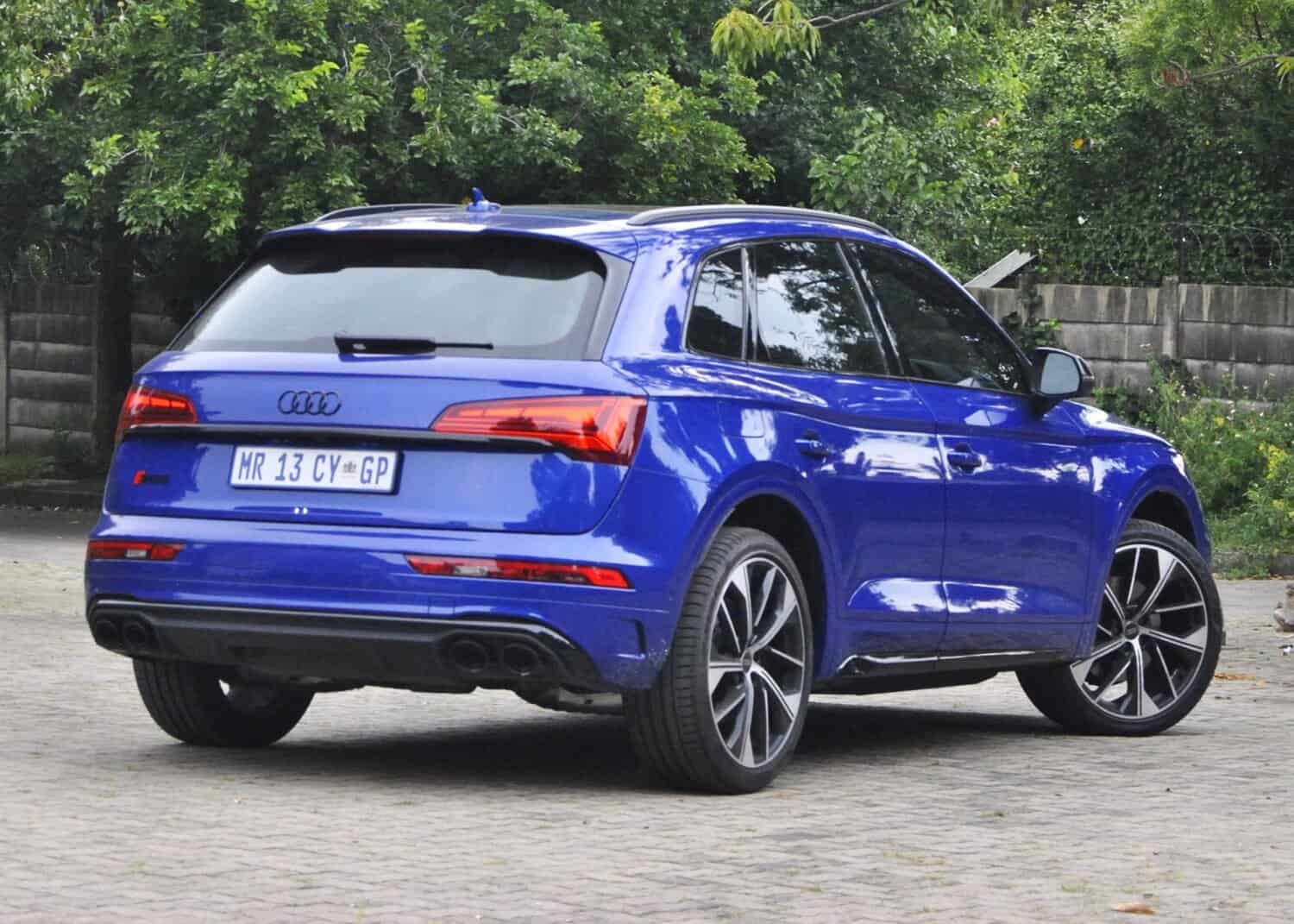
As a way of saying goodbye, the test unit featured the black styling package under Black Edition nomenclature introduced two years ago.
Supposed to improve the SQ5’s value-for-money proposition by adding a number of otherwise options at no extra cost, the 501 km and seven days behind the wheel served as a fond but also slightly disappointing farewell, considering the likely complexity the new Q5 and SQ5 will represent.
Sporty but not loud
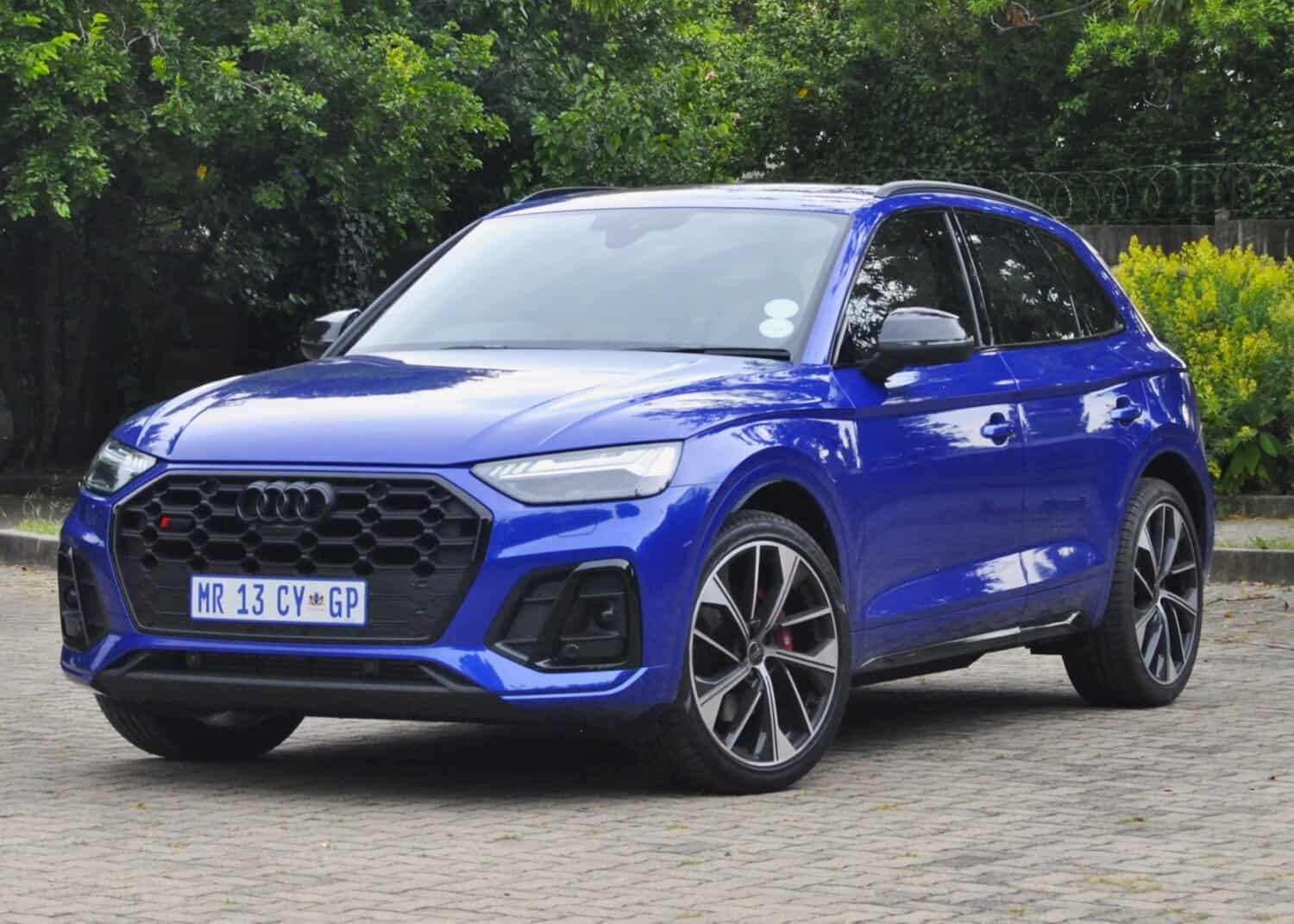
Decked out, stunningly, in an S model unique colour called Ultra Blue Metallic, the SQ5 is still restrained in appearance, and nowhere as polarising as the BMW X3 M50, for example.
Aside from the colour, the black touches feature on the door handles, around the Singleframe grille and on the faux skidplates underneath the bumpers.
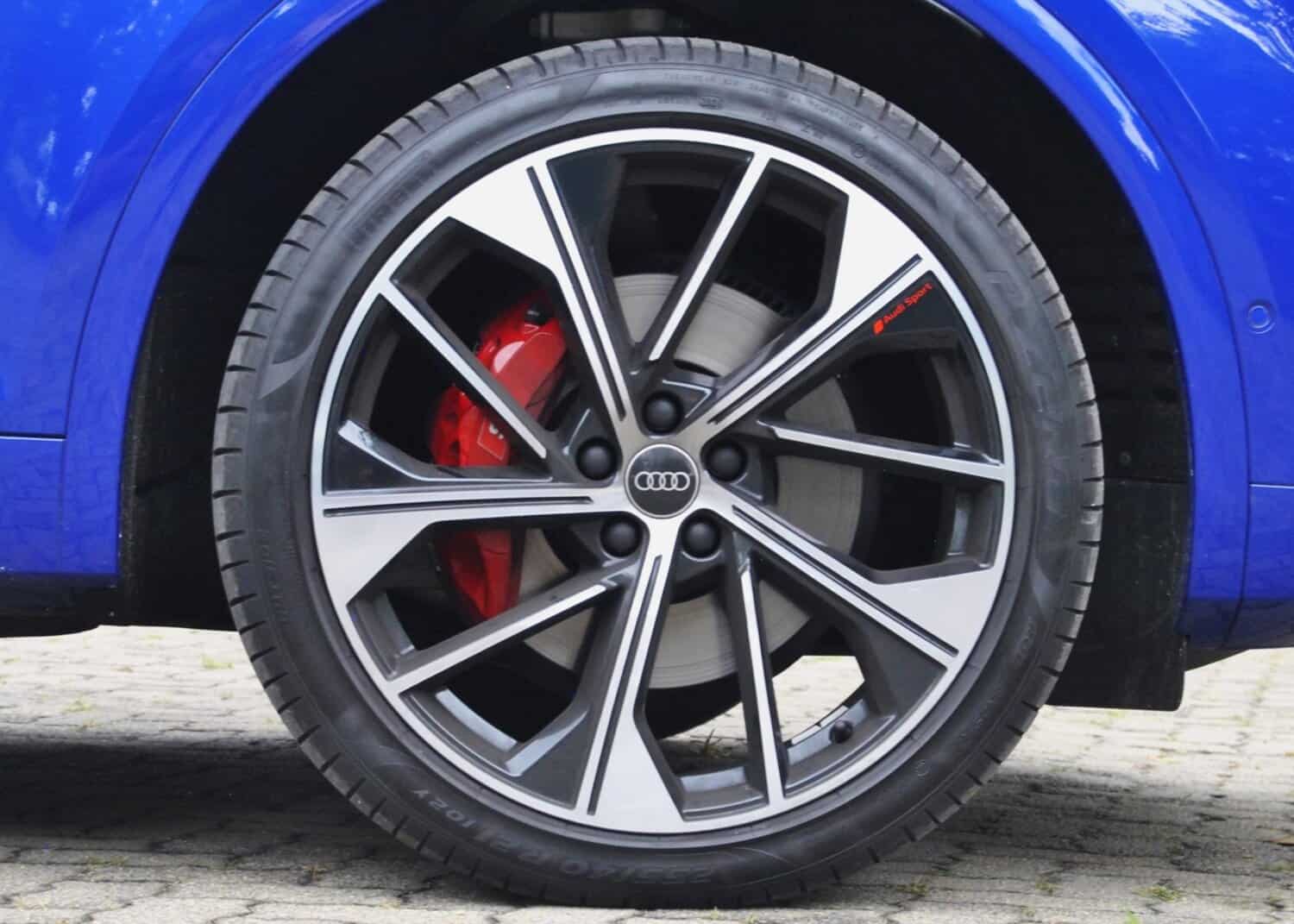
As well as the Matrix LED headlights, the 21-inch Audi Sport wheels remain silver albeit with black highlights, while the brake calipers receive a red finish.
Given the surprise absence as to why an RS Q5 never crossed Audi’s minds, the SQ5 strikes a well proportioned balance between staid and sporty, without going overboard.
Showing its age the most
As mentioned, opening the door gives the SQ5’s nearly decade old age away.
Despite the mentioned facelift, the interior verges on the dull side by modern standards, in spite of the trademark, impeccable, Audi built quality.
The virtuous of the layout and design being older, though, is that functionality remains as easy as ever with no myriad of screens on display.
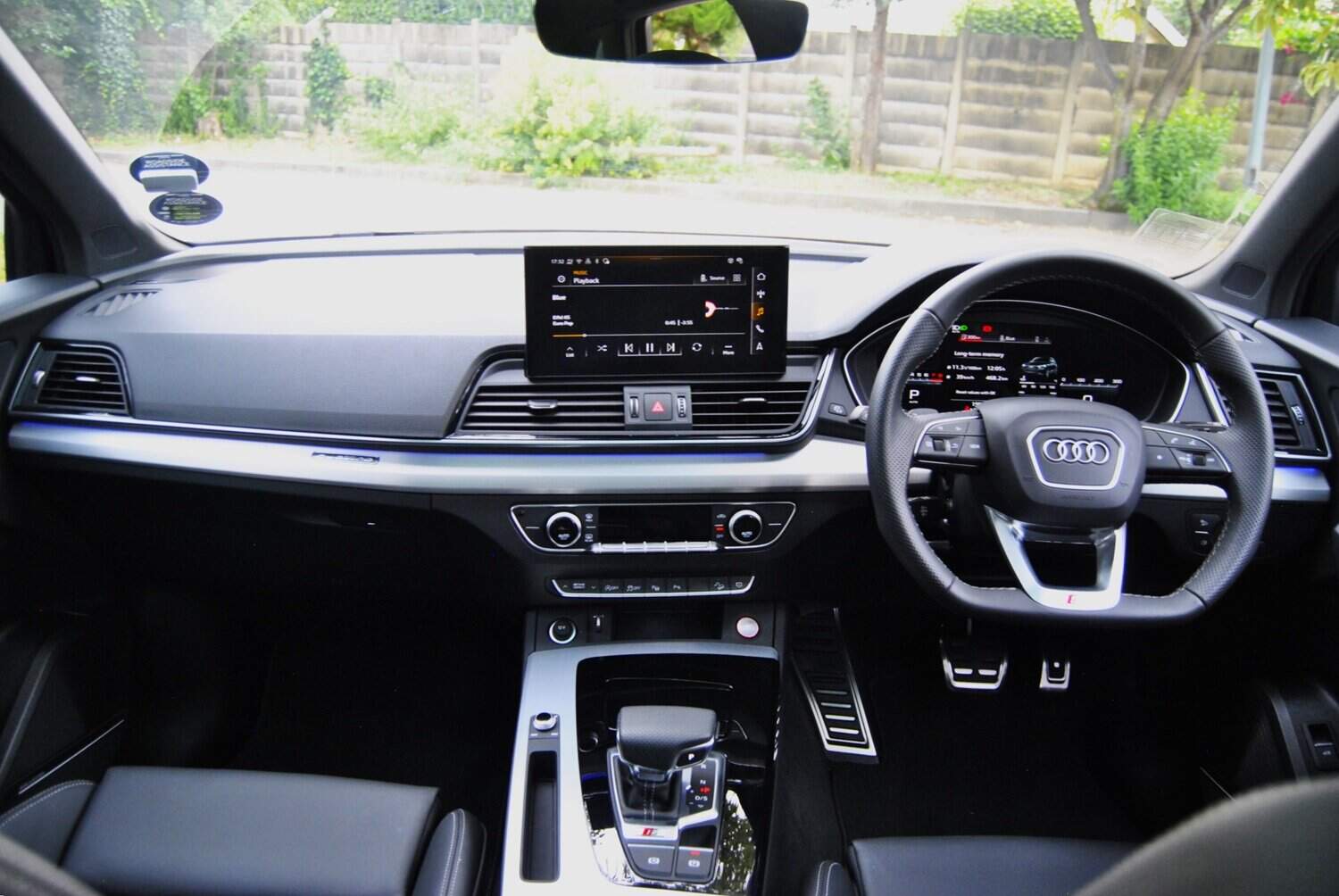
Aside from physical buttons, a volume dial also remains, although, mounted on the passenger’s side as its relocation to beside the driver has not taken place in the move from left to right-hand drive.
Still, this is nothing but a minor irritation as the rest of the cabin’s ergonomics leave little to be desired.
This same also applies to the 10.1-inch MMI infotainment system, which remains one of the easiest systems to use as it had nearly a decade ago.
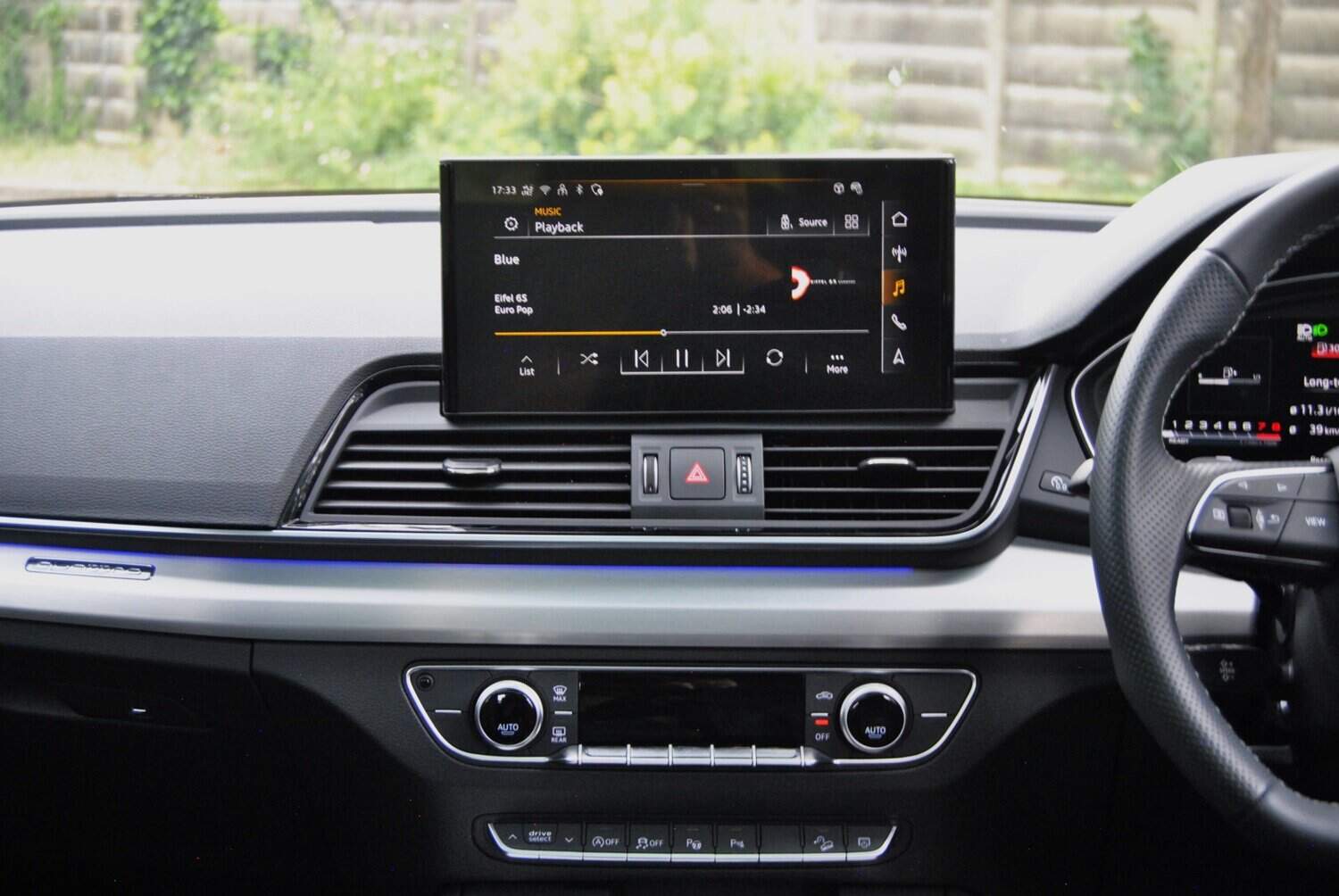
Easy to scroll through and without the myriad of sub-menus, it remains the clearest example of the saying, “if it ain’t broke, don’t fix it”.
At the same time, 12.3-inch Audi Virtual Cockpit Display instrument is still configurable, but with all of the readouts neatly “integrated” and uncomplicated to decipher.
No need to tick the boxes
Excluding the items already mentioned, the SQ5’s list of otherwise cost options include a panoramic sunroof, electrically folding tow bar, the Audi Phone Box smartphone pairing system, keyless entry, rear type-C USB ports and Park Assist.
Arguably the most welcoming standard inclusions are the diamond-pattern Nappa sport leather seats and the excellent Bang & Olufsen 3D sound system.
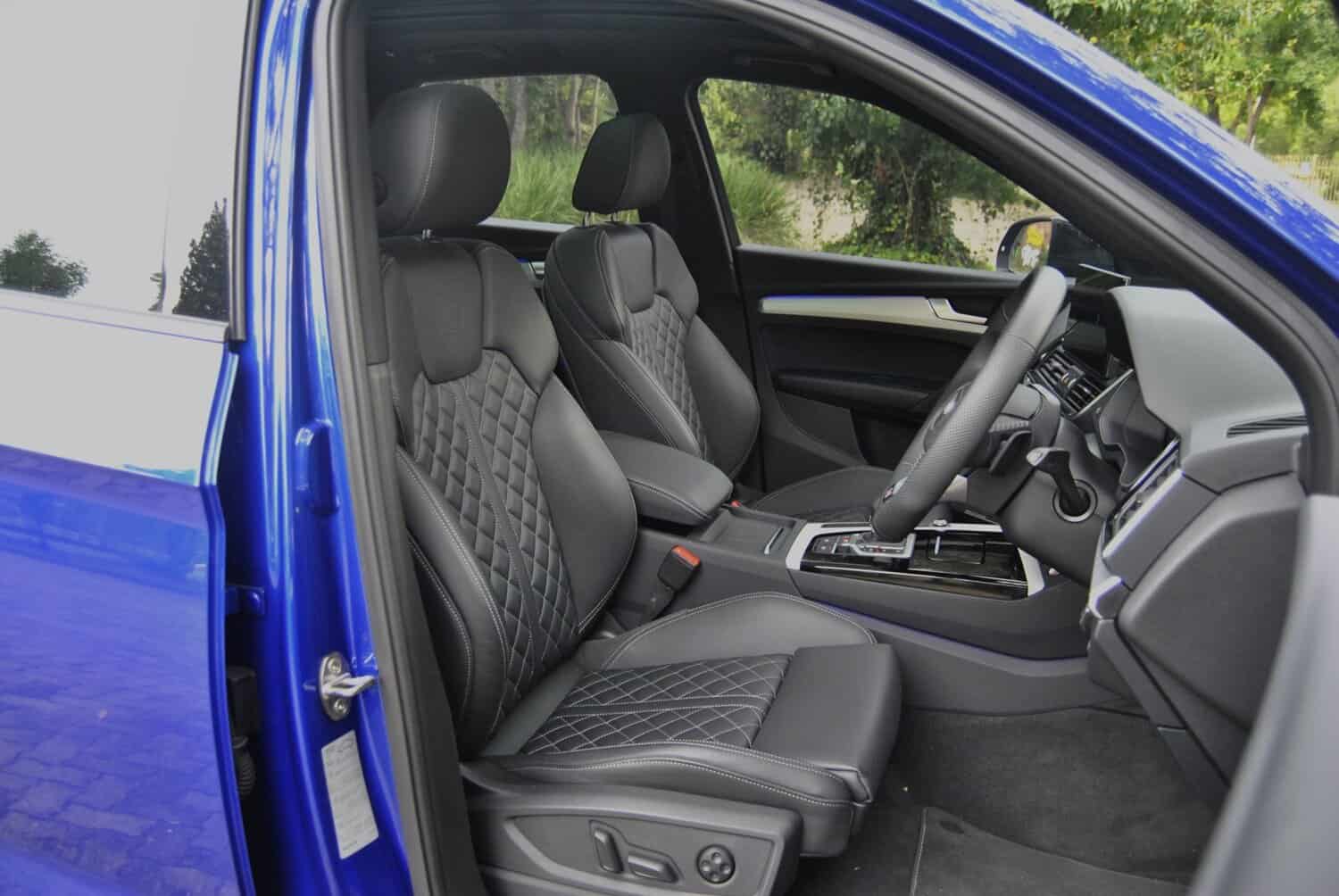
Despite their S insignia and wearing the “sport” tag, the seats are more comfort-biased as opposed to those of a comparative RS model.
While oddly devoid of heating or ventilation settings, the inclusion of electrical adjustability and lumbar support for the driver, makes getting comfortable easy with no lack of support either.
Not all rosy
The same, however, cannot said of the rear quarters, especially headroom thanks to the panoramic roof impacting on space, albeit by the absolute slightest.
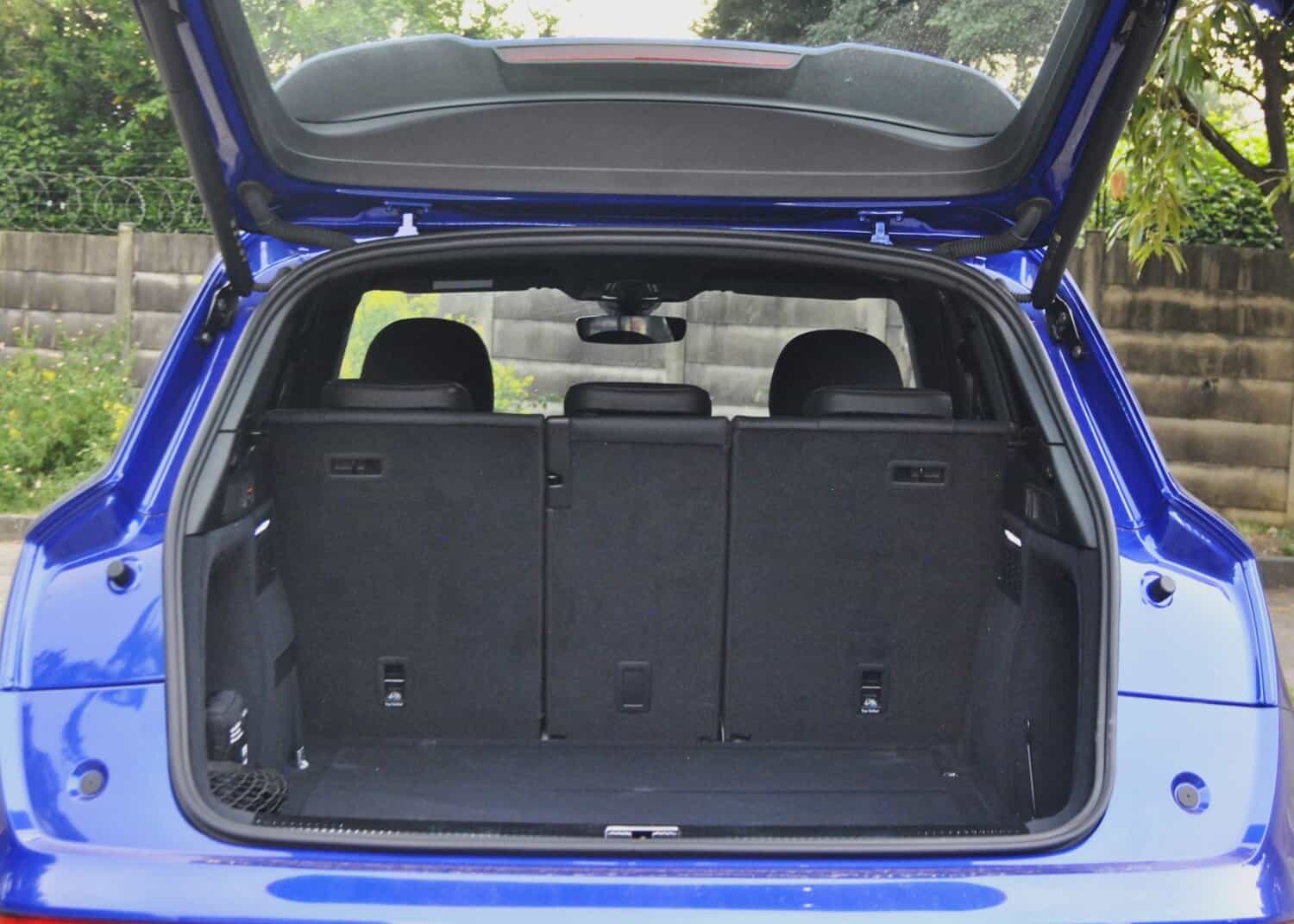
Legroom is much more impressive, though, and opening the electric tailgate reveals 510-litres of boot space, or 1 510-litres with the rear seats folded forward.
About that engine…
Up front, the SQ5’s standing as an “S” model translates to it being nowhere as a hardcore as an RS in spite of its engine’s displacement.
Outputting 260kW/500Nm, the 3.0 TFSI V6, as with the exterior, straddles the gap between refined and smooth, but not explosive when leaning on the loud pedal.
Starting up with a typical six-cylinder growl, the engine quickly settles down to a low tone burble with an linear power delivery.
Once past 3 000 rpm, the lag makes away for a power surge that almost doesn’t want to end. The same goes for the soundtrack, which becomes throatier and ear-pleasing without popping or banging.
While putting Audi’s claimed 0-100 km/h time of 4.9 seconds at Gerotek didn’t materialise, the engine’s characteristics don’t result in the SQ5 feeling lethargic or underpowered.
Instead, it can be described as “expected” for what is, to repeat the narrative, not an RS similar to the X3 M50 being an M Performance and not full-on BMW M model.
Tiptronic more than capable
Unlike the Q5 range, the SQ5 sticks with the torque converter eight-speed Tiptronic gearbox instead of the dual-clutch seven-speed S tronic.
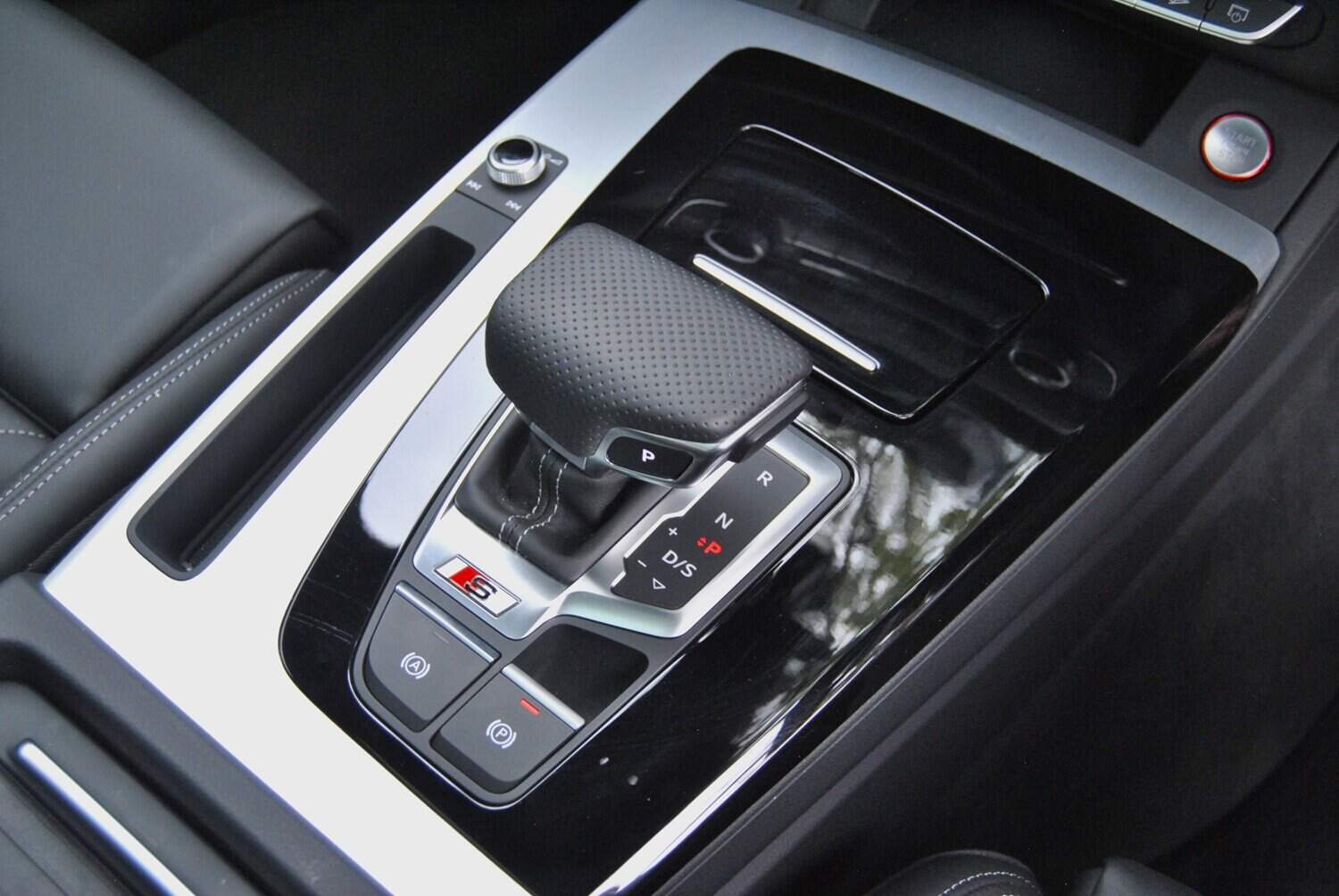
Smooth, without the typical low-speed dual-clutch shudder, the Tiptronic isn’t all perfect and tends to hesitate when asked to suddenly shift down.
Moving the flat-topped gear lever into Sport mode and using the paddle shifters does alleviate this entirely, even though most buyers will simply leave it in Drive and make it decide its next move.
Comfortable cruiser
What SQ5 lacks in performance is made up in comfort and refinement on-road.
As part of the standardised “options”, Audi has equipped with the S adaptive air suspension and the Drive Select mode system.
In the case of the latter, seven settings feature; Efficiency, Comfort, Auto, Dynamic, Individual, Allroad and Offroad.
Denoting air suspension which adapts depending on the road surface and selected mode, ride quality is soft, but without falling apart when faced with sudden imperfections.
Suiting the SQ5’s dynamics, the suspension isn’t find lacking in the comfort department, nor does it become rock hard when switched to Dynamic mode.
As well as the cabin being quiet, the steering is weighted and with good feedback considering – yes again – it not being an RS.
Switching to Dynamic mode, which also improves throttle response and make the engine respond a bit better, the steering get heavier but not so much to hide its electric setup.
Unsurprisingly, grip is relentless thanks to the quattro all-wheel drive system. This means predictable handing, but surefootedness when setting off with urgency.
Fuel consumption
Left in Auto mode throughout most of the seven days – with sporadic jaunts in Dynamic – fuel consumption had expected to be on the high side.
Tipping the scales at 1 825 kg, and with a heavy V6 underneath its bonnet, the SQ5 fell way short of Audi’s 9.2 L/100 km claim by the time of its return.
The eventual best of 10.9 L/100 km displayed on the instrument cluster is still, however, commendable given the engine’s punch and displacement.
Conclusion
With the unveiling of the all-new Q5 at parent company Volkswagen’s annual product Indaba this week, the SQ5’s tenure has reached its end some are unlikely to welcome.
Nowhere as flamboyant or dramatic as its BMW and Mercedes-Benz rivals, the SQ5’s appeal is one of reservedness, but with an element of loutishness thrown in once in Dynamic mode,
At R1 541 000 with the black pack included, it comfortably beats the X3 M50 and Mercedes-AMG GLC 43 for value despite being the oldest.
Given the new generation’s likely higher price tag and complexities inside, the outgoing SQ5 can be seen as a well-devised bargain final performance goodbye worth taking a punt at.
NOW READ: Audi brings the knife out on Q5
About the Author