Early on January 15, 2026, Ugandans arrived at polling stations with the familiar mix of patience and purpose.
Some came early, hoping to vote before work. Others prepared for a long wait. By law, polling was meant to begin at 7:00 a.m. Instead, across much of the country, the day stalled before it had properly begun.
The machines had failed. Uganda’s general election, held to choose a president and members of Parliament at the end of their five- year terms, was meant to showcase a technologically fortified voting process.
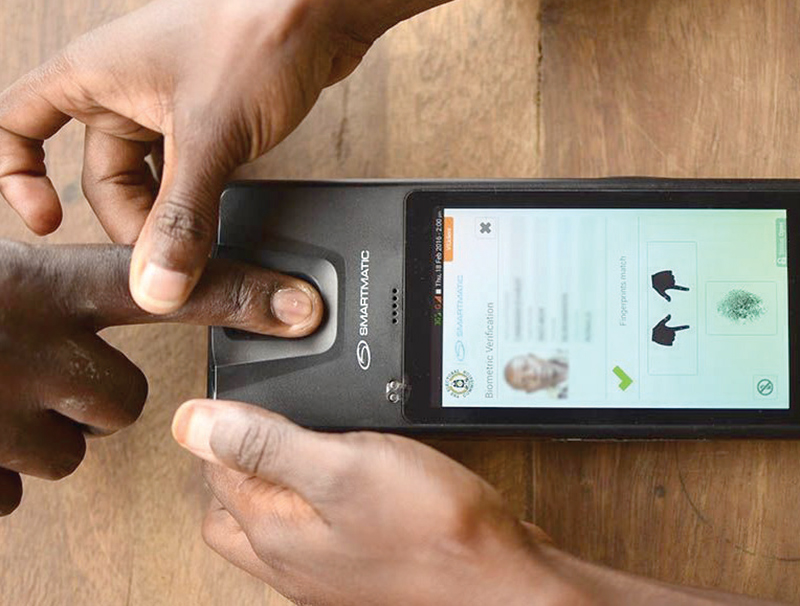
At its centre were biometric voter verification kits (BVVKs), introduced to enforce the principle of “one person, one vote” and prevent fraud. Instead, they became the election’s first and most visible crisis.
The Electoral Commission had procured 109,142 biometric kits at a cost of Shs 268.38 billion, supplying two machines to each of the country’s 50,739 polling stations. The devices, supplied by Sim Valley, were equipped with fingerprint scanners and facial recognition software.
Parliament and election observers had raised concerns about their reliability long before election day. Those concerns proved prophetic. By 6:30 a.m., queues had formed at polling stations in Kampala and beyond. Yet voting could not begin. At station after station, the biometric kits failed to activate.
By mid-morning, frustration was rising. “We are waiting for a code from the Electoral Commission to activate the machines,” a polling assistant told voters at St. NUWA polling station in Makerere–Kikoni.
“We cannot allow you to vote before biometric verification.” By 9:30 a.m., many voters were still standing under the sun, uncertain whether voting would begin at all. At Naguru One polling station, some gave up and left.
“I work as a security personnel in Ntinda,” one voter said. “I was allowed to vote and report by 8:30 a.m. But there is no sign voting is starting.”
Elsewhere, the problems multiplied. At Kikomeko Ground and Kikaaya grounds in Ssumbwe Parish, Wakiso District, none of the promised 34 biometric machines were delivered to the 17 polling stations there.
In other areas, polling assistants failed to report for duty, forcing supervisors to ask for volunteers from the queue, offering Shs 100,000 for the day. Confusion deepened when some polling stations were relocated without notice.
Voters arrived at familiar locations only to be redirected elsewhere, often without clear guidance. Under mounting pressure, the Electoral Commission shifted course. Its chairperson, Justice Simon Byabakama, issued a directive instructing officials to abandon biometric verification where machines failed and proceed using the National Voters Register.
“Where a biometric machine fails to start or function,” Byabakama said, “the voting process should commence immediately… so as not to disenfranchise voters.”
He apologised for the inconvenience and ordered that polling stations remain open beyond 4:00 p.m. to allow all voters in the queue to cast their ballots. Voting eventually began around 9:30 a.m. in many areas, and closer to midday in others.
Even the president was not spared. President Yoweri Kaguta Museveni, 81, voted at Rwakitura in Kiruhura District and acknowledged the system’s failure.
“It did not accept my fingerprints,” he said. “But when they put my face, the machine recognised me.”
Later, Museveni suggested the problem might have gone beyond technology, alleging possible sabotage by Electoral Commission staff who had not submitted operator biodata in time. Opposition leaders were less charitable.
“They wasted billions of taxpayers’ money,” said National Unity Platform leader Robert Kyagulanyi Ssentamu after voting in Magere.
“These machines are not even working.” Kyagulanyi warned against interference and called on citizens to protect their vote, while stressing non-violent protest.
Other candidates echoed his concerns. Mubarak Munyagwa of the Common Man’s Party argued the failures undermined the legal basis of the vote. Mugisha Muntu of the Alliance for National Transformation described the breakdown as systemic, pointing to delays of up to six hours in some districts.
Forum for Democratic Change candidate Nandala Mafabi went further, calling for the arrest of the Electoral Commission chairperson and an audit of the billions spent. Robert Kasibante of the National Progressive Party alleged deliberate sabotage.
Frank Bulira of the Reformed Progressive Party described the failures as negligence that indirectly disenfranchised voters. By the time ballots were finally cast, the damage had already been done.
In an election already marked by internet shutdowns, heavy security, and widespread mistrust, the failure of the biometric system reinforced a deeper unease. Technology meant to inspire confidence instead exposed fragility.
For many voters, the delays were not just an inconvenience—they were another reminder of how easily the mechanics of democracy can falter. When the sun finally dipped and ballots were cast, Uganda’s election had survived—but only just.
The biometric machines, meant to signal progress and integrity, instead became symbols of fragility, reminding voters how easily the promise of a smooth, credible vote can unravel.
For some, the delays were an inconvenience; for others, they were the last straw in a long relationship with a system they no longer trust. Elections are not only won by numbers, but by confidence—and once lost, confidence is far harder to restore than any machine.
What lingers after January 15 is not just who won, but whether Ugandans believe the process that delivered the result truly worked for them. Uganda voted. But the machines’ silence spoke loudly.
About the Author