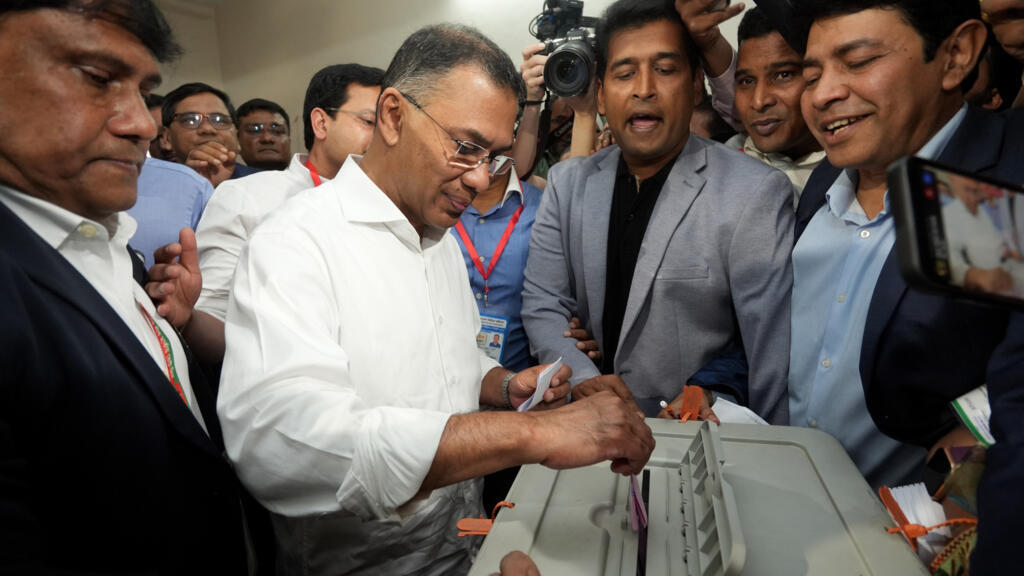
The Bangladesh Nationalist Party (BNP) claimed a decisive victory on Friday in the country’s first general elections since a deadly uprising in 2024, with party leader Tarique Rahman set to become prime minister.
According to official Election Commission results, the BNP-led alliance secured 212 seats, while the Islamist-led Jamaat-e-Islami alliance won 77 seats. The Jamaat, however, voiced doubts over the credibility of the results, citing “serious questions about the integrity of the results process” without providing specific evidence.
Rahman, speaking to AFP two days before polling, expressed confidence that his party — long suppressed under the 15-year autocratic rule of ousted Prime Minister Sheikh Hasina — would reclaim power in the South Asian nation of 170 million people. Hasina’s Awami League party was barred from participating in the election.
International Reactions
The United States embassy congratulated Rahman and the BNP for a “historic victory,” while neighbouring India hailed it as a “decisive win,” a positive step after tense bilateral relations. China and Pakistan, both of which had strengthened ties with Bangladesh following Hasina’s ouster, also extended congratulations.
Election Conduct and Turnout
The vote was largely peaceful, with the Election Commission reporting a 59% turnout across 299 of 300 constituencies. Another 50 seats reserved for women will be allocated from party lists.
Security forces were deployed nationwide ahead of the polls, following UN warnings of “growing intolerance, threats and attacks” and a “tsunami of disinformation.” During the campaign, political clashes left five dead and more than 600 injured, according to police records.
Despite past turbulence, the BNP urged restraint. Senior party leader Ruhul Kabir Rizvi called on supporters to offer prayers rather than hold street celebrations. “There will be no victory rally despite the BNP’s sweeping victory,” he said.
Supporters, however, remained enthusiastic, gathering outside BNP offices into the night. “We will join the nation-building effort led by Tarique Rahman,” said Md Fazlur Rahman, 45. “Over the last 17 years, we have suffered a lot.”
Jamaat-e-Islami and Opposition Reactions
Jamaat chief Shafiqur Rahman criticized the election process, claiming “repeated inconsistencies and fabrications in unofficial result announcements,” but did not provide further details.
Former interim leader Muhammad Yunus, who has led the country since Hasina’s ouster in August 2024, urged calm. “We may have differences of opinion, but we must remain united in the greater national interest,” he said, describing the election as having “ended the nightmare and begun a new dream.”
Hasina, sentenced to death in absentia for crimes against humanity, denounced the vote as “illegal and unconstitutional.”
Referendum and Democratic Reforms
Voters also endorsed constitutional reforms in a referendum, including prime ministerial term limits, a new upper house of parliament, strengthened presidential powers, and enhanced judicial independence, with around 60% approval.
About the Author