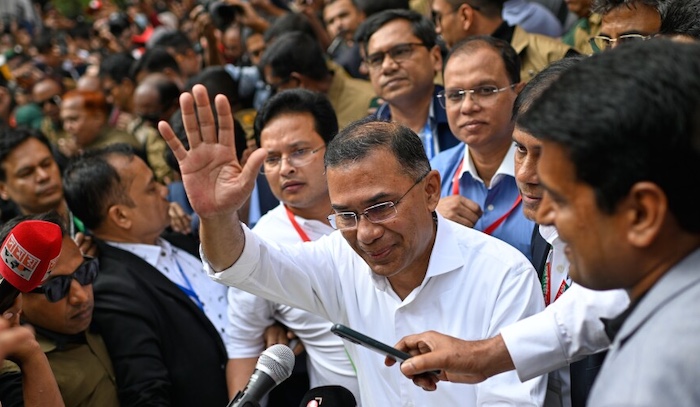
The Bangladesh Nationalist Party (BNP) has won a decisive majority in Bangladesh’s first parliamentary election since the student-led protests of 2024, ending the 15-year rule of former Prime Minister Sheikh Hasina. This marks a dramatic political comeback for BNP leader Tarique Rahman, who has been living in self-imposed exile in London.
Voters also participated in a nationwide referendum to amend the constitution, reflecting widespread demand for political reform and democratic renewal after the protests. The 2024 uprising resulted in roughly 1,400 deaths, with Hasina accused of ordering crackdowns, allegations she denies. Her party, the Awami League, was prohibited from contesting the election, leaving the BNP to lead the political transition.
The international community closely monitored the vote. The China embassy in Dhaka congratulated Bangladesh on what it called a “smooth and successful” election and welcomed the BNP’s lead. Beijing highlighted plans to “write new chapters of China-Bangladesh relations” and cited local media projections confirming the BNP victory.
China has strengthened ties with Bangladesh since the interim government took office in August 2024, investing $800 million and expanding cooperation in defence, medical, and infrastructure sectors. Meanwhile, India has observed developments closely, with bilateral relations strained following Hasina’s departure.
Analysts say the BNP’s win opens a new chapter for Bangladesh, promising constitutional reforms, governance changes, and shifts in foreign policy. The election underscores both the country’s political transformation and its evolving regional and international relations under a new leadership.
Erizia Rubyjeana
About the Author