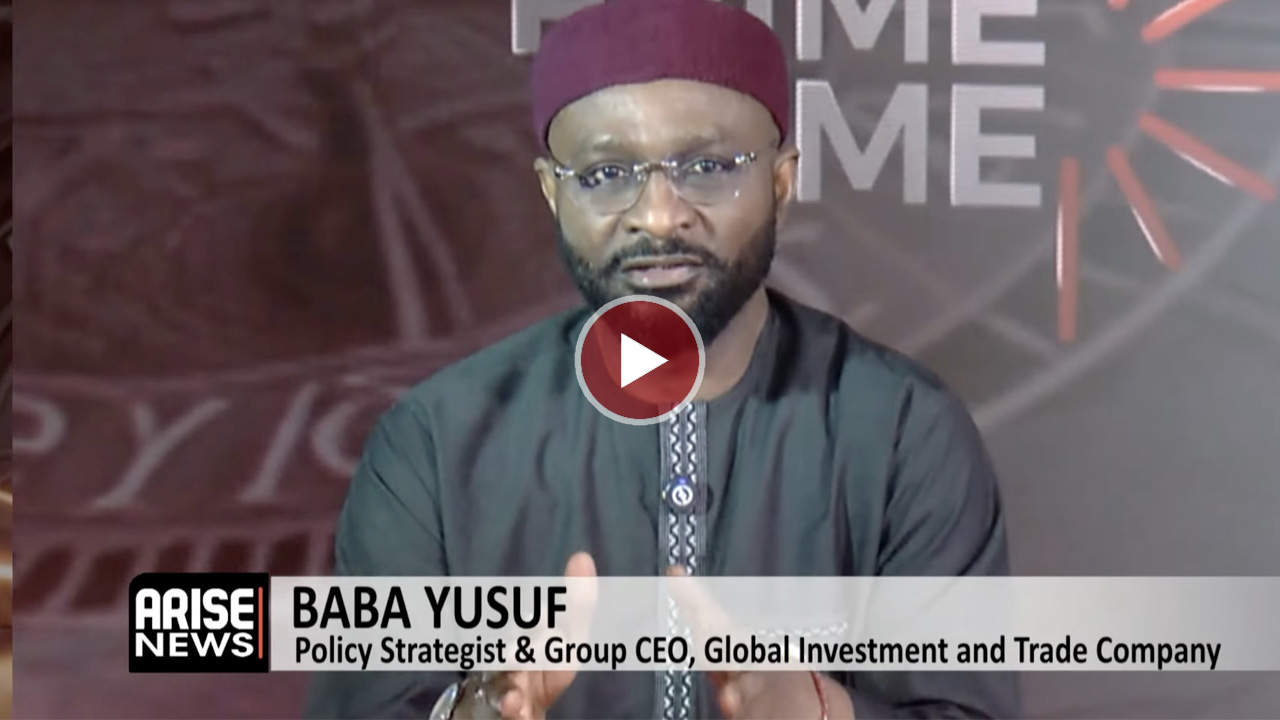
A policy strategist and Group Chief Executive Officer of Global Investment and Trade Company, Baba Yusuf, has said Senator Rabiu Musa Kwankwaso misjudged his political leverage in his reported negotiations with the All Progressives Congress (APC), describing the demands attributed to him as an example of overreach and the declining relevance of transactional godfather politics in Nigeria.
Speaking in an interview with ARISE News on Friday, Yusuf said available political signals suggest Kwankwaso overplayed his hand, even as he cautioned that the senator’s own account of events should still be heard.
“I will agree with the second outcome you mentioned — that Senator Rabiu Musa Kwankwaso overreached,” Yusuf said. “Without prejudice to hearing his own side of the story, Nigerian politics today is such that about 70 per cent of the wheeling and dealing is already out in the open.”
He argued that recent political developments in Kano had weakened Kwankwaso’s bargaining power.
“The dice has already been cast,” Yusuf said. “He has lost his key political godson — who incidentally is his son-in-law — to his political arch-enemy, former Governor Abdullahi Ganduje, and to the APC.”
Yusuf said conversations with party supporters across Kano suggest a broader shift away from entrenched political patronage.
“What we are seeing is the politics of entitlement by the political class,” he said. “I dare say that the vicious cycle of transactional godfatherism in Nigeria is timing out.”

Drawing parallels with political crises across the country, Yusuf said Kwankwaso’s situation was not unique.
“We are seeing what is playing out in Rivers State. We saw what happened in Kano State before. We saw what played out between Governor Obaseki and former Governor Nasir El-Rufai,” he said. “This is a lesson for political players that sometimes you need to play the long game.”
He warned that internal tensions within the APC itself could soon surface.
“The current honeymoon in the APC is another trouble waiting to happen,” Yusuf said. “As we move towards party congresses at state and regional levels, it will be interesting to see how these strange bedfellows manage power.”
On the defection of Kano State Governor Abba Kabir Yusuf from the New Nigeria Peoples Party (NNPP) to the APC, Baba Yusuf described the move as driven by political survival rather than ideology.
“It is pure and simple self-preservation,” he said. “A few months after his swearing-in, there were chants across Kano saying, ‘Aba ya tsaya da kansa’ — meaning, ‘Aba, stand on your own feet.’ That was the beginning of what we are seeing today.”
He said tensions emerged as members of the Kwankwasiyya movement accused Kwankwaso of exerting excessive control over the governor.
“There was an overbearing hold on the governor by Senator Rabiu Musa Kwankwaso,” Yusuf said. “This is a classic template of godfatherism playing out between a godfather and a godson.”
Yusuf noted that Governor Yusuf initially relied heavily on Kwankwaso’s political machinery.
“He had no independent political structure,” he said. “He leaned on the Kwankwasiyya structure, which we must give credit to — Kwankwaso built a movement that resonated deeply with the masses of Kano.”
However, he said the governor ultimately chose to break away.
“Aba Kabir Yusuf used the opportunity created by that overbearing influence and Kwankwaso’s political overreach to free himself,” Yusuf said.
Assessing the impact of the defection on Kwankwaso’s national standing, Yusuf said the effect would be mixed.
“In the short to mid-term, this has weakened him,” he said. “But in the mid-to-long term, Kwankwaso could resurge politically in Kano.”
He cited Kano’s history of protest voting to explain why Kwankwaso’s grassroots appeal may endure.
“Kano is a very interesting state,” Yusuf said. “If you go back to history, we are masters of protest votes.”
Referencing the 1991 governorship election, he added, “When party elites fell out, the masses voted differently. That same political calculus still exists today.”
According to Yusuf, the erosion of Kwankwaso’s influence at the grassroots is not yet decisive.
“To be honest with you, the erosion of Kwankwaso’s value at the grassroots is not significant,” he said. “What remains to be seen is how this plays out in voting patterns, and how Governor Abba Kabir Yusuf delivers dividends of democracy between now and 2027.”
Boluwatife Enome
About the Author