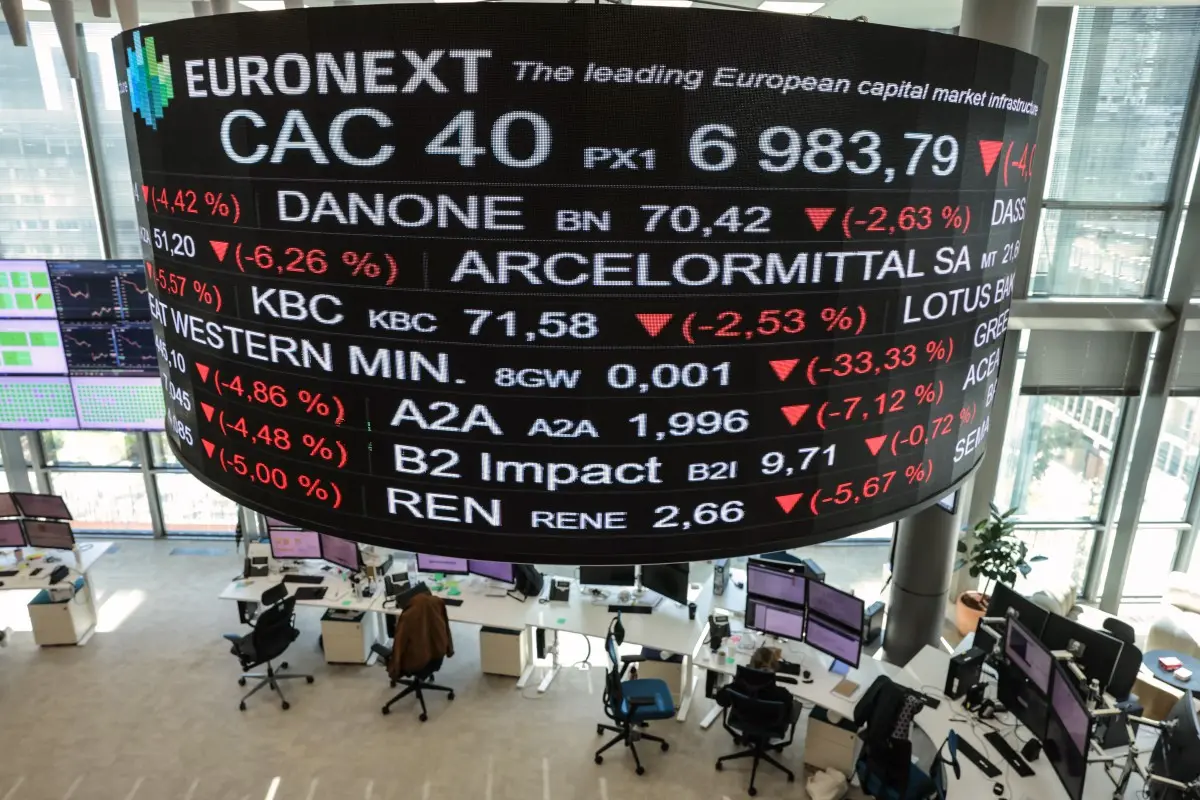
Markets react to reports the International Energy Agency may tap emergency oil stockpiles as Middle East tensions keep investors on edge……
Asian stock markets extended their gains on Wednesday while oil prices steadied, following reports that global energy authorities may release a large portion of emergency oil reserves to calm volatile markets.
Investors reacted to a report suggesting that the International Energy Agency (IEA) is considering the release of a record volume of strategic crude reserves to counter surging energy prices triggered by the ongoing Middle East conflict.
Oil markets have experienced sharp swings since military strikes by the United States and Israel on Iran late last month. Tehran retaliated by launching attacks on targets across the Gulf region and effectively shutting down the vital Strait of Hormuz, one of the world’s most important oil transit routes.
The disruption sparked fears of a prolonged conflict that could severely impact global energy supplies.
Those concerns pushed crude prices sharply higher earlier in the week, with both major oil benchmarks climbing close to $120 per barrel on Monday, their highest level since 2022. Natural gas prices also surged during the spike.
However, oil prices retreated on Tuesday after Donald Trump said the war with Iran could end soon, easing some of the panic in energy markets.
Sentiment improved further after reports emerged that leaders of the Group of Seven (G7) industrialised nations were discussing the possibility of releasing emergency oil reserves to stabilise supply.
According to a report by the Wall Street Journal, the IEA is considering a release that could exceed the 182 million barrels its member countries made available following Russia’s invasion of Ukraine in 2022.
The proposal was reportedly circulated during an emergency meeting involving energy officials from the IEA’s 32 member countries, with a final decision expected soon.
Despite the possibility of additional supply entering the market, oil prices remain highly sensitive to developments in the region.
Both Brent crude and West Texas Intermediate initially dropped around five percent on Wednesday but later recovered part of their losses as traders continued to weigh the risk of further disruptions.
Asian markets surge
Equity markets across Asia largely moved higher amid the relative easing in oil prices.
Japan and South Korea two markets that have seen significant volatility since the Middle East crisis escalated recorded strong gains.
The Nikkei 225 in Tokyo rose more than two percent, while South Korea’s Kospi index surged over three percent.
Other regional markets also advanced, including the Hang Seng Index in Hong Kong and major exchanges in Sydney, Wellington, Taipei, Manila and Jakarta.
Meanwhile, mainland China’s Shanghai Composite and Singapore’s market posted modest declines.
Uncertainty still clouds oil outlook
Despite the market rebound, analysts warn that the underlying risks in global energy supply remain significant.
France’s finance minister said earlier this week that discussions within the G7 about releasing strategic oil reserves were still ongoing and that members had not yet reached a final decision.
Market analysts say the key concern remains the stability of shipping routes in the Gulf.
Fawad Razaqzada of Forex.com noted that the Strait of Hormuz remains the most critical flashpoint for the global oil market.
“As one of the world’s most important oil shipping routes, any disruption to traffic through the strait would immediately reignite supply fears and likely send crude prices sharply higher again,” he said.
He added that traders are unlikely to push oil prices significantly lower until there is clear confirmation that shipping routes and regional production are stabilising.
U.S. monitors shipping routes
A spokesperson for the United States Department of Energy said officials are closely monitoring developments in the Gulf region and are in contact with industry leaders.
The spokesperson also revealed that the U.S. military has been asked to examine additional measures to ensure shipping through the Strait of Hormuz remains open.
These measures could include naval escorts for oil tankers, if necessary.
Iran, however, has responded to the strikes by threatening to block oil exports from the Gulf, insisting that it not Washington will determine how and when the conflict ends.
Trump has warned Tehran against attempting to mine the key waterway, which carries nearly 20 percent of the world’s crude oil supply.
“If for any reason mines were placed, and they are not removed forthwith, the military consequences to Iran will be at a level never seen before,” he said in a social media post.
Mixed signals on the war’s timeline
Analysts have also pointed to mixed signals from global leaders about how quickly the conflict might end.
Skye Masters of National Australia Bank said there appears to be a divergence in messaging between the United States and Israel.
While Trump has suggested the conflict could end soon, Israeli Prime Minister Benjamin Netanyahu has indicated that de-escalation may not happen immediately.
Key market indicators
As of early Wednesday trading:
- West Texas Intermediate crude rose 0.4 percent to $83.75 per barrel
- Brent crude gained 0.6 percent to $88.28 per barrel
In equity markets:
- The Kospi in Seoul climbed 3.3 percent
- Tokyo’s Nikkei 225 advanced 2.1 percent
- Hong Kong’s Hang Seng Index added 0.4 percent
- China’s Shanghai Composite slipped 0.1 percent
Currency markets also showed modest movement, with the euro strengthening slightly against the dollar and the British pound gaining ground.
Even with the short-term calm, investors remain cautious as the conflict in the Middle East continues to shape the outlook for global energy markets and financial assets.
About the Author