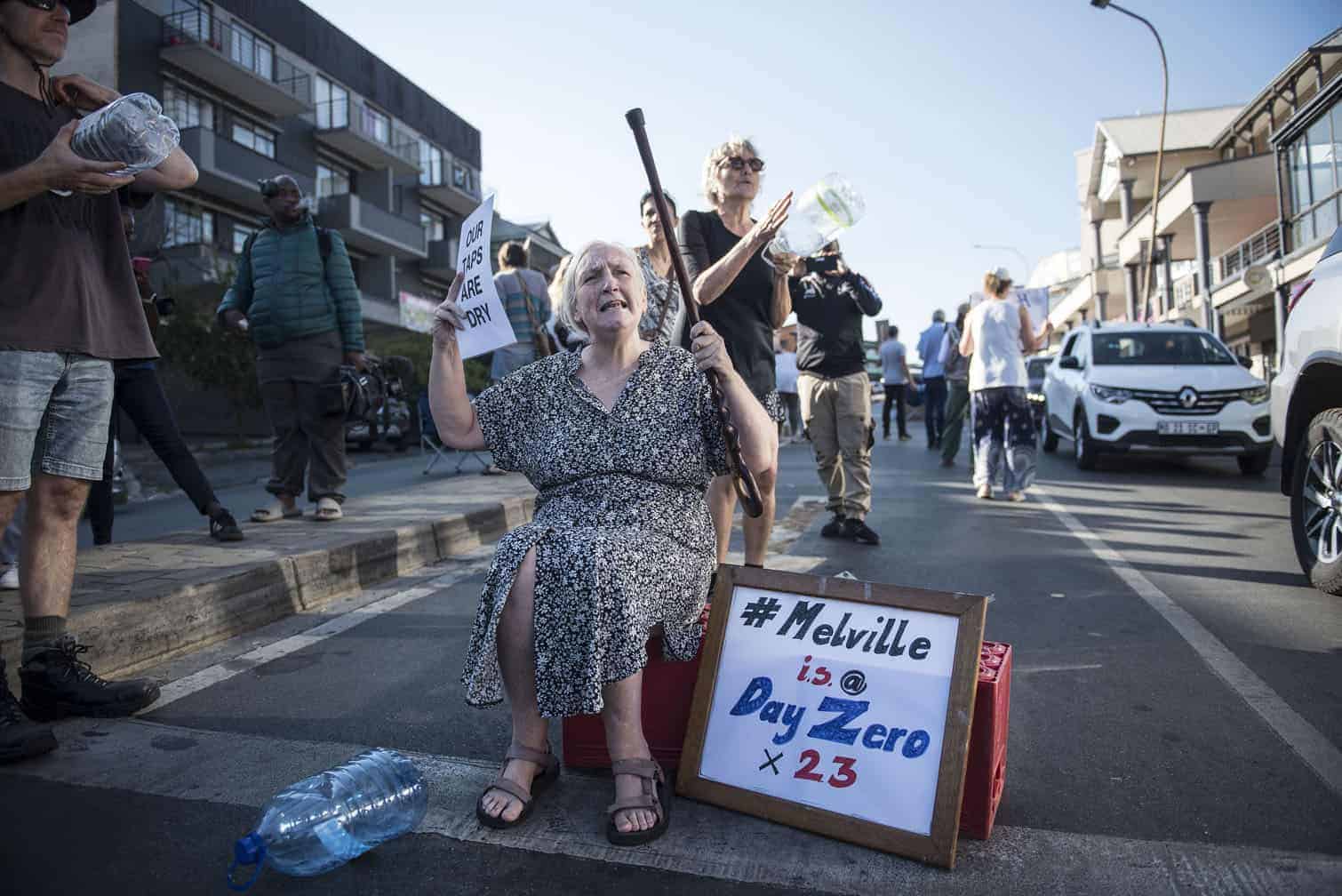
Melville resident Susan Jobson demonstrates as residents of Melville, Westdene and surrounding areas protest against the lack of water supply in their suburb and many parts of Johannesburg, 11 February 2026, along Main Street in Melville. Jobson has been without water for 16 days. The city is facing an increasingly dire water situation as taps have run dry. Picture: Michel Bega/The Citizen
Once you come to understand the comrades’ lust toward the Freedom Charter, you’ll understand why water is such a non-issue to the leadership class; it’s not mentioned in the Freedom Charter.
I guess that in 1955, the thoughtful people of the Congress Alliance didn’t think that their own would be leading the charge of watering down the infrastructure 70 years later, so they never included it in the instruction manual.
Is water not a human right?
If water wasn’t a big enough issue enough to plug it into the seminal document of freedom back then, what does that tell you about how bad our governance is now? It’s quite flippant to make the comparison, I know, and certainly philosophically inconsistent.
It’s just that you can’t claim to be the party on the side of human rights, particularly socioeconomic rights, and then give us the guy that tells us he’s suffering, too, because he has to bath in a hotel.
Bath? Gosh, even Jacob Zuma was water-conscious enough to ensure his controversy was merely a shower. Nevermind. I forgot about the firepool.
ALSO READ: Dry tap woes in Joburg may have shocked Ramaphosa into action
But worse, spending so many resources to disassociate with alliance partners like the DA and then probably handing the party Johannesburg, unless the electorate prefers no water, or isn’t fooled by the DA’s blue logo giving the subconscious hint that it’s got lots of water to give.
You’d think that having experienced the glories of load shedding and foreshadowing escaped Cape Town’s Day Zero crisis, there would be some attempt to prevent the Johannesburg taps running dry… and staying dry for weeks. But no.
The people can go without water. That should be the wording of the new freedom charter. After all, it promised freedom, not water.
And the constitution? What about that little right hidden in Section 27 about the progressive realisation of sufficient water? Well, if you are a fan of the basic education system, then maybe you, too, can be a language artiste and interpret realisation to deterioration. That way, you can serve the constitution by letting the system break.
No fixing or prevention
If I didn’t have to conserve my liquids, I’d be wetting myself at the thought that nobody seems to be doing anything to fix the problem, let alone the years of not doing anything to prevent it in the first place.
Then again, this is South Africa, right. The place led by the “shut up, we’re working on it” class. Remember how we used to have all that gender-based violence until it was declared a national disaster? Thank goodness for that, because once men heard it was a national disaster, they decided to stop violencing.
ALSO READ: WATCH: Joburg in deep water crisis, as Pemmy Majodina sings ‘water song’ in Ethiopia
It’s great to know that all the government had to do was make the declaration because they haven’t really done much since the declaration, so clearly the declaration is working.
As the water makes a trickling return, one is left to wonder how long it will last. Is investing in a tanker a worthy pursuit and, if it is, why should it be? What of the poor folk who can’t get their hands on a tanker, have no place to put one or don’t have the buckets to fetch water from emergency pick-up points?
There’s a whole lot of rights issues at play here, but it doesn’t seem to be important enough, as long as there’s a hotel with a borehole and a bath.
About the Author