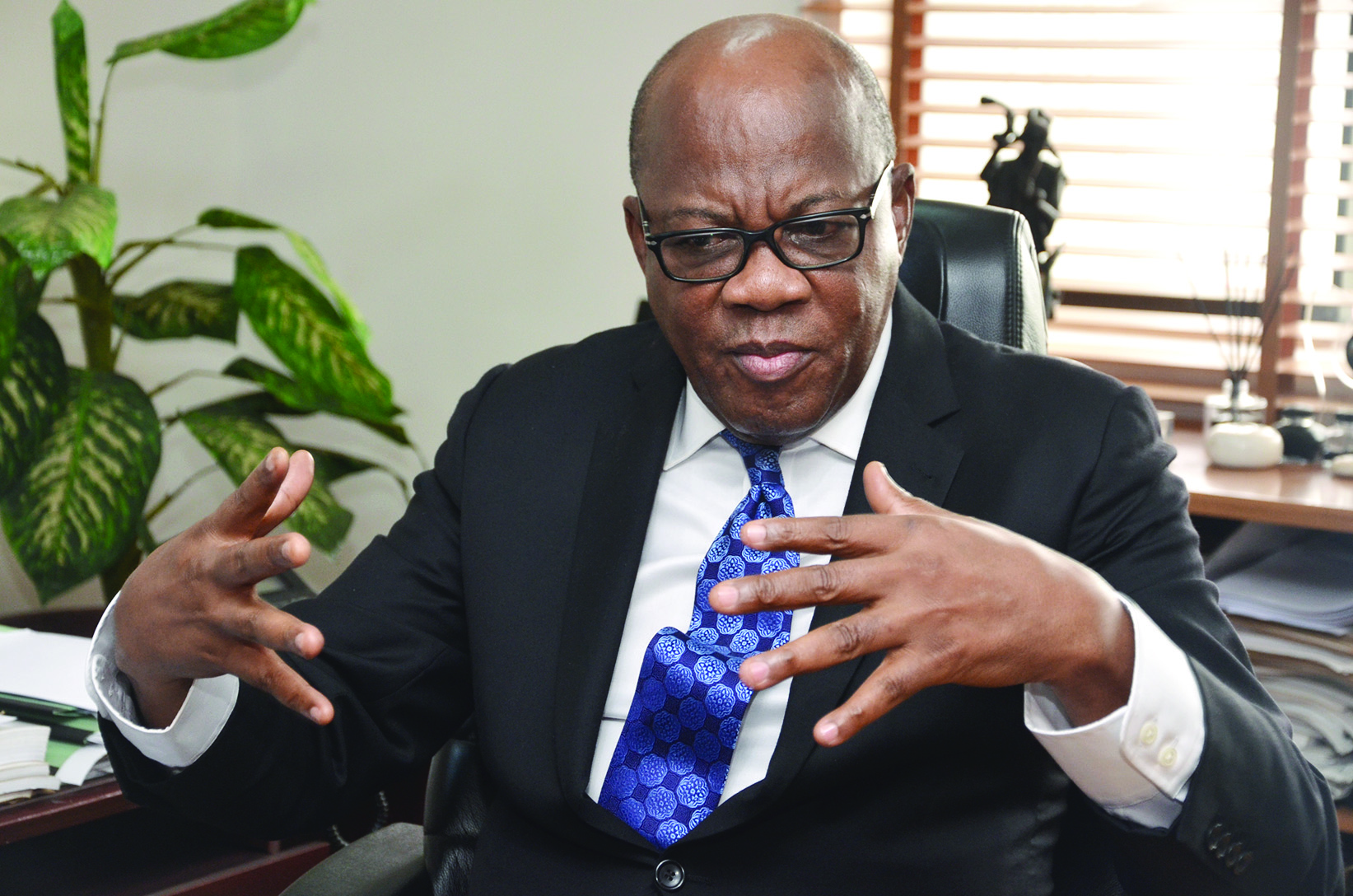
Former President of the Nigerian Bar Association (NBA) and maritime law expert, Dr. Olisa Agbakoba (SAN), has called on the Minister of Marine and Blue Economy, Adegboyega Oyetola, to urgently implement wide-ranging reforms that could unlock up to N70 trillion in annual revenue from Nigeria’s maritime and blue economy sector.
In a letter addressed to the minister on Sunday, Agbakoba described the maritime industry as Nigeria’s “largest untapped economic frontier,” with potential earnings that could rival or even surpass oil revenues if the government fully executes the reforms contained in the National Policy on Marine and Blue Economy (2025–2034).
He referenced projections by the Nigerian Institution of Marine Engineers and Naval Architects (NIMENA), which estimates that the sector could contribute $44 billion (N70 trillion) annually to national GDP through strengthened governance, improved regulation, and modernised infrastructure.
According to him, this scale of revenue offers Nigeria a critical pathway to economic stability at a time of deepening fiscal stress.
Agbakoba warned that the country’s financial condition has reached an alarming point.
He said as of June 2025, Nigeria’s total public debt stands at N152.40 trillion, while debt servicing consumed N12.36 trillion, which is 35.26% of the entire 2024 national budget.
The projected N15.4 trillion debt service bill for 2025 surpasses spending on education, health and defence combined, and far exceeds the World Bank’s recommended threshold of 22.5% for debt sustainability.
Despite this financial distress, Agbakoba said Nigeria continues to overlook enormous revenue opportunities in the maritime sector.
He detailed seven key revenue streams that could immediately transform the nation’s economic outlook if supported by legislative and institutional reforms.
He noted first that poor port infrastructure continues to cost the country an estimated N20 billion daily, as importers divert cargo to more efficient ports in neighbouring Benin Republic, Ghana, and Togo.
According to him, enacting the Ports and Inland Waterways Development Act and amending the NPA and NIWA laws would modernise Nigeria’s ports and unlock about N14 trillion annually from tariffs, cargo handling, and special economic zones.
Agbakoba also highlighted the wasted potential of Nigeria’s 42 inland waterways, which he said could generate N10-12 trillion annually if dredged and integrated into a multimodal national transport system.
This would reduce road congestion, lower transport costs, and facilitate new revenue lines from tolling, ferry operations and tourism.
He identified the weak enforcement of the Cabotage Act as another major leakage, noting that more than 25,000 foreign vessels trade illegally within Nigeria’s coastal waters.
Strengthening enforcement, he said, would secure N8 trillion annually while creating jobs for Nigerian seafarers and shipowners.
Agbakoba described as “a major oversight” the fact that oil rigs operating in Nigerian waters do not pay taxes, estimating an additional N6 trillion in yearly losses.
He urged an amendment to the NIMASA Act to create a framework for taxing rigs and offshore operations.
He further lamented the massive capital flight in oil and gas maritime services, where more than $1 billion worth of legal, insurance, shipping and financial services is annually executed abroad, costing Nigeria an estimated N16 trillion.
He recommended strict enforcement of the Local Content Act and the establishment of a Maritime Development Bank.
On maritime security, Agbakoba praised the Deep Blue Project for reducing piracy but insisted that only a full-fledged Nigerian Coast Guard can effectively safeguard the maritime domain.
Enhanced security, he said, would attract more international shipping traffic, reduce insurance premiums by up to 40%, and unlock N8–10 trillion annually.
He also urged the ministry to embrace emerging maritime technologies, particularly autonomous shipping, ahead of the International Maritime Organisation’s 2028 mandate.
Agbakoba urged the minister to implement the legislative roadmap already contained in the Marine and Blue Economy policy.
He said “Nigeria stands at a crossroads. The maritime sector offers immediate and transformative revenue opportunities that could relieve our debt burden and power national development. What is required now is decisive action.”
Wale Igbintade
About the Author