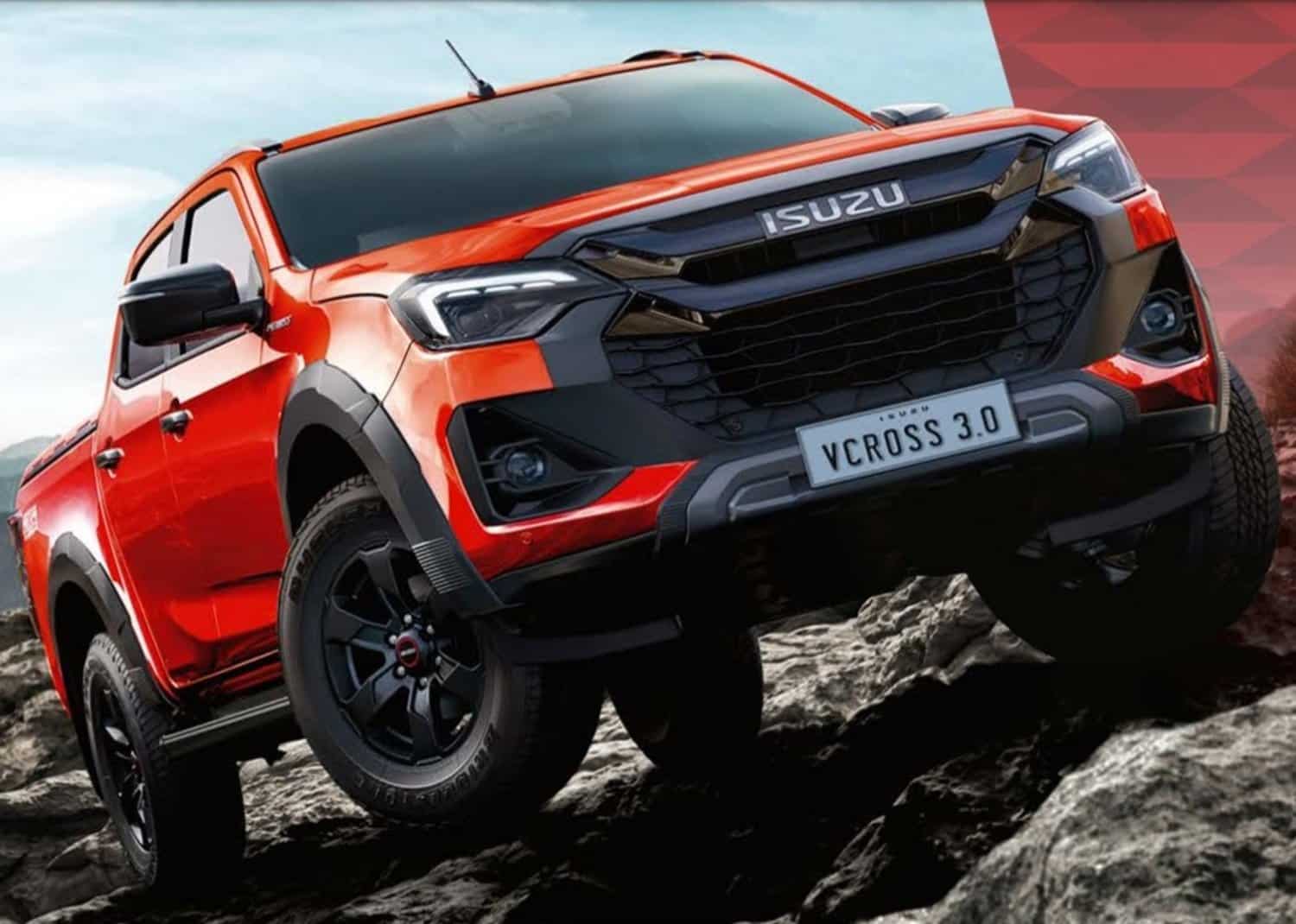
Isuzu has hinted that the next generation D-Max could follow the existing model by having its assembly take place at its Struandale plant in the Eastern Cape.
Running out
Back in December, an unnamed Isuzu representative alluded to Australia’s drive.com.au that the current RG generation D-Max is reaching the end of its lifecycle.
ALSO READ: Isuzu seemingly readying next generation D-Max for 2027 reveal
Accordingly, the source hinted hinted that the fourth generation D-Max could arrive in 2027, before stopping short of confirming anything else.
“You can imagine that we are now [on an] eight-year cycle [for] changing models, so like that, we are considering,” the representative told the publication.
Timeline so far
Revealed globally in 2019, the RG or third generation D-Max looks set to receive a final round of updates before production wraps-up.
At present, its one and only aesthetic revision has been in 2023, followed by the introduction of the brand-new 2.2-litre Max Force turbodiesel engine at the end of 2024.
Facelift coming
Locally, Isuzu has confirmed that the updated D-Max will finally go on-sale this year, though, it stopped short of confirming when.
A teaser campaign on its social media pages has, however, already started, suggesting an official reveal isn’t far off.
Due to not having been tested for local market conditions, the 2.2-litre Max Force is only expected to arrive at a later stage.
As such, expect the D-Max to continue with the current RZ4E-TC 1.9-litre and 4JJ3-TCX 3.0-litre DDI turbodiesel engines.
For South Africa
Speaking at its annual media conference Address event at Struandale last week, Isuzu Motors South Africa President and CEO, Billy Tom, said the brand has remained in a resilient position since becoming Isuzu Motors South Africa in 2018.
Including its truck division, it sold 26 122 vehicles in 2025, with offset of the D-Max increasing by 11.7%.
In total, D-Max sales stood at 19 153 units, making it the sixth best-selling vehicle of 2025, and third bakkie behind the Toyota Hilux and Ford Ranger.
In addition, sales of the MU-X rose 45.4% to 1 326, and vehicle exports to African markets by 4.5% to 5 371.
Africa’s importance
Having celebrated its 45th anniversary in South Africa last year, Tom stated that Africa has officially become the second biggest market for Isuzu after Thailand.
In a thinly veiled “confirmation” of the next generation D-Max’s assembly, Tom said one only needs to look at Africa’s ranking and importance to ascertain whether it will be produced or not.
He, however, stopped short of confirming it outright, or providing an estimated date or time of arrival.
At the same event, Executive Vice-President for Revenue Generation, Craig Uren, said the brand’s performance is all about consistency and not making excuses for being what it is.
Describing it at as “function over emotion”, he stated, “customers choose Isuzu because they know exactly what to expect: vehicles that are reliable, durable and built for the realities of African operating conditions”.
Further investment
Aside from significant investments into the facility since it took over after General Motors’ departure in 2017, it has injected an additional R750-million into the nearby VSL Manufacturing facility.
Opened last year, the plant will manufacture body components for the D-Max, as well as device skills development for employees.
Next, besides D-Max..
Down the line, the arrival of the updated D-Max will be followed by what the brand describes as an “improved” MU-X.

On-sale since last year, the nature of the “improvements” are unknown as no similar enhancements, bar the Max Force engine, have happened to the equivalent Thai market version.
While based on the same platform as the D-Max, the MU-X, for now, remains an imported product.
NOW READ: Isuzu removes wraps from improved, facelift D-Max
About the Author