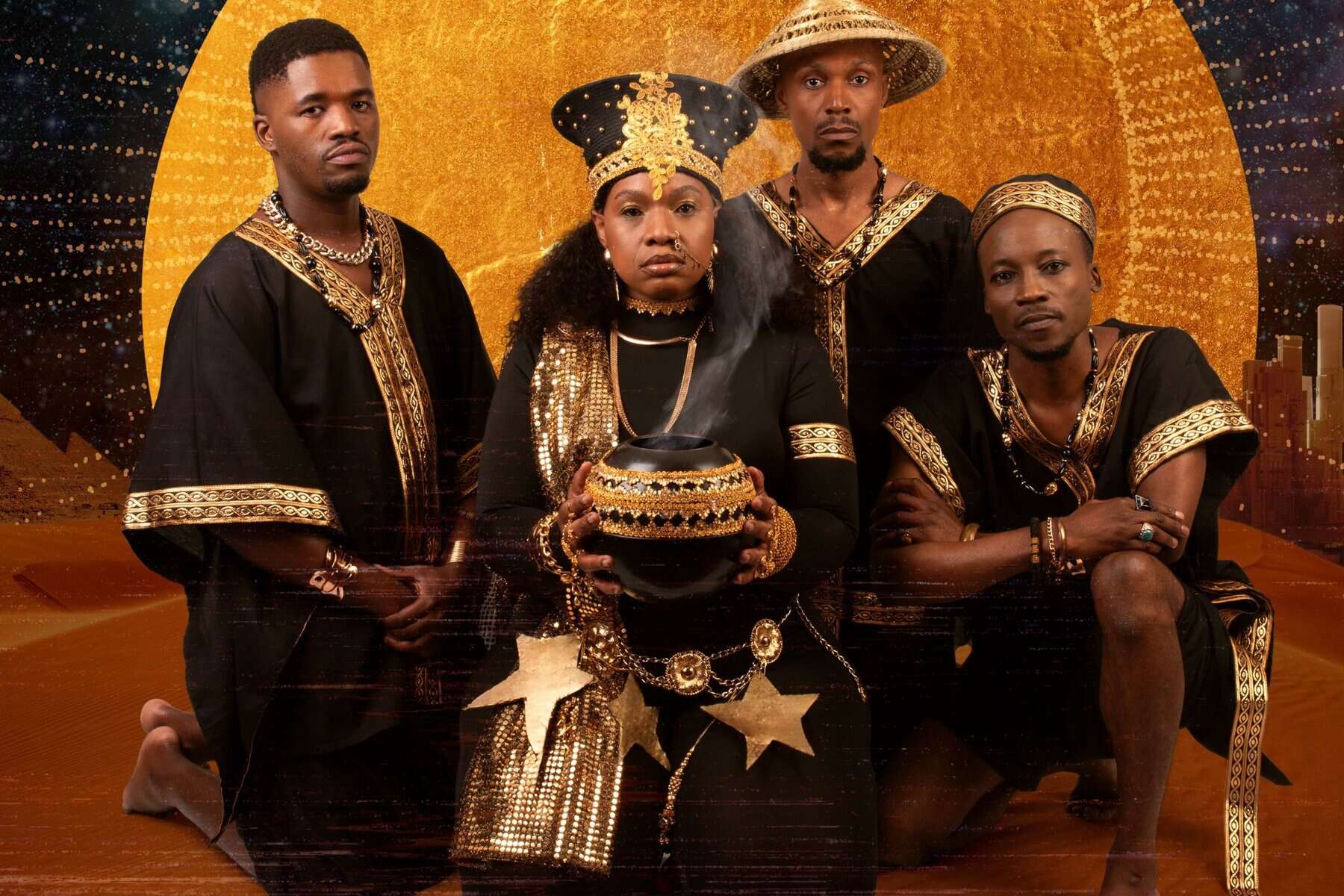
It’s music, but unlike what you have ever heard before. And it’s as authentic as the reality that’s carved out by us, and by our imaginations, every day.
L8 Antique combine indigenous rhythms and chants drawn from musical traditions across the African continent with modern recording technology, electronic programming and digital production.
The result is what they call African Futurism in practice, where ancient musical forms and contemporary tools meet in the same space. Their music moves between past, present and future, blending ancestral sound with experimentation to create a style that feels both familiar and forward-looking.
L8 Antique, the band collective, said NTU Futurism is far more than the title of an album. They describe it as a philosophy and way of life shaped by IsiNTU and UbuNTU values, exploring the relationship between humanity and the divine.
Central to that thinking is NTU, described as the universal life force present in all things.
Through their music, the collective aims to remind people of their shared humanity, communicating ideas of oneness and spiritual connection through African languages, sound and performance.
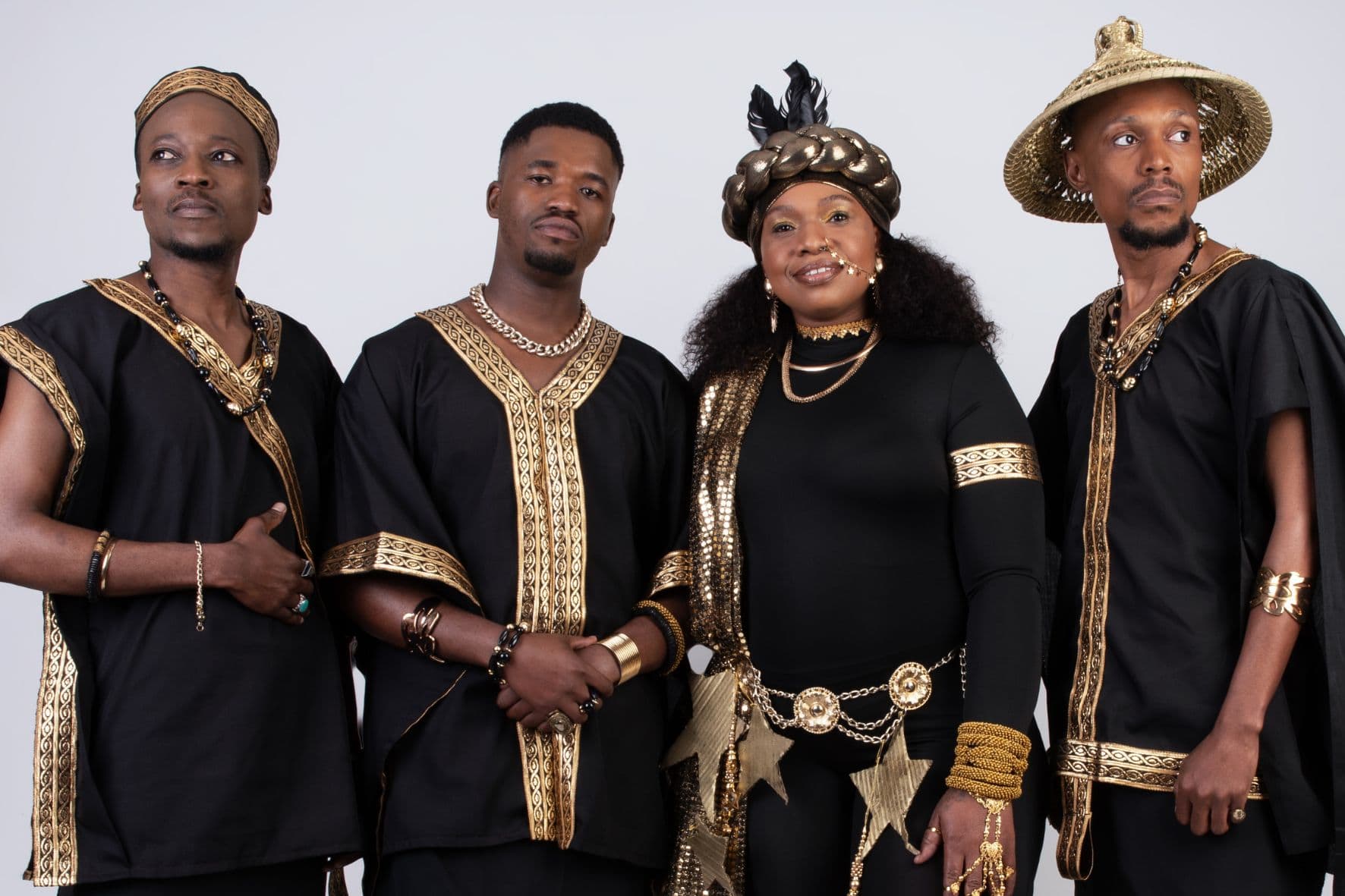
The members of L8 Antique arrived at the collective from very different paths. Itumeleng Mothomoholo describes the group as a place where his artistry and purpose aligned, allowing him to express what he called his highest truth.
Founder Lebogang Mahlatji began as a rapper before forming the band Afrodesiac and later establishing L8 Antique after years of collaborating with other musicians.
Lehlogonolo Mokgabudi came from a background as a church musician and said the band deepened his understanding of music’s healing power, while Xolani Mtshali moved from an early focus on computer science and genres such as jazz, rock and gospel.
Do you see NTU Futurism reclaiming the past and building the future?
NTU Futurism is both a remembering and a building. It reminds us of who we are and of the divine in all of us, connecting us to the universal life force that exists in everything.
In this way, it reclaims a truth and intelligence that has always been part of us, while also building something new for the world, a philosophy and sound that expresses that memory in the present and projects it into the future. This message is not only for our continent but for the whole world.
Does it change African storytelling?
African Futurism has been present for as long as I can remember, even in my teenage years. Artists like Angélique Kidjo, Salif Keita and Khadja Nin carried this vision, and more recently artists such as Wizkid, Burna Boy, Tems and Moonchild Sanelly have continued it. I hope more artists will carry the baton, telling African stories in ways that are bold, innovative and rooted in our heritage.
Watch: Experience the sound
The album speaks about past, present and future. How do you personally experience that continuum in your creative lives?
We draw from ancient ancestral wisdom and intelligence (Emandulo) and communicate these messages through digital creative and artistic forms in the present day. This process is not only about cultural preservation. It becomes a continuous legacy for generations to come.
ALSO READ: Gen Z artist Rayne: ‘Music is my oxygen’
What role does music play beyond the spiritual?
Music is spiritual at its core, and we honour that. We use it as a form of communication with the divine and as a tool for healing, not only for ourselves but for everyone who listens to our music and attends our concerts and keep the experience authentic rather than purely performative. performances. Rituals such as burning impepho help us stay connected to that sacred essence.
Is it abstract art?
NTU Futurism is not abstract at all. It is relatable and easy to understand. The rhythms are simple and supported by chants, which function as a non-verbal language that everyone can feel, understand and participate in. This transcends culture, language and belief, and that is the essence of our music.
It is important for Africans to recognise the immense contributions our ancestors made to world civilisation. Empires like Kush, Monomotapa and Ancient Egypt were far ahead in technology, education and the arts.
We must remember who we are and continue creating. I foresee a very bright and exciting decade ahead for African creativity and culture.
NOW READ: Film extraordinary: Bono’s Stories of Surrender
About the Author