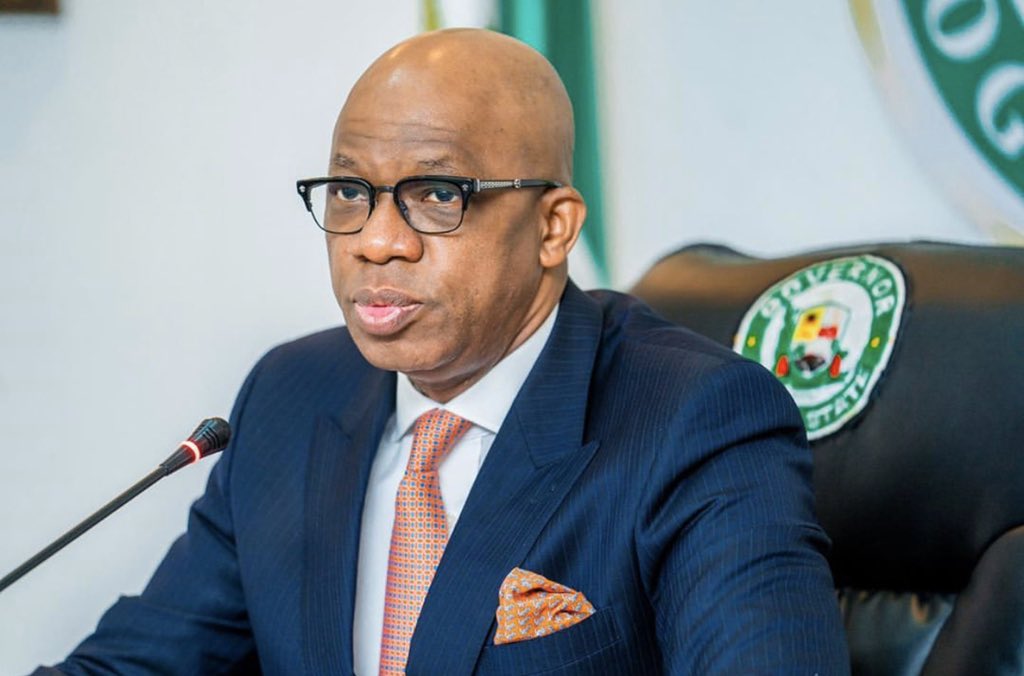
Governor Dapo Abiodun of Ogun State has declared that Nigeria’s most damaging economic burden before May 2023 was not the petrol subsidy but the foreign exchange subsidy, arguing that it inflicted deeper harm on the naira and investor confidence.
Speaking on Tuesday on the sidelines of the National Economic Council (NEC) Conference at the State House, Abuja, Abiodun said the fuel subsidy, though politically sensitive and highly visible, was less destructive than years of foreign exchange interventions that distorted the market and encouraged speculation.
He referenced remarks attributed to Central Bank of Nigeria (CBN) Governor, Olayemi Cardoso, during a panel session at the conference, which identified forex subsidy as the larger economic leak.
According to Abiodun, the dual subsidy regime eroded confidence in the local currency and pushed individuals and businesses to hold dollars instead of naira, as rapid depreciation made the local currency unattractive as a store of value.
He noted, however, that recent fiscal and monetary reforms introduced by President Bola Tinubu’s administration had helped stabilise the foreign exchange market and restore confidence.
“There is stability in the forex market. There is confidence in the forex market, and there is confidence in holding the naira,” Abiodun said.
The governor stressed that macroeconomic stability remains the foundation for attracting investment, warning that infrastructure alone cannot drive capital inflows without credible and predictable policies.
He said investors are more concerned about exchange rate transparency and the ability to repatriate returns than about physical assets, adding that uncertainty in the forex market discourages long-term investment.
While describing the reforms so far as significant, Abiodun emphasised that the next phase must focus on strengthening security, improving power supply and accelerating infrastructure delivery.
He said security remains a decisive factor for investment, noting that even the best policies and roads would not attract capital if communities are unsafe.
Abiodun also highlighted major federal infrastructure projects such as the Lagos–Calabar Coastal Highway and the Sokoto–Badagry corridor as transformative initiatives capable of enhancing trade, mobility and national integration.
From Ogun State’s perspective, he said the coastal highway had improved prospects for port development and eased movement of goods.
On power sector reforms, the governor praised the President’s assent to legislation allowing states to generate, transmit and distribute electricity, describing it as a turning point.
He disclosed that Ogun State had begun regulating its electricity market and was working toward establishing a state grid to attract investment and deepen public-private partnerships.
Abiodun added that enhanced federal–state cooperation and ongoing discussions on state policing and further devolution of powers are critical to sustaining reforms and addressing grassroots security challenges.
By Deji Elumoye, Abuja
About the Author