Another board, another committee.
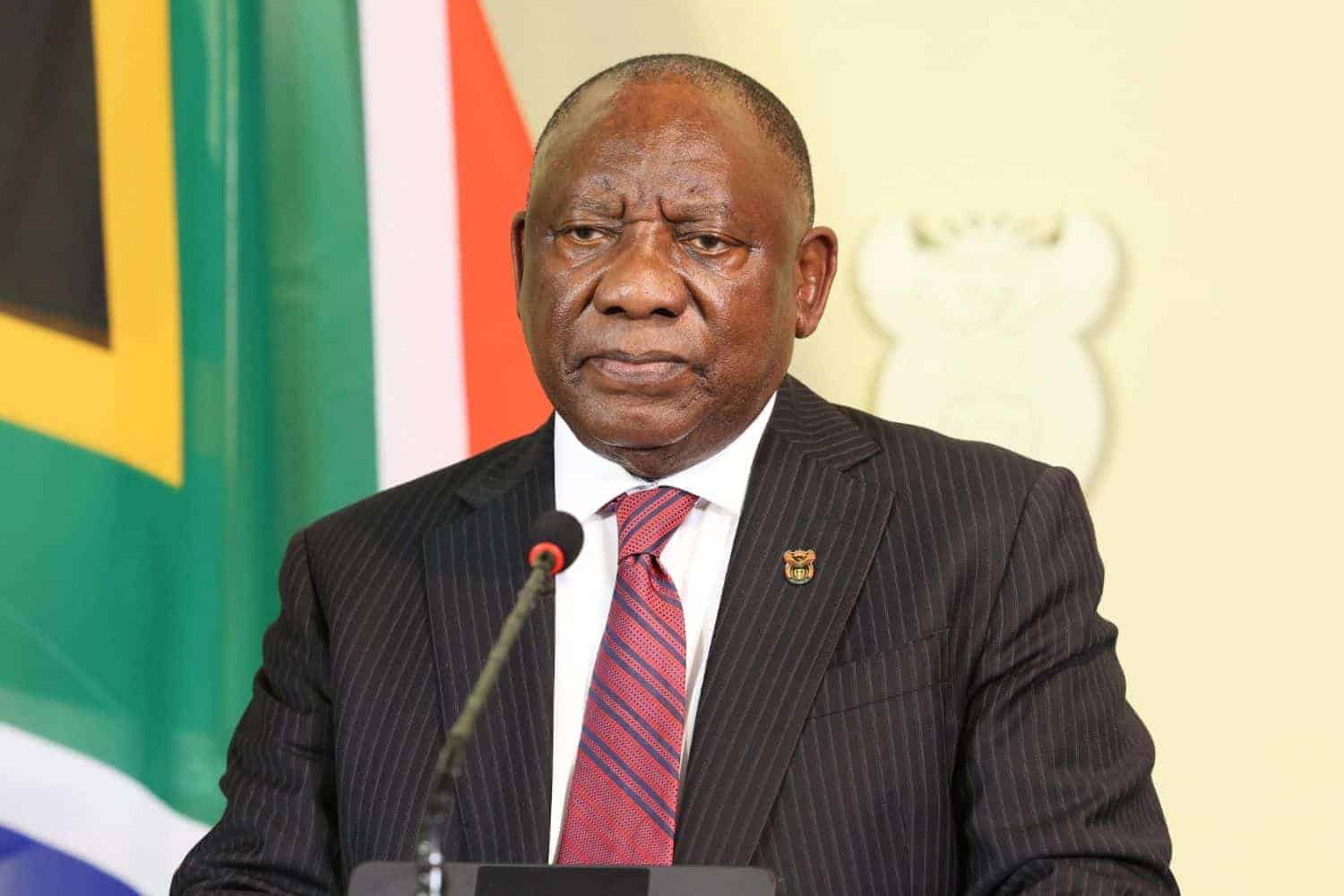
I am not a drinking man, and thank goodness for it. Otherwise, if there was a drinking game for the number of times President Cyril Ramaphosa or his ministers mentioned committees and boards during this week’s State of the Nation Address (Sona) debates, I may have died from alcohol poisoning.
It has been eight years since Ramaphosa promised a New Dawn, free of the corruption of the past and filled with less crime and improved service delivery. He later described his predecessor Jacob Zuma’s presidency as “nine wasted years”, something Zuma’s new fly-by-night foot soldiers again denied this week.
But it soon became clear that Ramaphosa was running out of ideas and was backed into a corner by some in the ANC. His solution: create more and more commissions, committees, and boards.
Perhaps he thought through these, and bringing certain portfolios into his office, he could be closer to the action and possible solutions. If nothing more, it would create a public perception that he actually cared to solve the problems his voters had.
Instead, it has often created parallel structures, muddied the waters of administration, complicated reporting lines and accountability, and made solutions more complex.
ALSO READ: A VIEW OF THE WEEK: Who you trust, or don’t, may kill you
Years of deterioration and committees
Some parts of the economy may be on the up, but unemployment and government debt-to-GDP ratios are worse than when the New Dawn was declared. A key part of this work sits with the Vulindlela task force, created by Ramaphosa, which coordinates with the National Treasury and reports directly to the president.
While load shedding has ended under Ramaphosa, it saw its peak during his presidency. At its worst, Ramaphosa created the National Energy Crisis Committee (NECOM) and appointed a Minister in the Presidency responsible for Electricity, Kgosientsho Ramokgopa.
Now that water issues are following a similar trajectory, Ramaphosa has established a presidential-led water crisis committee.
ALSO READ: A VIEW OF THE WEEK: We’re at war with each other over water, while officials pass the blame
Crime also increased from 2018 to 2025, and in 2021, Ramaphosa announced the establishment of the National Anti-Corruption Advisory Council (NACAC). This council recently suggested creating another division, a more permanent, independent anti-corruption body outside of political control.
Corruption is a plague that Ramaphosa once said his government was working hard to eradicate. But it has also worsened since Ramaphosa took over, with Transparency International finding that perceptions of public sector corruption are worse now than in 2018.
Madlanga Commission a bigger moemish than State Capture
If State Capture was the dark legacy of Zuma’s presidency, corruption in the criminal justice system will be Ramaphosa’s. He has been the man to fix both, and has so far failed miserably.
Not only have those implicated in the State Capture Commission not been brought to book, but many of them still sit in Parliament today. A slap on the wrist and sweeping it under the carpet seemed to be the strategy.
So when Lieutenant-General Nhlanhla Mkhwanazi shone a light on political interference, criminal collusion, and corruption in police and beyond, Ramaphosa may have felt another headache coming on.
He could no longer ignore the problem, like he had when police officers were themselves being routinely arrested and when studies had found trust in the police and courts was on the floor.
He pulled a familiar card: a lengthy and expensive judicial commission of inquiry.
To make doubly sure, Parliament would have their own inquiry, rinsing and repeating many of the same allegations and witnesses.
And guess what happens to those implicated? This week, it was confirmed that they will not be punished but rather redeployed. A tactic that was recently piloted in Gauteng, with weak reasoning that only points to failed and blunt accountability management.
Beyond this, a National Police Board will potentially be established to guide police reform. Is such a board, like many of those already created under Ramaphosa, necessary, beyond giving jobs to pensioner pals?
The recommendations of the commission should be enough. The president must act on these and be given the power to do so decisively.
There is no need for fatty layers before we get to the real meat of the problem in a country starving for honesty and accountability.
NOW READ: A VIEW OF THE WEEK: SA’s faceless and crumbling future
About the Author