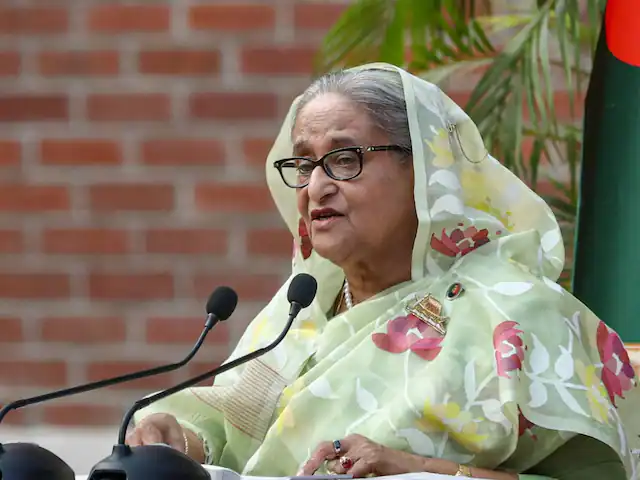
Former Bangladesh Prime Minister Sheikh Hasina has announced plans to return to Bangladesh later this year, nearly two years after fleeing to India following the mass uprising that ended her 15-year rule.
Speaking via video link on Wednesday at an event organised by the Foreign Correspondents’ Club (FCC) of South Asia, Hasina said she intends to return in December, although she noted that the exact date would be announced “when the time comes.”
The 78-year-old appeared alongside her son, Sajeeb Wazed Joy, and senior leaders of the Awami League, including former Education Minister Mohibul Hasan Chowdhury Nowfel.
“I will return to Bangladesh,” Hasina said, while also calling for authorities to lift the ban imposed on the Awami League following her removal from office.
Her son told the gathering that the family was not in contact with Bangladesh’s current interim administration.
Hasina has been living in self-imposed exile in neighbouring India since August 2024, when she fled Dhaka by helicopter after weeks of nationwide student-led protests escalated into a political uprising that forced her from power.
Her departure followed a violent government crackdown on demonstrators, an operation that drew widespread international criticism over alleged human rights abuses and the use of excessive force against protesters.
Since leaving office, Hasina has faced multiple legal proceedings in Bangladesh. Authorities have accused her of offences linked to the deadly suppression of protests, allegations she and her supporters have consistently rejected as politically motivated.
The former prime minister has declined to return to Bangladesh to face the charges, citing concerns over the fairness of the judicial process.
Her announcement comes as Bangladesh and India continue efforts to stabilise diplomatic relations following the dramatic political transition in Dhaka, while uncertainty remains over whether Hasina’s planned return would be permitted or whether she would face immediate arrest upon arrival.
The prospect of her return is expected to further shape Bangladesh’s evolving political landscape, where questions over accountability, democratic reforms and the future of the Awami League remain at the centre of national debate.