REA seals landmark deal to begin local production of solar panels and batteries, aiming to create jobs, cut costs and accelerate access to electricity across Nigeria……
More than 85 million Nigerians roughly four out of every 10 citizens still do not have reliable access to electricity from the national grid, despite years of investment in rural electrification projects.
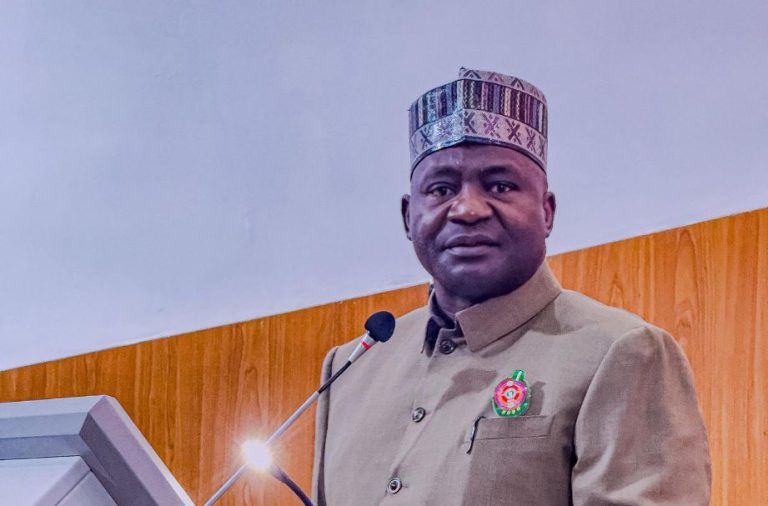
The startling figure was revealed by the Managing Director and Chief Executive Officer of the Rural Electrification Agency (REA), Abba Aliyu, during the signing of a Joint Development Agreement between the agency and Ecotech Development Nigeria Limited in Abuja on Tuesday.
The agreement will pave the way for the establishment of a solar panel and battery assembly and manufacturing facility in Nigeria, a move the REA believes could transform the country’s renewable energy landscape while reducing its heavy dependence on imported equipment.
Aliyu described the partnership as a watershed moment for Nigeria’s clean energy ambitions, noting that it represents the first time a Tier-1 Chinese renewable energy company has committed to establishing manufacturing and assembly operations within the country.
According to him, while the REA has successfully connected millions of previously underserved Nigerians through initiatives such as the Rural Electrification Fund, the Nigerian Electrification Project and the Distributed Access through Renewable Energy Scale-Up Project, the country’s electricity access gap remains significant.
“More than 85 million Nigerians, representing close to 40 per cent of our population, still do not have reliable access to grid electricity. That is the challenge the Rural Electrification Agency exists to solve,” Aliyu said.
Beyond expanding electricity access, the REA boss expressed concern over Nigeria’s continued reliance on imported renewable energy components, saying virtually every solar project installed across the country is built using equipment manufactured overseas.
He noted that although Nigeria provides the market, demand and installation opportunities, the economic value from manufacturing continues to benefit other countries.
According to Aliyu, every dollar spent importing solar panels, batteries and inverters represents an opportunity lost to create jobs, strengthen local technical expertise and retain foreign exchange within Nigeria.
“We have continued to finance industrial growth in other countries with resources that could have been invested in building our own manufacturing capacity,” he said.
As part of the agreement, the REA, through its renewable asset management subsidiary, will facilitate the annual offtake of up to 200 megawatts of locally manufactured solar photovoltaic modules and 200 megawatt-hours of battery energy storage systems produced by Ecotech in Nigeria.
Aliyu, however, clarified that the arrangement is not an exclusive procurement agreement and will not override existing public procurement rules. He stressed that every transaction will still be evaluated based on competitiveness, quality, reliability and value for money.
He added that local manufacturing is expected to shorten delivery timelines for renewable energy developers, reduce import dependence, create employment opportunities, boost domestic technical capacity and conserve foreign exchange.
The initiative, he said, also aligns with President Bola Tinubu’s broader economic agenda of driving industrialisation through private-sector investment as part of efforts to build a $1 trillion economy by 2030.
Speaking at the signing ceremony, Managing Director of Ecotech Development Nigeria Limited, John Zhao, said the company plans to manufacture and assemble solar panels, battery energy storage systems and hybrid inverters tailored for residential, commercial and industrial users.
He added that the company will also provide engineering design, system integration, installation and long-term maintenance services, saying the investment is expected to improve access to reliable renewable energy technologies while supporting Nigeria’s transition to cleaner energy and strengthening local industrial development.
Nigeria continues to face one of Africa’s largest electricity access deficits, with millions of households and businesses relying on expensive alternatives due to unreliable grid supply. In recent years, the Federal Government has increasingly turned to renewable energy solutions including mini-grids and solar home systems while encouraging local manufacturing to expand energy access, reduce import dependence and stimulate economic growth.